

Complete works of hall c.., p.1
Complete Works of Hall Caine, page 1


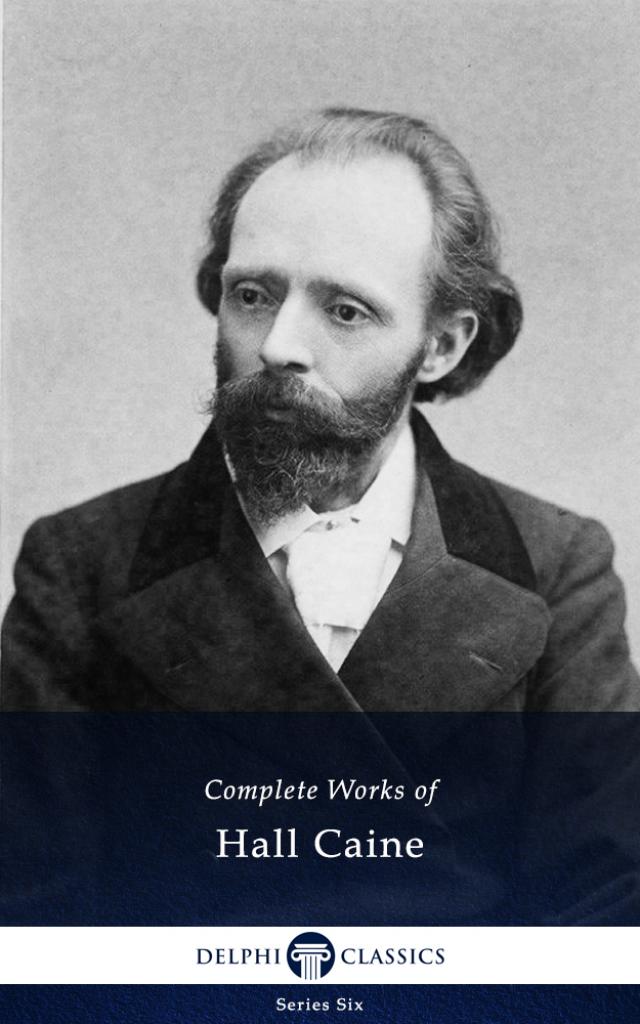
The Complete Works of
HALL CAINE
(1853-1931)
Contents
The Novels
THE SHADOW OF A CRIME
SHE’S ALL THE WORLD TO ME
A SON OF HAGAR
THE DEEMSTER
THE BONDMAN
THE SCAPEGOAT
THE MANXMAN
THE CHRISTIAN
THE ETERNAL CITY
THE PRODIGAL SON
THE WHITE PROPHET
THE WOMAN THOU GAVEST ME
THE MASTER OF MAN
THE WOMAN OF KNOCKALOE
The Shorter Fiction
THE PROPHET
CAP’N DAVY’S HONEYMOON AND OTHER STORIES
CHARLIE THE COX
The Plays
THE ISLE OF BOY
PETE
The Non-Fiction
RECOLLECTIONS OF DANTE GABRIEL ROSSETTI
THE LITTLE MANX NATION
THE DRAMA OF THREE HUNDRED AND SIXTY-FIVE DAYS
The Biography
HALL CAINE, THE MAN AND THE NOVELIST by C. F. Kenyon
The Delphi Classics Catalogue
© Delphi Classics 2016
Version 1
The Complete Works of
HALL CAINE
By Delphi Classics, 2016
COPYRIGHT
Complete Works of Hall Caine
First published in the United Kingdom in 2016 by Delphi Classics.
© Delphi Classics, 2016.
All rights reserved. No part of this publication may be reproduced, stored in a retrieval system, or transmitted, in any form or by any means, without the prior permission in writing of the publisher, nor be otherwise circulated in any form other than that in which it is published.
Delphi Classics
is an imprint of
Delphi Publishing Ltd
Hastings, East Sussex
United Kingdom
Contact: sales@delphiclassics.com
www.delphiclassics.com
Parts Edition Now Available!
Love reading Hall Caine?
Did you know you can now purchase the Delphi Classics Parts Edition of this author and enjoy all the novels, plays, non-fiction books and other works as individual eBooks? Now, you can select and read individual novels etc. and know precisely where you are in an eBook. You will also be able to manage space better on your eReading devices.
The Parts Edition is only available direct from the Delphi Classics website.
For more information about this exciting new format and to try free Parts Edition downloads, please visit this link.
Explore Edwardian literature with Delphi Classics
For the first time in digital publishing history, Delphi Classics is proud to present the complete works of these important authors.
www.delphiclassics.com
The Novels
Runcorn, an industrial town and cargo port in Cheshire — Caine’s birthplace
Runcorn Docks, 1880’s
THE SHADOW OF A CRIME
A CUMBRIAN ROMANCE
After leaving school Caine was articled to John Murray, an architect and surveyor. During this period, he developed a passion for books and spent much time in Liverpool’s Free Library, later maintaining that he was mainly self-taught. At the age of fifteen he discovered the poetry of Samuel Taylor Coleridge, which would become his first important literary influence. He started writing and contributed articles to a trade paper, The Builder, which also carried literary articles, and to local newspapers, particularly the Liverpool Mercury.
In 1870, following his grandfather’s death, Caine suffered a nervous breakdown and so gave up his employment to go and live on the Isle of Man. His uncle, James Teare, was a schoolmaster in Maughold, but was ill at the time and so Caine acted as an assistant teacher in his school. During this time Caine was influenced by the writings of John Ruskin, of whom he became ‘an eager pupil and admirer’. Later he would be a frequent visitor to Ruskin’s Coniston home, Brantwood and a keen member of the local Ruskin Society.
Caine had come to be very impressed by the poems of Dante Gabriel Rossetti, and he gave a series of three lectures on the poems of the Pre-Raphaelites. He sent a copy of one of his published lectures to Rossetti, who by that time had become a virtual recluse, suffering from years of addiction to chloral and alcohol. A frequent correspondence followed and they eventually met in September 1880 when Caine visited Rossetti in his home at Cheyne Walk, Chelsea, where he lived “in shabby splendour”. The following year Caine left his employment in Liverpool and went to live with Rossetti until the artist’s death in April 1882. He served as secretary, companion, housekeeper, general factotum and eventually nurse to Rossetti.
Following Rossetti’s death, Caine gained an income by writing articles for the Liverpool Mercury, while preparing a book about his time with Rossetti. Recollections of Dante Gabriel Rossetti appeared in October 1882 and sold reasonably well. In 1883 Cobwebs of Criticism was published, a book about reviewers and whether or not their criticisms had been valid. During this time he was maintaining old friendships and building new ones with people that included Ford Madox Brown, Algernon Charles Swinburne, Theodore Watts, R. D. Blackmore, Matthew Arnold, Robert Browning and Christina Rossetti.
It was during this creative period that Caine began to consider that his future might lie in writing fiction. Shadow of a Crime, Caine’s first novel, was first published in serial format. The first number appeared in the Liverpool Mercury in the autumn of 1884, when he had only the first few chapters ready. By the end of October the novel was proving hugely successful, as Caine worked tirelessly to finish it. The final book version was published, with numerous revisions, by Chatto & Windus in February 1885.
Set in the Lake District and based on a love triangle, Shadow of a Crime continued to sell well and to be in print well into the 1900’s. The narrative takes place during the English Civil War of the seventeenth century and reflects Caine’s antiroyalist views. It would go on to launch his career as a romantic novelist of huge popularity — a career that would span forty years and produce fourteen novels.
The newspaper that Caine’s novel was first serialised in
Caine, c. 1895
CONTENTS
PREFACE.
CHAPTER I. THE CITY OF WYTHBURN.
CHAPTER II. THE CRIME IN THE NIGHT.
CHAPTER III. IN THE RED LION.
CHAPTER IV. THE OUTCAST.
CHAPTER V. THE EMPTY SADDLE.
CHAPTER VI. THE HOUSE ON THE MOSS.
CHAPTER VII. SIM’S CAVE.
CHAPTER VIII. ROBBIE’S REDEMPTION.
CHAPTER IX. THE SHADOW OF THE CRIME.
CHAPTER X. MATTHA BRANTH’ET “FLYTES” THE PARSON.
CHAPTER XI. LIZA’S WILES.
CHAPTER XII. THE FLIGHT ON THE FELLS.
CHAPTER XIII. A ‘BATABLE POINT.
CHAPTER XIV. UNTIL THE DAY BREAK.
CHAPTER XV. RALPH’S SACRIFICE.
CHAPTER XVI. AT SUNRISE ON THE RAISE.
CHAPTER XVII. THE GARTHS: MOTHER AND SON.
CHAPTER XVIII. THE DAWN OF LOVE.
CHAPTER XIX. THE BETROTHAL.
CHAPTER XX. “FOOL, OF THYSELF SPEAK WELL.”
CHAPTER XXI. MRS. GARTH AT SHOULTHWAITE.
CHAPTER XXII. THE THREATENED OUTLAWRY.
CHAPTER XXIII. SHE NEVER TOLD HER LOVE.
CHAPTER XXIV. TREASON OR MURDER.
CHAPTER XXV. LIZA’S DEVICE.
CHAPTER XXVI. “FOOL, DO NOT FLATTER.”
CHAPTER XXVII. RALPH AT LANCASTER.
CHAPTER XXVIII. AFTER WORD COMES WEIRD.
CHAPTER XXIX. ROBBIE’S QUEST BEGUN.
CHAPTER XXX. A RACE AGAINST LIFE.
CHAPTER XXXI. ROBBIE, SPEED ON!
CHAPTER XXXII. WHAT THE SNOW GAVE UP.
CHAPTER XXXIII. SEPULTURE AT LAST.
CHAPTER XXXIV. FATE THAT IMPEDES, FALL BACK.
CHAPTER XXXV. ROBBIE’S QUEST ENDED.
CHAPTER XXXVI. ROTHA’S CONFESSION.
CHAPTER XXXVII. WHICH INDICTMENT?
CHAPTER XXXVIII. PEINE FORTE ET DURE.
CHAPTER XXXIX. THE FIERY HAND.
CHAPTER XL. GARTH AND THE QUAKERS.
CHAPTER XLI. A HORSE’S NEIGH.
CHAPTER XLII. THE FATAL WITNESS.
CHAPTER XLIII. LOVE KNOWN AT LAST.
CHAPTER XLIV. THE CLEW DISCOVERED.
CHAPTER XLV. THE CONDEMNED IN DOOMSDALE.
CHAPTER XLVI. THE SKEIN UNRAVELLED.
CHAPTER XLVII. THE BLACK CAMEL AT THE GATE.
CHAPTER XLVIII. “OUT, OUT, BRIEF CANDLE.”
CHAPTER XLIX. PEACE, PEACE, AND REST.
CHAPTER L. NEXT MORNING.
CHAPTER LI. SIX MONTHS AFTER.
The original title page of the book edition
TO
MY ABLE FELLOW-JOURNALIST
JOHN LOVELL
WHO IN A DARKER HOUR OF LABOR AND MISGIVING
CHEERED ME WITH AN ESTIMATE OF THIS NOVEL
THAT THE PUBLIC HAS SINCE RATIFIED.
PREFACE.
The central incident of this novel is that most extraordinary of all punishments known to English criminal law, the peine forte et dure. The story is not, however, in any sense historical. A sketchy background of stirring history is introduced solely in order to heighten the personal danger of a brave man. The interest is domestic, and, perhaps, in some degree psychological. Around a pathetic piece of old jurisprudence I hav
The story, which is now first presented as a whole, has already had a career in the newspapers, and the interest it excited in those quarters has come upon me as a surprise. I was hardly prepared to find that my plain russet-coated dalesmen were in touch with popular sympathy; but they have made me many friends. To me they are very dear, for I have lived their life. It is with no affected regret that I am now parting with these companions to make way for a group of younger comrades.
There is one thing to say which will make it worth while to trouble the reader with this preface. A small portion of the dialogue is written in a much modified form of the Cumbrian dialect. There are four variations of dialect in Cumberland, and perhaps the dialect spoken on the West Coast differs more from the dialect spoken in the Thirlmere Valley than the latter differs from the dialect spoken in North Lancashire. The patois problem is not the least serious of the many difficulties the novelist encounters. I have chosen to give a broad outline of Cumbrian dialect, such as bears no more exact relation to the actual speech than a sketch bears to a finished picture. It is right as far as it goes.
A word as to the background of history. I shall look for the sympathy of the artist and the forgiveness of the historian in making two or three trifling legal anachronisms that do not interfere with the interest of the narrative. The year of the story is given, but the aim has been to reflect in these pages the black cloud of the whole period of the Restoration as it hung over England’s remotest solitudes. In my rude sketch of the beginnings of the Quaker movement I must disclaim any intention of depicting the precise manners or indicating the exact doctrinal beliefs of the revivalists. If, however, I have described the Quakers as singing and praying with the fervor of the Methodists, it must not be forgotten that Quietism was no salient part of the Quakerism of Fox; and if I have hinted at Calvinism, it must be remembered that the “dividing of God’s heritage” was one of the causes of the first schism in the Quaker Society.
H.C.
New Court, Lincoln’s Inn.
THE SHADOW OF A CRIME.
CHAPTER I. THE CITY OF WYTHBURN.
Tar-ry woo’, tar-ry woo’,
Tar-ry woo’ is ill to spin:
Card it weel, card it weel,
Card it weel ere you begin.
Old Ballad.
The city of Wythburn stood in a narrow valley at the foot of Lauvellen, and at the head of Bracken Water. It was a little but populous village, inhabited chiefly by sheep farmers, whose flocks grazed on the neighboring hills. It contained rather less than a hundred houses, all deep thatched and thick walled. To the north lay the mere, a long and irregular water, which was belted across the middle by an old Roman bridge of bowlders. A bare pack-horse road wound its way on the west, and stretched out of sight to the north and to the south. On this road, about half a mile within the southernmost extremity of Bracken Water, two hillocks met, leaving a natural opening between them and a path that went up to where the city stood. The dalesmen called the cleft between the hillocks the city gates; but why the gates and why the city none could rightly say. Folks had always given them these names. The wiser heads shook gravely as they told you that city should be sarnty, meaning the house by the causeway. The historians of the plain could say no more.
They were rude sons and daughters of the hills who inhabited this mountain home two centuries ago. The country around them was alive with ghostly legend. They had seen the lights dance across Deer Garth Ghyll, and had heard the wail that came from Clark’s Loup. They were not above trembling at the mention of these mysteries when the moon was flying across a darksome sky, when the wind moaned about the house, and they were gathered around the ingle nook. They had few channels of communication with the great world without. The pack-horse pedler was their swiftest newsman; the pedler on foot was their weekly budget. Five miles along the pack-horse road to the north stood their market town of Gaskarth, where they took their wool or the cloth they had woven from it. From the top of Lauvellen they could see the white sails of the ships that floated down the broad Solway. These were all but their only glimpses of the world beyond their mountains. It was a mysterious and fearsome world.
There was, however, one link that connected the people of Wythburn with the world outside. To the north of the city and the mere there lived a family of sheep farmers who were known as the Rays of Shoulthwaite Moss. The family consisted of husband and wife and two sons. The head of the house, Angus Ray, came to the district early in life from the extreme Cumbrian border. He was hardly less than a giant in stature. He had limbs of great length, and muscles like the gnarled heads of a beech. Upon settling at Wythburn, he speedily acquired property of various kinds, and in the course of a few years he was the largest owner of sheep on the country side. Certainly, fortune favored Angus Ray, and not least noticeably when in due course he looked about him for a wife.
Mary Ray did not seem to have many qualities in common with her husband. She had neither the strength of limb nor the agile grace of the mountaineer. This was partly the result of the conditions under which her girlhood had been spent. She was the only child of a dalesman, who had so far accumulated estate in land as to be known in the vernacular as a statesman. Her mother had died at her birth, and before she had attained to young womanhood her father, who had married late in life, was feeble and unfit for labor. His hand was too nervous, his eye too uncertain, his breath too short for the constant risks of mountaineering; so he put away all further thought of adding store to store, and settled himself peaceably in his cottage under Castenand, content with the occasional pleasures afforded by his fiddle, an instrument upon which he had from his youth upward shown some skill. In this quiet life his daughter was his sole companion.
There was no sight in Wythburn more touching than to see this girl solacing her father’s declining years, meeting his wishes with anticipatory devices, pampering him in his whims, soothing him in the imaginary sorrows sometimes incident to age, even indulging him with a sort of pathetic humor in his frequent hallucinations. To do this she had to put by a good many felicities dear to her age and condition, but there was no apparent consciousness of self-sacrifice. She had many lovers, for in these early years she was beautiful; and she had yet more suitors, for she was accounted rich. But neither flattery nor the fervor of genuine passion seemed to touch her, and those who sought her under the transparent guise of seeking her father usually went away as they came. She had a smile and the cheeriest word of welcome for all alike, and so the young dalesmen who wooed her from the ignoble motive came to think her a little of a coquette, while those who wooed her from the purer impulse despaired of ruffling with the gentlest gales of love the still atmosphere of her heart.
One day suddenly, however, the old statesman died, and his fiddle was heard no more across the valley in the quiet of the evening, but was left untouched for the dust to gather on it where he himself had hung it on the nail in the kitchen under his hat. Then when life seemed to the forlorn girl a wide blank, a world without a sun in it, Angus Ray went over for the first time as a suitor to the cottage under Castenand, and put his hand in hers and looked calmly into her eyes. He told her that a girl could not live long an unfriended life like hers — that she should not if she could; she could not if she would — would she not come to him?
It was the force of the magnet to the steel. With swimming eyes she looked up into his strong face, tender now with a tremor never before seen there; and as he drew her gently towards him her glistening tears fell hot and fast over her brightening and now radiant face, and, as though to hide them from him, she laid her head on his breast. This was all the wooing of Angus Ray.
They had two sons, and of these the younger more nearly resembled his mother. Willy Ray had not merely his mother’s features; he had her disposition also. He had the rounded neck and lissom limbs of a woman; he had a woman’s complexion, and the light of a woman’s look in his soft blue eyes. When the years gave a thin curly beard to his cheek they took nothing from its delicate comeliness. It was as if nature had down to the last moment meant Willy for a girl. He had been an apt scholar at school, and was one of the few persons in Wythburn having claims to education. Willy’s elder brother, Ralph, more nearly resembled his father. He had his father’s stature and strength of limb, but some of his mother’s qualities had also been inherited by him. In manner he was neither so austere and taciturn as his father, nor so gentle and amiable as his mother. He was by no means a scholar, and only the strong hand of his father had kept him as a boy in fear of the penalties incurred by the truant. Courage and resolution were his distinguishing characteristics.






