

Carnage a dark revenge r.., p.23
The Way She Rides, page 23


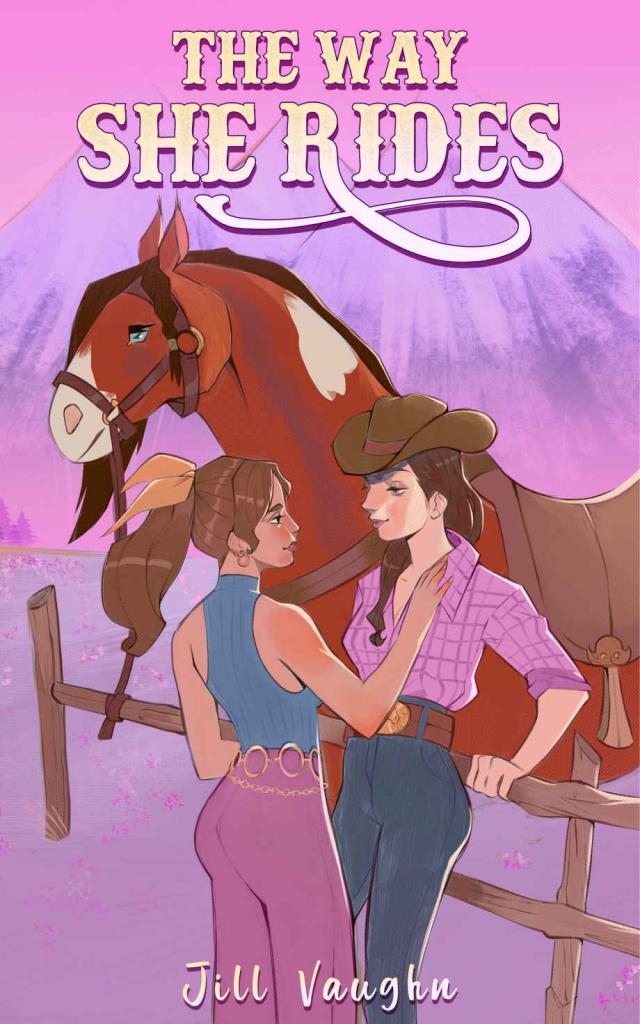
Jill Vaughn
The Way she Rides
Copyright © 2025 by Jill Vaughn
All rights reserved. No part of this publication may be reproduced, stored or transmitted in any form or by any means, electronic, mechanical, photocopying, recording, scanning, or otherwise without written permission from the publisher. It is illegal to copy this book, post it to a website, or distribute it by any other means without permission.
First edition
This book was professionally typeset on Reedsy
Find out more at reedsy.com
Contents
Chapter 1
Chapter 2
Chapter 3
Chapter 4
Chapter 5
Chapter 6
Chapter 7
Chapter 8
Chapter 9
Chapter 10
Chapter 11
Chapter 12
Chapter 13
Chapter 14
Chapter 15
Chapter 16
Chapter 17
About the Author
Chapter 1
By the time I pulled my rental car up to the ranch, I was convinced I’d accidentally packed for a year in Paris instead of two months in Montana. Five suitcases, two overstuffed totes, and a garment bag for good measure because apparently I thought the cows would care if I had wrinkle-free dresses.
I climbed out, already feeling ridiculous as my heels sank into the rocky drive. The air immediately hit me. Crisp, clean, carrying a faint smell of hay and something warm and earthy that made the city feel a thousand miles away. Which, I suppose, was the whole point.
Before I could start my circus act of trying to drag all my bags out at once, a woman came out onto the wide wooden porch of the main house. She looked to be in her sixties, silver-streaked braid over one shoulder, denim shirt rolled at the sleeves, and a smile as wide as the Montana sky.
“You must be Alicia,” she called. Her voice carried an easy weight, calm and sure, like someone who’d seen too much to rush.
“That obvious?” I said, glancing at the pile of luggage in my trunk.
She laughed. “City folk usually are. Don’t you worry, darlin’. We’ll get you settled.”
She introduced herself as Tonya, the owner of Duke Ranch, and by the time she’d reached me, she’d already taken three of my bags out of my hands like they weighed nothing. I trailed after her, grateful but also a little embarrassed.
Watching Tonya’s back as she marched up the dirt path, I couldn’t help but notice how differently she carried herself compared to the women I knew back home. Where Manhattan’s finest tiptoed in designer heels, she strode with purpose, shoulders squared, each footfall certain. No hesitation. No performance.
“So, how long have you been running this place?” I asked, trying to keep up with her brisk pace.
“Been keeping this place going for fifteen years now,” she said, not even breathing hard despite hauling what felt like half my worldly possessions. “Since my Harold passed. Folks thought I’d sell up, move into town. Told ‘em all to kiss my grits.”
I smiled at that, trying to imagine any of the ladies from my Upper East Side book club using such an expression. They’d sooner admit to shopping at discount stores than use such quaint colloquialisms.
“Must get lonely out here,” I ventured, already feeling sweat beading along my hairline despite the cool air. God, I was out of shape.
Tonya snorted. “Honey, I got three hundred head of cattle, two dozen horses, five dogs, and enough chores to fill two lifetimes. Ain’t got time to be lonely.”
She led me away from the main house, down a winding dirt path that cut through knee-high grass. The mountains loomed closer with each step, their shadows stretching toward us as the sun dipped.
Tonya pointed toward a cluster of small structures nestled at the base of the foothills. “Guests stay in the cabins down yonder,” she said, her boots kicking up little puffs of dust while I tottered behind her. “The one you’ll be staying in is the Hemingway cabin, as we call it. Not that we get many writers out this way, but it’s got a nice desk with a view that might inspire something worth putting on paper.”
I followed her, trying not to wobble on my heels as we traversed what felt like the longest hundred yards of my life. The sun was starting its slow descent, casting golden light across the sprawling pastures where a few horses grazed in the distance. Mountains rose up behind them, purple-blue and massive, making me feel smaller with each step.
“This is…” I struggled to find the right word as we approached a modest log cabin nestled among a cluster of pines. “Real.”
Tonya chuckled. “That it is. Not like those fancy ranch resorts where they perfume the horse smell out of the air.”
“No, this is exactly what I was looking for,” I replied, though a small voice in my head whispered, What have you done, Alicia?
It all started three weeks ago. A Tuesday night that felt like every other Tuesday night in my life. There I was, curled up on my couch in my shoebox Manhattan apartment, surrounded by crumpled outlines and a laptop that had seen nothing but my screensaver for days. An empty red wine bottle sat on my coffee table; evidence of my sophisticated coping mechanism for writer’s block.
My first two novels had done the impossible. “All That We Were” and its sequel “All That We Became” had both hit the New York Times bestseller list, were featured in several celebrity book clubs, and suddenly turned me into someone people recognized at literary events. But book three? Book three was shaping up to be the true story of “All That I Had Been”.
Three missed deadlines. Twelve apologetic emails to my publisher. One very concerned agent.
“You just need a change of scenery,” My agent, Cleo, had insisted during our last lunch, picking at her kale salad while I nursed my third espresso. “Somewhere without distractions.”
I’d nodded, smiled, and gone home to drown my creative despair in cheap Merlot. That’s when the algorithm gods of the internet decided to show me an ad: “Authentic Montana Ranch Experience—Where Distraction Ends and Living Begins.”
Three glasses in, it seemed like divine intervention. By glass four, I’d entered my credit card details. By morning, I’d forgotten entirely until the confirmation email arrived, cheerfully informing me I’d just spent an obscene amount of money to live in the middle of nowhere for two months.
When I called Cleo in a panic, she’d gone silent for so long I thought the call had dropped.
“Montana?” she’d finally said. “Like, where the cows live?”
“Apparently,” I’d groaned.
But then her tone shifted. “You know what? This is brilliant. No parties, no social media events, no distractions. Just you and your laptop and…” she paused, “whatever they have in Montana.”
“Moose?” I’d offered.
“Inspiration,” she’d corrected. “Your publisher will stop breathing down my neck if you actually finish this manuscript. And maybe being somewhere completely different is exactly what your story needs.”
Truth be told, leaving New York behind wasn’t actually the hardship I’d made it out to be. Not anymore. Eleven months ago, when Audrey had packed her vintage record collection and designer blazers into three perfectly organized suitcases, leaving nothing behind but a note and the lingering scent of her perfume, my apartment had suddenly felt both emptier and smaller all at once.
“I can’t compete with the characters in your head,” she’d written in her elegant script. “I’m tired of being the supporting actress in the Alicia Hidalgo show.”
I’d crumpled the note, uncorked a bottle, and told myself it was for the best. We’d been growing apart. Her gallery openings. My book launches. Ships passing in the night, occasionally docking at the same overpriced restaurant to exchange pleasantries before retreating back to our separate worlds.
Since then, I’d been going through the motions. Wake up. Stare at blank document. Make coffee. Stare more. Attend required readings and smile for Instagram photos. Return home. Open wine. Sleep. Repeat.
Success was supposed to feel different. I’d imagined champagne and validation and a sense of having arrived somewhere important. Instead, I had royalty checks deposited into an account I rarely checked, invitations to parties I attended with increasing reluctance, and a hollow feeling that grew with each passing day.
And now, here I was trying to escape it all in the middle of Montana.
The cabin standing in front of me looked like it was straight out of some rustic Pinterest board, except it wasn’t staged or filtered. The wood was weathered in places, the small porch had a slightly crooked railing, and an old forgotten fishing rod leaned against the wall. It wasn’t perfect—it was better.
“It’s wonderful,” I said, meaning it.
“It’s got running water, electricity, and Wi-Fi,” Tonya said, pushing open the door. “Though the connection gets a little moody when it storms. Some folks say that’s a message from above telling you to take a break.”
Inside was surprisingly spacious. There was a main room with a kitchenette, small dining table, and a worn leather sofa facing a stone fireplace. A desk was positioned under the largest window, offering a view that took my breath away.
“Bathroom’s through there,” Tonya pointed, “and bedroom’s in the back. Nothing fancy, but the mattress is new and the sheets are clean.”
I set my bags down, feeling the tension in my shoulders start to unwind. The cabin smelled of pine a
“I’ll leave you to get settled,” Tonya said, heading for the door. “Dinner’s at six in the main house if you’re hungry. No dress code… those heels can take a vacation too.”
After she left, I kicked off my ridiculous shoes and padded across the wooden floor. The silence was overwhelming. No horns honking, no neighbors arguing, no delivery trucks beeping. Just the occasional distant whinny of a horse and the soft whisper of wind through the pines.
I stepped outside onto the small porch, gripping the slightly uneven railing. For a moment, I just stood there, closing my eyes and filling my lungs completely. The air felt different here. Thicker somehow, yet cleaner, like each breath was worth three of my shallow New York gasps. When was the last time I’d actually focused on just… breathing?
I opened my eyes to the panorama before me. The sun was sinking lower now, painting the mountains with amber light that seemed to make them glow from within. A hawk circled lazily overhead, riding thermals with barely a flap of its wings. The tall grass in the nearest field rippled like water when the breeze caught it, creating waves of gold and green.
“Wow,” I whispered to absolutely no one.
I couldn’t remember the last time I’d been surrounded by actual nature. Not the manicured kind in Central Park where you could still hear taxi horns and smell hot dog vendors, but real, wild, sprawling nature that existed without caring if humans approved. Had I ever?
Actually, I had. The memories washed over me suddenly, like the tide rushing in—Puerto Rico. Those childhood summers when my parents would pack us up and fly “home,” as they always called it, though I’d been born in Queens. The rainforest, El Yunque, where my cousins and I would hike trails while my abuela warned us about the coquí frogs that would jump in our hair if we weren’t careful.
When had I forgotten all that? When had concrete and glass replaced those memories of lush green and endless blue?
I leaned against the porch post, feeling a strange ache in my chest. That little girl who’d collected seashells and chased lizards and fallen asleep to the sound of palm fronds rustling outside her window—she seemed like someone I’d read about in a book rather than someone I’d ever been.
When had I lost that connection? Somewhere between college applications and career ambitions, I’d packed away that part of myself, filed it under “childhood” and moved on.
And yet, standing there on that weathered porch, Montana’s vastness stretching before me, I felt an unexpected twinge of recognition. The landscapes couldn’t be more different: Puerto Rico’s lush, dense greenery versus Montana’s open, golden plains, but something in my chest responded to this wild expanse in a way I hadn’t felt since those childhood summers.
It wasn’t the specifics that matched; it was the feeling. That sense of being small against something ancient and untamed. The way the land existed on its own terms, indifferent to human presence. The mountains here didn’t care about bestseller lists, just like El Yunque’s waterfalls hadn’t cared about my teenage anxieties or college applications.
I pulled my phone from my pocket, an automatic reflex, then stared at the black screen. No notifications. No urgent emails. No social media updates demanding my attention. The silence felt foreign and oddly liberating.
A distant bell rang somewhere on the property, probably calling the ranch hands in from whatever ranch hands did all day. (Note to self: find out what ranch hands actually do all day. Research, Alicia. You’re supposed to be a writer.)
With a final deep breath that seemed to clear cobwebs from corners of my lungs I didn’t know existed, I turned and went back inside. The cabin felt instantly cozy as the evening chill began to settle outside.
I approached the writing desk by the window and ran my hand along the natural wood top, imagining my laptop there, my notes spread out, my mind finally clear enough to focus on the manuscript that was already three months past deadline.
“Okay, Montana,” I whispered to the empty room. “Let’s see what you’ve got.”
Chapter 2
The next morning I woke with the sun, which in Montana meant ungodly early. The world outside my window was still misty, the mountains just beginning to emerge from their nighttime shadow. Perfect writing conditions.
Clutching my coffee mug like the holy grail it was, I settled at the rustic desk by the window. My laptop hummed to life, cursor blinking with accusation. One chapter. That’s all I needed. Just one decent chapter to prove I hadn’t made a colossal mistake coming here.
Twenty minutes later, I had written exactly seven words. And deleted six of them.
“This is ridiculous,” I muttered, pushing back from the desk with more force than necessary. My chair scraped against the wooden floor, the sound echoing through the quiet cabin. I’d been in Montana less than twenty-four hours and already expected literary miracles?
I pressed my forehead against the rough wooden wall. Outside, the ranch was coming alive – a distant figure moving between buildings, birds swooping low over the tall grass. The landscape seemed to breathe, expansive and patient in a way my cramped Manhattan apartment never was.
“Cut yourself some slack, Alicia,” I said to my reflection. “You just got here.”
My deadline, even though already long passed, felt distant enough for now. What I needed wasn’t forced productivity but to let this place work its way into my bones. I changed into jeans and my most comfortable boots, the ones that had only seen Central Park dirt.
“I’m going for a walk,” I announced to the empty room, as if I were appeasing its judgment. “For research purposes.”
The lie made me smile as I headed for the door. Sometimes the best writing happened when you weren’t trying to write at all.
The morning air hit my face with a brisk slap of reality as I stepped outside. This was nothing like New York City’s manufactured parks or carefully curated green spaces, this was nature with a capital N, sprawling in every direction without apology.
I wandered down a dirt path that curved away from my cabin, breathing deeply. The scent was different here. Cleaner, with notes of grass, earth, and something sweet I couldn’t identify. Wildflowers dotted the meadows in splashes of purple and yellow, their petals dancing in the gentle breeze.
“Well, hello there,” I murmured, crouching to examine a particularly vibrant cluster of blue blooms. I reached out to touch one delicate petal, half expecting my city-girl fingers to somehow taint it. Instead, it felt like silk against my skin. I brushed my thumb across it again, surprised by how alive it felt—cool from the morning air, impossibly soft. The scent rising from the blossoms was faint but clean, like rain on stone. Behind me, the hum of insects and the rustle of grass made the quiet feel fuller, almost sacred. For a moment, I just stayed there, fingers grazing color, trying to understand how something so small could seem so certain of where it belonged.
A low mooing sound drew my attention to a nearby field where several dozen cattle grazed with lazy purpose. They looked up at me with expressions that seemed to say, “Yes, tourist? Can we help you?” before returning to their breakfast. I couldn’t help but laugh at their utter indifference to my presence. One flicked its tail, another gave a halfhearted snort, and the whole herd seemed to move as one slow, breathing landscape.
Further along the path, movement caught my eye: a small herd of horses galloping across a distant pasture, their manes flowing like banners behind them. They moved with such freedom, such wild grace, that I felt my breath pause.
“Are you wild or just lucky enough to live here?” I whispered, watching them disappear behind a gentle rise in the landscape. The question felt strangely personal, as if I were really asking it of myself.
I continued walking, eventually circling back toward what appeared to be the main cluster of ranch buildings. A weathered sign pointed toward the stables, and on impulse, I followed it.
The stable building was larger than I expected, with wide doors standing open to the morning air. The scent of hay and horses grew stronger as I approached, along with the sound of someone humming softly.
I paused at the stable entrance, letting my eyes adjust to the dimmer light inside. That’s when I saw her.






