June 30th, June 30th

June 30th, June 30th

Richard Brautigan

Richard Brautigan

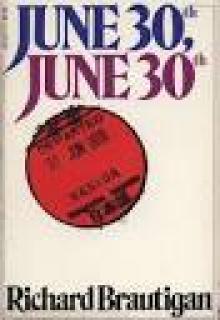
June 30th, June 30th is the most intimate book Richard Brautigan has ever written. It is about his first trip to Japan in the spring of 1976 and explores with wit and compassion the day-to-day realities of the human heart. This book of poetry is also a unique look at Japan as seen through the eyes of one of America’s most popular poets. “What can I say? It is your work that has touched me the most deeply, the least mannered and most exact in its insistent nakedness. It is not a succession of lyrics but finally ONE BOOK. A long poem that offers us its fragments. It is saturated with the ‘otherness’ we know to be our most honest state and the true state of poetry. It offers itself in perhaps the unconscious but ancient fabled form of the voyage. It is about the stately courage and loneliness of this voyage into a strange land which is both Japan and the true self of the poet, where there are no barriers to admitting and singing all. It is about love and exhaustion and permanent transition, so fatal that it is beyond the poet’s comprehension. I love the book because it is a true song, owning no auspices other than its own; owning the purity we think we aim at on this bloody journey.” —Jim Harrison, author of Wolf and Farmer Richard Brautigan’s latest book is Dreaming of Babylon: A Private Eye Novel 1942. Richard Brautigan’s other books of poetry include The Pill Versus the Springhill Mine Disaster, Rommel Drives On Deep into Egypt, and Loading Mercury with a Pitchfork. Richard Brautigan divides his life between San Francisco, Montana, and Tokyo.
Read online
  • 529
Lay the Marble Tea

Lay the Marble Tea

Richard Brautigan

Richard Brautigan

First published in 1959, Lay the Marble Tea, a collection of twenty-four poems, was Brautigan's first published collection of poetry; his third poetry book publication.Where most of Brautigan's later poetry was written in the first person, this collection offered a variety of historical and literary narrators. These poems, as did most of his subsequent work, blurred the boundaries between poetry and prose.
Read online
  • 370

The Hawkline Monster: A Gothic Western

The Hawkline Monster: A Gothic Western

Richard Brautigan

Richard Brautigan

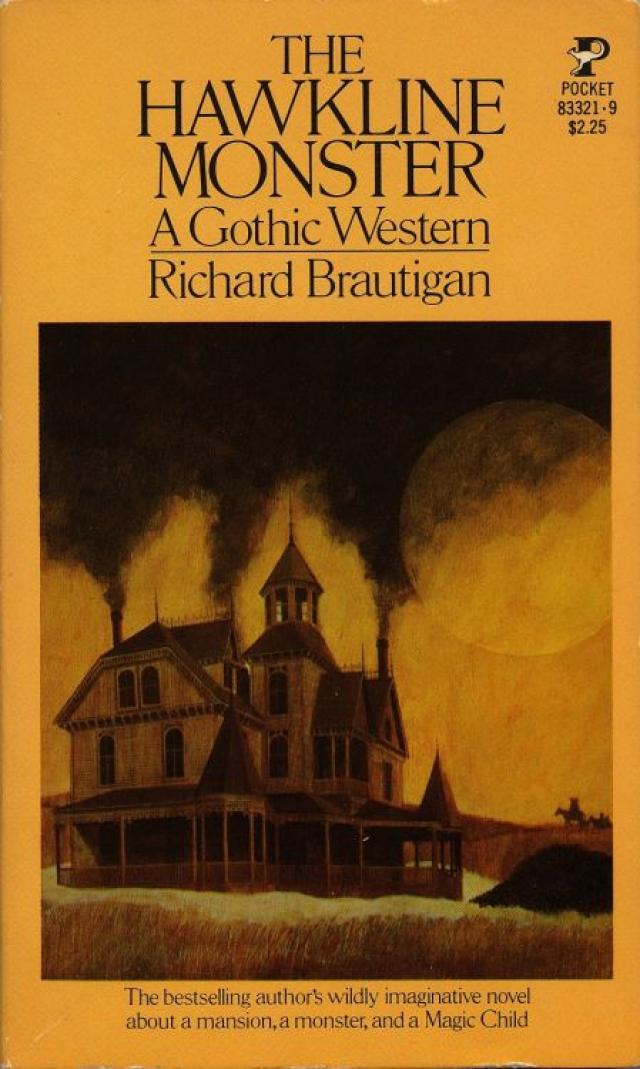
The time is 1902, the setting eastern Oregon. Magic Child, a fifteen-year-old Indian girl, wanders into the wrong whorehouse looking for the right men to kill the monster that lives in the ice caves under the basement of Miss Hawkline's yellow house. What follows is a series of wild, witty, and bizarre encounters.
Read online
  • 72
Dreaming of Babylon

Dreaming of Babylon

Richard Brautigan

Richard Brautigan

About the AuthorRichard Brautigan's comic genius and countercultural vision of American life made him a literary idol of the 1960s and 1970s. His books became required reading for the beat generation, and Trout Fishing in America sold more than two million copies throughout the world.
Read online
  • 68
Loading Mercury With a Pitchfork

Loading Mercury With a Pitchfork

Richard Brautigan

Richard Brautigan

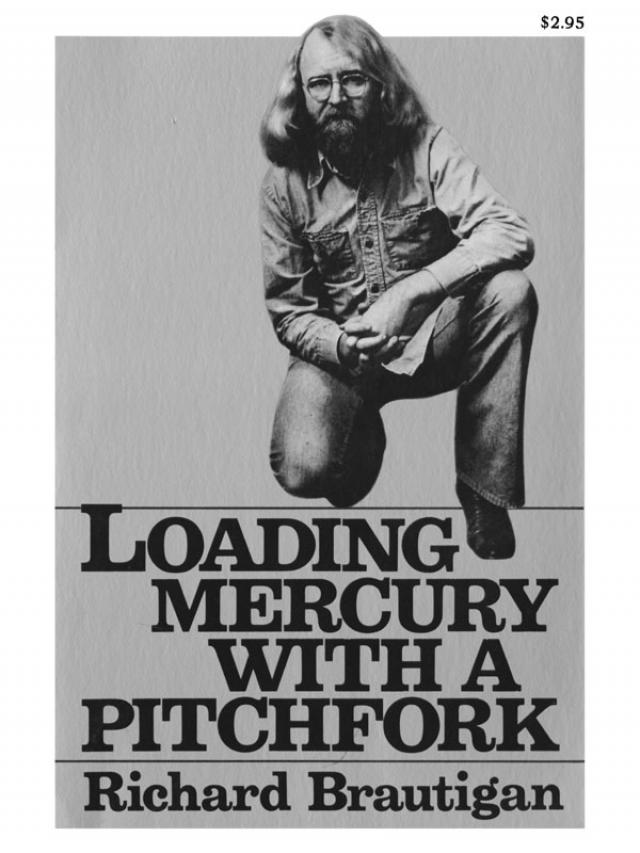
Anonymous. "Brautigan, Richard." Kirkus Reviews 15 March 1976: 355.Brautigan-the-poet is at it again (The Pill versus The Springhill Mine Disaster, Rommel Drives On Deep into Egypt), and this fey little volume, with its modest startles, immortalized yawns, and affected yet likable artlessness, should reopen the languid debate over whether what he's writing is American haiku or surrealist Rod McKuen. Let's say a little of both. Brautigan has by now so thoroughly exercised what he calls the "invisible muscle" of daydream that he can conjure up his trademark lines ("a penny smooth as a star") and similes ("great huge snowflakes like millions/ of transparent washing machines") with a felicity bordering the facile. His inspiration is exceedingly short-winded, and the great majority of these poems are little more than five or six lines, sometimes less; many consist of one wee brainstorm image around which a minimum of grammatical trimming droops like whilted parsley. It's enough to aggravate any "serious" poet who struggles much harder for a far meagerer living; but for the reader Brautigan has his slight charm, his evocation of bemused mood, which occasionally shafts deeper. These poemlets range from simple, near-banal statement of familiar emotions ("For fear you will be alone/ you do so many things/ that aren't you at all") to a little gallery of disappointed and hopeful people; to the hot, empty landscapes and "gasoline ghosts" of highway America; to the all-embracing solipsism of small sensual contentments ("A beautiful girl is watching/ the bacon"); to such darker, more original dream-visions as "Toward the pleasures of reconstituted crow/ I collect darkness within myself like the shadow/ of a blind lighthouse."—. "Brautigan, Richard." The Booklist 15 May 1976: 1329.Typical Brautigan whimsy, whether insightful or seemingly meaningless, in short poems with appeal mainly for the writer's following.—. "Brautigan, Richard." Choice September 1976: 815.Not everyone likes or even manages to respect the poetry of Richard Brautigan; and even its fans must feel the urge to withdraw their acclaim from at least certain of his pieces, if only in self-defense. For Brautigan's work is nothing if not charming, and to admit to being in charm's thrall is hardly in keeping with the temper of the times. Brautigan does not care, even if one reader's excluded poems are precisely the favorites of another, for ease of operation is his keynote and his method too. "Finding is losing something else./ I think about, perhaps even mourn,/ what I lost to find this," he writes—a typical poem in its entirety. If that is a poem, what about "Impasse": "I talked a good hello/but she talked an even/ better good-bye"? Found on facing pages, these two pieces exemplify the arguable strengths and weaknesses of Brautigan's output: the tendency to flatten into prose so familiar one cannot stifle his "So what?", and the ripple in the affections achieved by just the same means. The best of his works are coy little presences that won't go away, cute poem-pooches, while the worst are harmless neighbors of the first. But Brautigan is all that survives of the generation of young writers to come along in the California of the 1960s, and his readership is large enough to make ordering his titles an automatic gesture by most librarians—especially, of course, those at universities.Bokinsky, Caroline J. "Richard Brautigan." Dictionary of Literary Biography. Vol. 5: American Poets Since World War II. Ed. Donald J. Greiner. Detroit: Gale Research Company, 1980. 96-99.Brautigan's terse messages and witty similes are overshadowed by a blacker humor and a darker, more pensive mood. The poems are more personal; the reader even glimpses the poet in the process of writing. . . . A poet who once saw life in pleasant, whimsical analogies is now filled with foreboding and pessimism. His sensations are no longer so acute. . . . He concludes the volume with an existential pose [convincing himself that his actions have some value].Daum, Timothy. "Brautigan, Richard." Library Journal 101(15) 1 September 1976: 1780.Brautigan's poetic style, previously centered around eclectic insights into how everyday events are transformed into art, is here reduced to quick simulacra of bitter thoughts and cynical visions—his verse abounds with misplaced love, lonely nights, and jealous stabs at previous lovers. Commonplace images are mutated into uneasy jokes: "They said that/ my telephone/ would be fixed/ by 6./ They guaranteed/ it." Even the lighter poems, such as "Information" or "We meet, We try. Nothing happens, but." are deeply trained by Brautigan's ego, and a very few express and evoke the silent delight that has marked his recent novels. Desperation is a constant theme, as in "War Horse": "He has been made invisible/ by his own wounds./ I know how he feels." Where is the real Richard Brautigan: in his novels or his poems? Either way, his readers will ask for these poems, and few poetry colletions can afford to be without this work.
Read online
  • 53
Rommel Drives on Deep Into Egypt

Rommel Drives on Deep Into Egypt

Richard Brautigan

Richard Brautigan

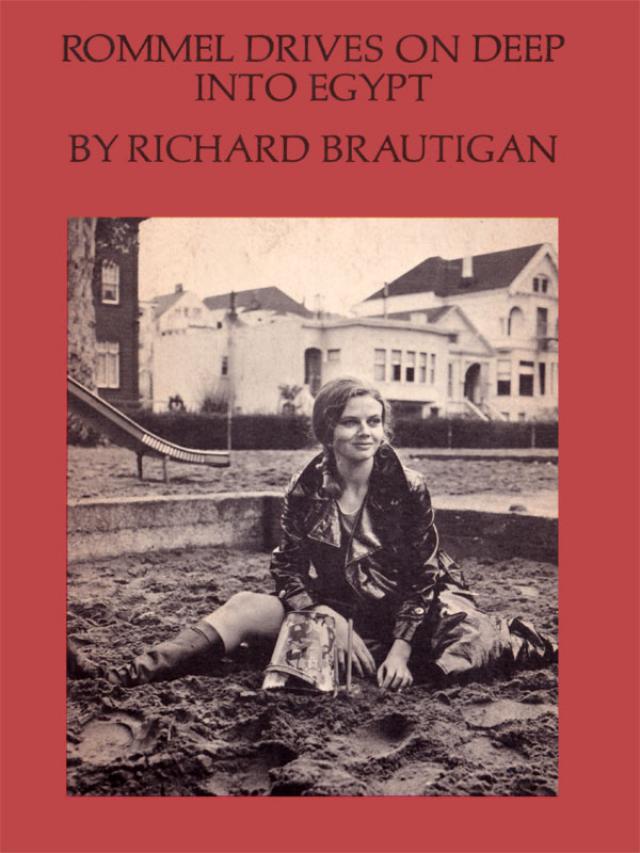
Rommel Drives on Deep into Egypt is Richard Brautigan's eighth poetry publication and includes 58 poems. The title of the book echoes a 1942 San Francisco Chronicle headline describing a successful operation by Rommel during the North African Campaign ofWorld War II. The six line title poem, reminiscent of Ozymandias, uses this headline to examine the transitory nature of both human endeavor and the reader of the poem. The photograph on the cover of the first softcover edition was taken by Edmund Shea in Golden Gate Park, San Francisco.
Read online
  • 52


Trout Fishing in America

Trout Fishing in America

Richard Brautigan

Richard Brautigan

Richard Brautigan was a literary idol of the 1960s and 1970s whose comic genius and iconoclastic vision of American life caught the imagination of young people everywhere. He came of age during the Haight-Ashbury period and has been called "the last of the Beats." His early books became required reading for the hip generation, and on its publication Trout Fishing in America became an international bestseller. An indescribable romp, the novel is best summed up in one word: mayonnaise.This new edition includes an introduction by the poet Billy Collins, who first encountered Brautigan's work as a student in California.
Read online
  • 51
The Tokyo-Montana Express

The Tokyo-Montana Express

Richard Brautigan

Richard Brautigan

His best work since 1967's Trout Fishing in America, this assortment of essays and short stories is like a photo album of Brautigan's annual journeys between his favorite city, Tokyo, and his home, Montana's Paradise Valley (PEOPLE, Nov. 3). His perceptions as a traveler flash-freeze into snapshots: a Japanese family running while carrying ice-cream cones, a sad woman on a Tokyo train, a bed salesman with no customers, six crows eating a truck tire in the dead of winter. The small adventures of country living are interwoven with the bizarre encounters of the ultra-urban environment. While fact and fantasy sometimes blur, the pages are spiced with shrewd insights, whimsy and musings. The author coyly disowns the autobiographical details, insisting in his preface that it is really the story of the "train" of the title. That conceit aside, the funny, fast-paced reading is worth the fare.
Read online
  • 45
Revenge of the Lawn, the Abortion, So the Wind Won't Blow It All Away

Revenge of the Lawn, the Abortion, So the Wind Won't Blow It All Away

Richard Brautigan

Richard Brautigan

Three unforgettable Brautigan masterpieces reissued in a one-volume omnibus edition.REVENGE OF THE LAWN: Originally published in 1971, these bizarre flashes of insight and humor cover everything from "A High Building in Singapore" to the "Perfect California Day." This is Brautigan's only collection of stories and includes "The Lost Chapters of TROUT FISHING IN AMERICA."THE ABORTION: AN HISTORICAL ROMANCE 1966: A public library in California where none of the books have ever been published is full of romantic possibilities. But when the librarian and his girlfriend must travel to Tijuana, they have a series of strange encounters in Brautigan's 1971 novel.SO THE WIND WON'T BLOW IT ALL AWAY: It is 1979, and a man is recalling the events of his twelfth summer, when he bought bullets for his gun instead of a hamburger. Written just before his death, and published in 1982, this novel foreshadowed Brautigan's suicide.Three unforgettable Brautigan masterpieces reissued in a one-volume omnibus edition. Originally published in 1971, these bizarre flashes of insight and humor cover everything from "A High Building in Singapore" to the "Perfect California Day." This is Brautigan's only collection of stories and includes "The Lost Chapters of Trout Fishing in America."
Read online
  • 27
The Abortion: An Historical Romance 1966

The Abortion: An Historical Romance 1966

Richard Brautigan

Richard Brautigan

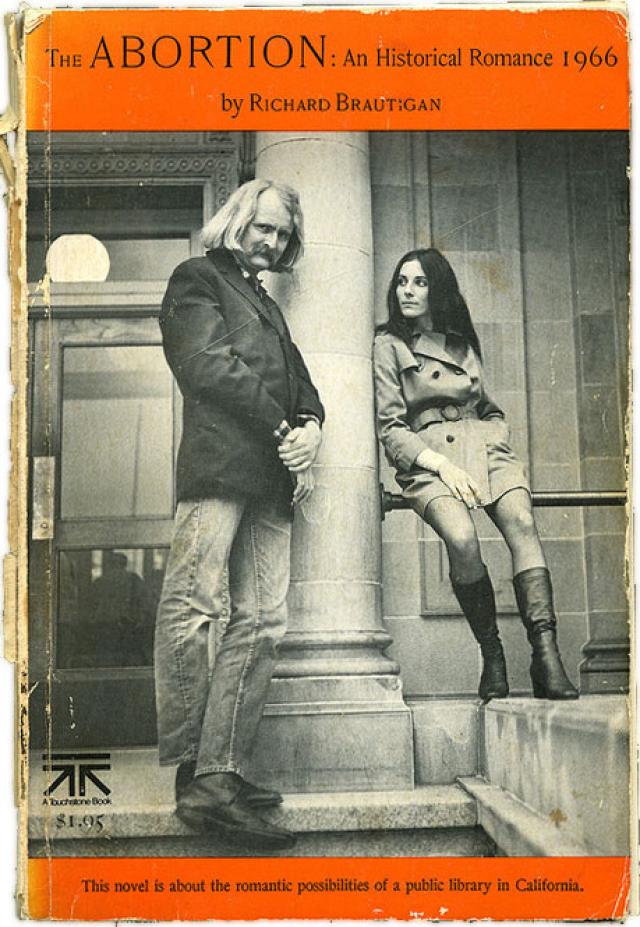
A reclusive young man works in a San Francisco library for unpublishable books. Life's losers, an astonishing number of whom seem to be writers, can bring their manuscripts to the library, where they will be welcomed, registered and shelved. They will not be read, but they will be cherished. In comes Vida, with her manuscript. Her book is about her gorgeous body in which she feels uncomfortable. The librarian makes her feel comfortable, and together they live in the back of the library until a trip to Tijuana changes them in ways neither of them had ever expected.
Read online
  • 24
Willard and His Bowling Trophies

Willard and His Bowling Trophies

Richard Brautigan

Richard Brautigan

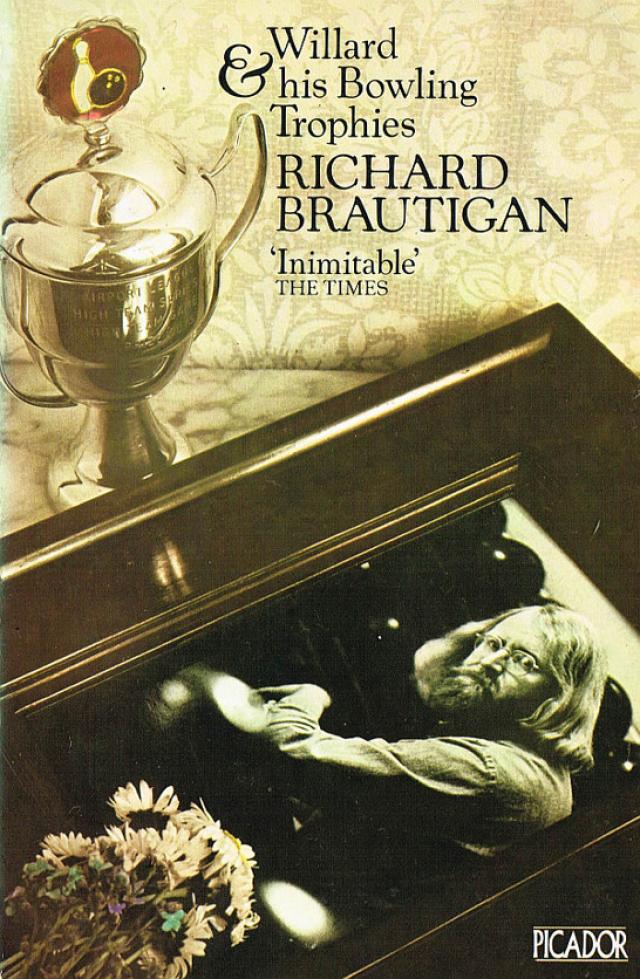
The story takes place in San Francisco, California in the early 1970s. The title character is a papier mache bird that shares the front room of a San Francisco apartment with a collection of bowling trophies that some time earlier were stolen from the home of the Logan brothers. The human tenants of this apartment are John and Pat, who have just returned from seeing a Greta Garbo movie in a local movie theater. Their neighbors are Bob and Constance, a married couple going through some rough times in their relationship. Because of their failing relationship, Bob becomes depressed. Meanwhile the Logan brothers are looking for their bowling trophies stolen three years earlier. The brothers have turned their happy life of bowling into a life of vengeance. 
Read online
  • 16
183