

Abuela dont forget me, p.1
Abuela, Don't Forget Me, page 1


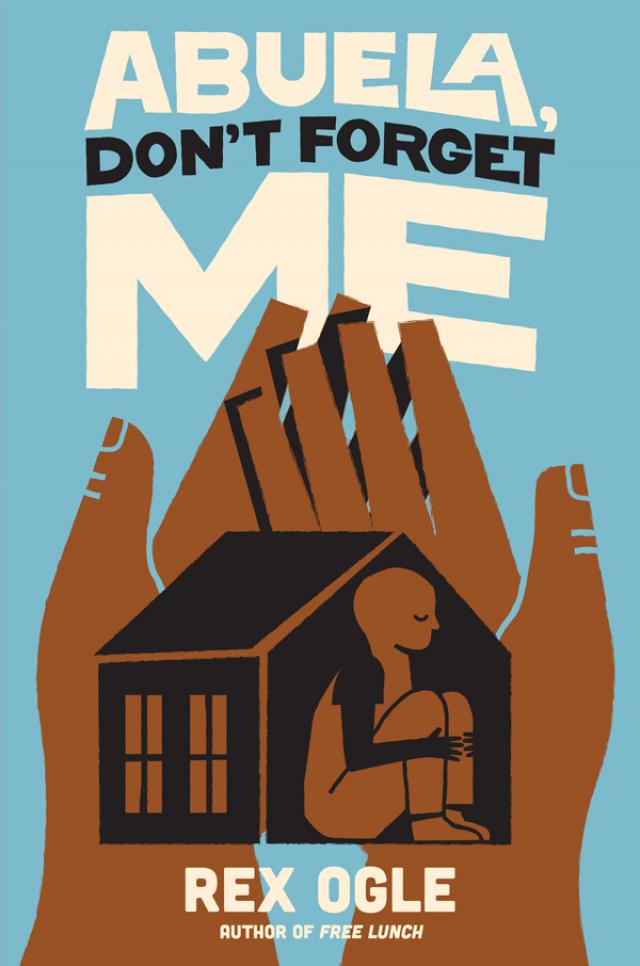
ABUELA,
DON’T FORGET ME
REX OGLE
CONTENTS
FOREWORD
1. ABUELA’S HOUSE
2. TO AND FROM
3. GIFTS AND FISTS
4. AN EDUCATION
5. SENIOR YEAR
6. THERE AND BACK AGAIN
7. NOW
Foreword
These days, when I call my abuela, the conversation goes in circles. She says, “How are you? How’s work? I’m so glad you graduated from college, education is so important. How are you? How’s work? I’m so glad you graduated from college, education is so important. How are you? How’s work? I’m so glad you graduated from college. . . .” When I try to break the loop or introduce a new topic, it doesn’t go well. Abuela becomes confused. “Excuse me? Sir? What time is it? I have to go.” My abuela is having a hard time remembering things because she—the most important person in my life—is living with dementia.
My abuela is the woman who encouraged me to read and write at an early age. Who bought groceries when my mom was unemployed and we were living on food stamps. She is the woman who offered her home to me when the violence at my mom’s became too much. Abuela is the woman who got me off the streets after my father kicked me out for being gay. She told me if I wanted to be a novelist, then I should pursue it, that if I worked hard, I could accomplish anything. By every definition of the word, my grandmother is an angel. My own personal fairy godmother. Abuela is the only parent I’ve ever known who showed me truly unconditional love, kindness, and support.
And now she is forgetting me.
Most days, she knows who I am. But sometimes, she struggles. She forgets that I left my job to write full-time. She forgets that I have two brothers. She forgets that I am married, that she was at my wedding in the front row in the first seat. And sometimes . . . sometimes she gets a little confused about who I am. Though she seems unfazed, her lack of recall is devastating for me.
But I don’t let her know that. I answer each and every question as if she were asking it for the first time. I talk slowly and with a buoyed heart, that I might bring some joy into her day. I try to show her the same love and compassion she showed me through all those years of my innocent childhood, my depressed (and angry) teenage years, and my anxiety-riddled college years. I can be strong for her, because she was always strong for me . . . though when I get off the phone, or leave her house, I cry long and hard, feeling like a forgotten child.
So I write. I sit down, write a few lines about my abuela, and revel in it, cherishing a recollection captured on a single page, losing myself in the echoes of the past. Reading them again, it’s like wrapping myself in an electric blanket (like the one Abuela put on my bed). As if I were back in Abuela’s guest room, scratch-scratch-scratching at my chicken pox, while she feeds me chicken soup with noodles. Or holding her soft brown hand in a library, as we pick out books. Or picking pecans in her backyard, as she tells me about growing up in Mexico with nothing to eat. Or her carrying me to safety, a swarm of angry geese chasing after us for running out of stale bread crusts to toss them.
Most of the poems I share with her. A few have left her confused about what it is she’s reading. But others? They make her clap her hands, and say, “I remember that pecan tree. I remember those horrible geese. You are such a good writer. Will you share more with me?”
She may forget. And one day, I may forget too. But for now, the memories are captured, like insects in amber, ready to survive for millions of years. My memories of a wonderful woman are written in words and verses and fragments in this book, unable to be unwritten.
And if it is forgotten, it can always be read again.
1
ABUELA’S HOUSE
hamper
The end of her hallway has
four doors for people, and
two much-smaller doors for elves,
opening into an empty space
the size of a laundry basket
or a little boy.
Built into the wall,
the wooden doors, smooth and lush brown,
like a Kit Kat milk chocolate bar,
or Abuela’s skin, silky and soft.
I am four-years-young
and still learning to speak up,
so ask, “What’s in there?”
Abuela, her lips curled at the corners, proud that I am hungry to know,
answers, “For ropa sucia, dirty laundry. A hamper.”
I laugh, rolling the new word in my mouth, like a gumball,
“Hamper? Hamper. Hamper!”
It feels the same on my tongue as hamburger and so
I squeal, “Hamper-ger!”
At times when no one sees me,
all eyes on my mom, shouting, ranting, screaming (again),
accusing others of this and of that,
I run away,
scamper to the hamper, like a mouse.
Opening the bottom door, climbing inside
into the darkness,
slowing my breathing, inhaling drywall and fabric softener,
hiding,
waiting for someone to remember (and seek)
me.
My giggles cannot be stopped,
they rush out like ants from a kicked mound, but
more joyous, like birds racing toward the sun.
Even if I bite my fingers to stop them,
the silly escapes,
“Hee-hee-hee-hee-hee-hee-hee-hee,”
refusing to be held back until
the top door of the hamper lifts,
Abuela’s face appears, warm
haloed by the hall light,
a heavenly angel to scare away the shadows,
asking, “Hola, hamper. Have you seen mi nieto, my grandson?”
This makes me laugh so hard,
I tumble out
onto her brown feet, sheathed in pastel blue cotton slippers,
as I squeal, like a delighted piglet,
“¡Estoy aquí! I’m your grandson!”
te amo siempre
When Abuela sees me, she tells me,
“Te amo. Te amo siempre.”
“What’s that mean?”
“It means, I love you. I love you forever.”
So I try to say it, “Tea ammo sim-pray.”
I slap my own face. “I did it wrong. I’m so dumb.”
“Do not hit yourself. You were very close. Try again.”
Then she repeats, slower for me, “Tay ya-mo.”
“Te amo.”
“Te amo siempre.”
“Te amo siempre. What’s it mean again?”
“I love you. And I will love you forever.”
“And I will,” she says, “forever.”
And she will.
No matter how many times I mess up.
ear—kiss—POP!
My mom refuses to live in the same town as her mom.
But when we visit Abilene,
or Abuela visits us,
the first thing my grandmother does
is embrace me,
her cheeks soft with powder, a silk kerchief tied round her neck,
and pulls my ear to her lips,
whispering, “Tu eres mi futuro,”
then, MWAH!!
sucking the air out with a kiss, making my ear hole POP!
I push her away,
squealing, giggling,
“Don’t kiss on my ear!”
She laughs.
Then kisses the other ear
the exact
same
way.
1214 South Jackson Drive
“I am lucky to have my own home,” Abuela tells me.
“In Mexico, we had nothing. One room, dirt floors, no running water.
A small shack for mi familia: my parents, my brothers and sisters, and me. But now . . .”
Now, her home is
red bricks, white trim, white wood beams, a white tin roof.
Three bedrooms. Two bathrooms.
Living room. Two-car garage.
Back and front yards.
Yellow grass in the winter, yellow grass in the summer
because green does not last
in the Texas hill country heat.
White walls in the halls, and bedrooms,
the living room paneled by wood (that isn’t real wood)
and a stone fireplace, with wood beams (that is real wood).
Throughout the house
the carpet, dark and deep red, scratchy
maroon, like a scabbed knee two days after falling.
Bathrooms and kitchen are laid with tan linoleum (that looks like tiles, but isn’t).
The kitchen is bright, like my Crayola crayon, “Dandelion.”
Yellow fridge, yellow oven, yellow stove
yellow and white checkered tablecloth, like a picnic basket blanket.
Though the countertops are the same color as
the tree leaves outside,
green, like the dreams of the envious grass below
wishing it wasn’t so thirsty
under the Texas sun.
from
Abuela rocks me in her arms
even as I squirm
like a worm.
“Do you know where you were born, mijo?”
“In the ocean! Agua! With clown fish!”
Her eyes, her smile, light up like the sun
as she shakes her head, “No. You were born here, in Abilene, Texas, at Dyess Air Fo
where your daddy was a soldier. Your mom is my daughter.”
“Nuh-uh! I was born in the sky, from black birds, and I flew with them
to the moon and back! We drank the stars like leche!”
“Your mom was young when she had you. Only twenty. She wanted you more than she wanted college, which was free, because her father, my husband, died for his country.
She was so beautiful then. Hair down to her waist.
She is beautiful still. Though her hair is shorter.
After you, she never went back to school.”
When Abuela speaks of my mom . . .
Her eyes, her smile, dim dark like caves at night,
her lips tighten into a thin line, forcing her mouth to say nice things
by speaking only facts.
But I am too young to know facts from fiction.
“My mom is a crow, my father is a mouse!
He only eats queso! And corn chips!”
Abuela rocks me in her arms again
trying to kiss my ear
as I squeal and wiggle
out of her arms
and run away
arms flapping toward the sky
trying to take flight.
mijo
Leaning over, around me,
Abuela is a parachute of gentle, soft smells and softer hands,
pressing her lips to my ear, saying,
“I love you, mijo.”
“What’s a mee-ho?!”
“It means, son.”
“I’m not the sun!”
“You are my first grandson, my daughter’s son. So you are my son too.”
“Say that then. Why say me-ho?”
Sun breaks in through the window, lighting her eyes,
brilliant brown, with flecks of green, like underwater in a swimming hole.
“Mijo is what my mamá called mis hermanos, my brothers,
so I say it to you,
not in English,
but my first language, Español.”
“What is my language?”
“You speak English,” Mom interrupts, her tone hard like an old hammer,
“and you are my son. Not hers.”
When my mom looks at her mom, eyebrows pointed in and down, furrowed and narrow,
Abuela bows her head to look at the floor,
and says nothing else.
names
With delicate precision,
Abuela writes my name on lined paper,
REX EARL OGLE III.
She hands me her pencil.
“Do you want to try?”
Snorting and giggling,
I write, CAT.
Abuela says, “That is not your name, silly grandson. Your name is Rex.”
“Your name is ’Buela.”
“That is what you call me. Me llamo es Catalina Caldwell.
Before I was married, I was Catalina Ignacia Benevides.”
“I can spell that!” I say.
I write CAT again,
my giggle growing to laughter.
Abuela adds more letters, so that CAT becomes CATALINA.
Before my eyes, Abuela shows me
how letters
make words
like magic.
chicken spaghetti
“Wha’cha making?!”
Abuela answers, “Chicken spaghetti.”
I shake my head, “No!
Silly ’Buela! Chicken doesn’t go in spaghetti!
Meatballs go in spaghetti. Meat! Chicken goes in chicken.”
“You can put chicken in different things. I like to put shredded chicken with pasta.
The recipe is from Reader’s Digest.”
“I don’t want chicken spaghetti.
I want tacos. Crunchy tacos with cheese. No lettuce or tomato.”
“Tomorrow. Tonight, we will have chicken spaghetti.”
“No! I don’t want it.”
“Have you ever tried it?”
I shake my head, “No.”
“Perhaps you should try it then.”
“It looks weird.”
“When I was a little girl, my family often went hungry.
We were lucky if each of us had one tortilla, with a little bit of arroz y frijoles, rice and beans.
You are lucky that I can offer you so much. Will you try it? For me?”
“One bite . . . for you . . . but I won’t like it.”
Her fork dips into the crockpot, returning with noodles, shreds
of white breast meat, dressed in red sauce, steaming with heat.
Abuela blows, so my tongue will not be scalded.
In my mouth, it is creamy, with a hint of pepper and sweetness,
a touch of Abuela’s home, a spice called cumin.
My eyes grow wide,
“Delicious! Can I have more?”
“Nah. You said you did not want any. I think I will keep it all for me.”
“’Buela! Please, just a little bowl? It’s my favorite in the whole wide world!”
I whine, and beg for what I did not want a moment before.
Her smile lets me in on her gentle trick.
“You can have as much as you want.
You will not go hungry—not while I live.”
por favor y gracias
“I need this,” I say, then louder,
“I NEED THIS!”
My little hands, shaking, holding
a small pink bear, a pleasant rainbow etched in red-yellow-green-blue on his white tummy.
“This is Cheer Bear, I need him so bad.”
I hug the plastic package, desperate to rip it open, free my cartoon friend, and take him home.
“’Buela! Did you hear me?”
She raises a finger to her lips.
“Shhh. We do not yell in stores. We do not make a scene.”
Like my mother, I think.
Abuela extends her hand to me.
Reluctantly, I give up the toy for her to see, adding, “He’s my friend.”
She studies the bear, then studies me.
“Your friend is not a boy, she is a girl.”
“No, that’s a mistake. He’s a boy, like me. I need him.”
“But he is pink.”
“Pink is good! Like strawberry cake, my favorite!”
She hesitates,
though I don’t know why
it is wrong for a boy to play with a pink toy.
But my joy
is her world,
evident in my fingers, as they reach up for love.
Abuela takes my right hand and kisses it.
“Mijo, need is different from want.
You need clean water and food and a roof.
A toy, you only want.”
“Then I want him!”
“Then what do you say?”
Confused, I speak,
“I want Cheer Bear?”
“You must say por favor. Please.”
“Poor flavor. And pleeeeeeeeeeeease!”
She places the toy in her shopping basket.
“And now you say . . . ?”
“I love you!”
She cannot hide her grin, though she tries to be stern,
“You say gracias. Thank you.”
“But I do love you.”
“This I know. But love is not gratitude.
You must be polite. Always say por favor y gracias. To everyone.
Even a cashier or janitor. Everyone deserves respect.”
I do not leave Abuela’s side in the air force base commissary,
eyes glued to my new friend,
trapped within plastic, imprisoned in a basket,
that I cannot have until he is paid for.
At the cash register, I shiver with desire
so eager to hold the Care Bear, as the cashier rings up
a toothbrush BEEP!
a notepad BEEP!
a lotion BEEP!
before finally moving Cheer Bear from conveyor belt to scanner BEEP!
Before he is lost in the brown plastic bag,
I grab him and hug him and squeal, “POR FAVOR Y GRACIAS!”
After she has paid, Abuela walks me outside,
opening her gift to her grandson, a pink bear,
so I can be the truest version
of me.






