Red traitor, p.1
Red Traitor, page 1


ALSO BY OWEN MATTHEWS
Fiction
Black Sun
Nonfiction
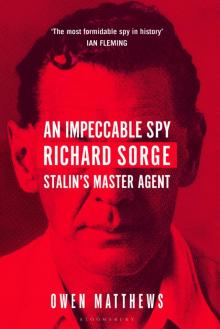
An Impeccable Spy
Glorious Misadventures
Stalin’s Children
This is a work of fiction. All incidents and dialogue, and all characters with the exception of some well-known historical and public figures, are products of the author’s imagination and are not to be construed as real. Where real-life historical figures and public figures appear, the situations, incidents, and dialogues concerning those persons are entirely fictional and are not intended to depict actual events or to change the entirely fictional nature of the work. In all other respects, any resemblance to persons living or dead is entirely coincidental.
Copyright © 2021 by Owen Matthews
All rights reserved. Published in the United States by Doubleday, a division of Penguin Random House LLC, New York, and distributed in Canada by Penguin Random House Canada Limited, Toronto.
www.doubleday.com
doubleday and the portrayal of an anchor with a dolphin are registered trademarks of Penguin Random House LLC.
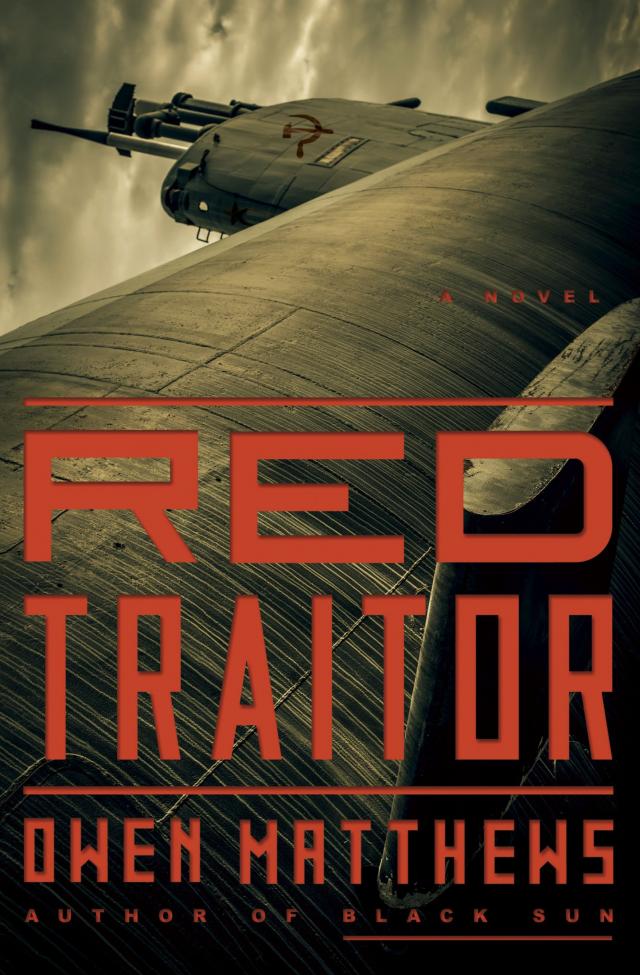
Cover images: (submarine) UMB-O; (hammer and sickle) Zoart Studio, both Shutterstock
Cover design by Michael J. Windsor
Library of Congress Cataloging-in-Publication Data
Names: Matthews, Owen, author.
Title: Red traitor : a novel / Owen Matthews.
Description: First edition. | New York : Doubleday, a division of Penguin Random House LLC, [2021] |
Identifiers: LCCN 2020051996 (print) | LCCN 2020051997 (ebook) | ISBN 9780385543422 (hardcover) | ISBN 9780385543439 (ebook)
Classification: LCC PR6113.A8914 R44 2021 (print) | LCC PR6113.A8914 (ebook) | DDC 823/.92—dc23
LC record available at https://lccn.loc.gov/2020051996
LC ebook record available at https://lccn.loc.gov/2020051997
Ebook ISBN 9780385543439
ep_prh_5.7.0_c0_r0
For Xenia, Nikita, and Teddy
CONTENTS
PROLOGUE
PART ONE
THE RESTLESS DEAD
PART TWO
SATAN IN A CAN
PART THREE
NOBODY WAS PUNISHED
PART FOUR
THE MAIN ADVERSARY
PART FIVE
THE HUNT FOR B-59
PART SIX
BATTLE STATIONS
PART SEVEN
THE SOLITARY TRUTH
AUTHOR’S NOTE
FURTHER READING
ACKNOWLEDGMENTS
PROLOGUE
ARKHIPOV
Severomorsk Naval Base, Headquarters of the Red Banner Northern Fleet of the USSR
Dawn, 4 July 1962
Breathe. Breathe, Vasily. Captain First Class Vasily Arkhipov fought his way out of his nightmare like a drowning swimmer struggling for the surface. Gasping down air, he forced his eyes open. Pale Arctic summer sunlight streamed through the thin curtains. He flexed his hands, cramped from clutching the damp sheets tangled around his body.
He inhaled, slowly. No submarine stink here. No smell of unwashed men and strong tobacco, no taste of sweet Navy tea in his mouth. No tang of molten solder, polymer sealant, hot oil, battery and reactor-coolant fumes choking your nose. No invisible poison in this air.
Arkhipov leaned over, fumbled for his watch, squinted to focus on the luminous dial. He followed the second hand as it ticked toward 0515. One year and one hour, precisely, since the reactor accident.
Eons had passed since that distant and only half-remembered horror. But there were times—more or less every night that Arkhipov refused to take the knockout pills the docs had given him—when he was still in the middle of it, time snagging back on itself and entangling him like seaweed.
It never felt like a nightmare. Not really. Rather, Arkhipov had the sensation of waking in a parallel and absolutely real world, located somewhere on the other side of sleep. A clamoring place of panic and screams. A familiar place of mayhem, steam heat, and fear, stuck on an endless loop like a scratched record. In Arkhipov’s waking world the dead were invisible. But he knew they were not absent. His restless dead were always present, always busily locked in their agonies, always ready to come and assert their claims.
The clock in the control room of Northern Fleet submarine K-19 had been electronic. It purred rather than ticked, the hands sliding over the minutes and hours smoothly, watch after watch. Arkhipov’s dream always began in that last moment of calm. The eerie silence of K-19, its futuristic smell. The metallic odor of the new instruments in their smooth, green-painted steel cabinets full of dials, glowing like a thousand eyes. And the quiet of the ship. Instead of the continuous, headache-making thud of a diesel engine, K-19’s brand-new nuclear reactor emitted a low thrum, deep and powerful. The Soviet Navy’s newest missile submarine cruised ninety meters below the surface of the North Atlantic as smoothly and quietly as a spaceship.
He would try to will that sliding second hand to stop. Arkhipov always knew what was coming but was powerless to speak, to warn the comrades as they settled sleepily into their stations at the beginning of the fateful morning watch of 4 July 1961.
A blankly dreaming instrument panel spread before the commander’s station. Arkhipov had just taken his post in the skipper’s leatherette chair. Officer of the watch, commander of the ship while his superiors slumbered. An awesome honor and responsibility, as the Political Officer never tired of telling him. In front of him, Postev, the lieutenant in charge of propulsion, was slumped at his station in his spotless engineer’s overalls, fighting sleep.
Pay attention, Postev, Arkhipov wanted to shout. Wake up! But his dream self remained relentlessly mute.
Within hours, Arkhipov knew, Postev’s young face would be scorched scarlet, the skin peeling as if scalded. The lieutenant would be screaming, and Arkhipov would be trying to hold him down while the medics struggled to cut through the thick rubber of his thermal suit to get a morphine syringe into him.
Wake up!
The dream would always fall into a familiar groove. The intercom light from the reactor control room blinks on. Red. Something urgent. Arkhipov snatches up the telephone in the communications panel and presses a switch.
“Sir? You’d better come. Quickly.”
A rising edge of panic in the duty sergeant’s voice.
Arkhipov and Postev sprint toward the reactor control center. The companionway is lit scarlet by red emergency lights spilling through the doorway. Yury Postev crouches forward, his face just inches from a dial labeled Reactor Coolant Pressure. The needle is vibrating violently, almost at zero. As Arkhipov watches, the needle settles on its restraining peg and goes still.
A klaxon sounds. Arkhipov feels a sickening tightness in his bowels.
“Shit,” says Postev, glancing over to another panel. Swearing on board is strictly forbidden. For officers, especially. Postev looks over his shoulder and hisses to Arkhipov. “Sir—we’ve lost coolant pressure. Both coolant pumps are out of action.”
Before Arkhipov can reply, the whole control panel blossoms with scarlet warning lights. A large panel over the controls blinks on, illuminating the words Safety Control Rods Activation Mechanism—SCRAM. The reactor is shutting itself down automatically. One by one, a few of the indicators go green.
“Did it work?” Arkhipov asks. The lieutenant doesn’t immediately respond as he swings from one instrument to the other, cursing as he goes.
“Postev! Is the reactor shut down?”
In reply the young officer simply straightens, white-faced, and points at a large dial marked Core Temperature.
“Control rods are down. Reactor successfully SCRAMed, sir. But look.”
The reactor’s temperature is climbing perceptibly.
“Residual heat, sir. The core will keep cooking at low power for about a hundred hours till it’s finally burned out. Without coolant, it’s going to melt down. Burn through the hull.”
“How long?”
In the four minutes since Arkhipov has been in the reactor control room, the dial has moved from 250 to 325 degrees Celsius, and is rising fast.
“Don’t know, sir. A few hours.”
* * *
—
Arkhipov hurries forward to the command deck. He struggles to keep his voice loud and steady. He sees his own fear reflected in the eyes of the men as they turn to him, the senior officer on the bridge.
Eyes that will remain on him, always.
* * *
—
Back in fitful sleep, Arkhipov turned restlessly in his bed. Under closed lids his eyes flickered, and his fists clawed at the sheets as though he were desperately seeking to escape. But the bedding only wound itself closer around him, tight as a shroud.
MOROZOV
Pioneers’ Ponds, Central Moscow
Dawn, 4 July 1962
Under the windows of Colonel Oleg Morozov’s apartment, the surface of Pioneers’ Ponds spread like a black mirror. Up above the rooftops a pearly gray was beginning to light the eastern sky. But down at water level darkness lingered, disturbed only by the single Cyclopean headlight of the first tram of the day as it rumbled down Malaya Bronnaya Street. In the apartment buildings that surrounded the park one or two lights flicked on.
Morozov’s uniform tunic hung over the back of a chair. On the desk that faced the window were a metal table lamp embossed with Soviet hammers and sickles, a copy of Novy Mir magazine, a stack of official reports carrying the stamp of the Soviet Ministry of Defense. Next to them stood a sawn-off brass artillery shell case full of cigarette butts and a Wehrmacht pressed-steel gasoline lighter. On a silver tray under the lamp lay a tiny curl of paper no bigger than a cigarette paper covered in tiny, almost undecipherable, typed script.
On the sofa, under a cocked lamp, Morozov hunched over, scribbling notes from a book held in his lap. His concentration was intense, interrupted only by the occasional whir of the building’s elevator and a faint stirring from the bedroom which made him freeze, listening. At length he snapped the book shut and reread the notes he had been making.
Morozov swore softly before crossing the room and crunching the paper into a ball and placing it in the ashtray. He flicked the German lighter and set fire to his notes and to the tiny strip of paper.
Once both were burned to ash, he leaned across the desk to open the window, flooding the room with chilly early-morning air. Morozov wore only a shirt with uniform breeches, and the dawn breeze bit fresh and clean through the smoke-filled study. But he sat on, oblivious to the draft that stirred the papers on his desk, holding a lit cigarette in his hand and watching the smoke stream out into the breaking day. At length he shrugged into his uniform tunic. The jacket was still snug on his muscular shoulders, but Morozov had to breathe in to button it down the belly. He moved into the hall and pulled on a pair of boots and a raincoat. Taking care not to wake his sleeping family, he closed the front door silently behind him.
Morozov was alone as he crossed the Ponds. Or almost alone. A street sweeper with a threadbare birch-twig brush worked his way down the sidewalk. On the corner of Yermolayevsky Lane, an elderly man paraded a wiry terrier. The pay phone on the corner was deserted.
The Colonel picked up the heavy Bakelite telephone receiver, deposited his two-kopeck piece in the slot, and dialed. He waited as the phone rang on and on.
“Yes?” A woman’s voice, thick with sleep, answered. “I am listening.”
Morozov hesitated before speaking, listening to the soft breathing on the other end of the line.
“Daria Vladimirovna? Forgive me for calling so early. I wanted to catch you before you left for work.”
“There is no Daria Vladimirovna here. You have the wrong number.”
“My apologies, citizen.”
Morozov replaced the receiver and hurried back home before his wife and daughter awoke.
The dog walker kept up his trudging pace. But instead of making yet another circle of the pond, he continued straight toward the Garden Ring. As he approached a parked Volga sedan, a heavyset man got out of the passenger seat to make room. The dog’s lead was taken from the old man’s hand. As he settled into the car, the driver deferentially held out the receiver of a radiotelephone.
“Sir—the Ears. They’re standing by.”
The man grunted in acknowledgment and spoke into the receiver.
“Hear me there, boy? Need a recording of the pay phone on the corner of Malaya Bronnaya and Yermolayevsky. Call made today at 0548. Bring it to my office. Half an hour.”
* * *
—
Half a mile across town, in the basement of the Central Telegraph office on Gorky Street, a young KGB lieutenant tore off a sheet of notepaper and set off at a trot down a subterranean corridor. He entered a low room filled with ranks of reel-to-reel signal-activated tape recorders, some turning, most not. Finding the right machine, he flicked the stop switch and marked the place with a white wax pencil. Then he pressed rewind and waited until the magnetic reel ran all the way back and its flapping end spun free. Cradling the reel to his chest, the officer sprinted from the room.
KUZNETSOV
Sagua la Grande Air Base, Cuba
Dawn, 4 July 1962
A dawn breeze off the sea woke KGB major Vadim Kuznetsov, bringing with it the corrupt, sweet smell of clear-cut undergrowth. Stirring jungle trees hissed like surf, and a cacophony of birds and insects started up a clamoring morning chorus. Kuznetsov kicked off his sweat-soaked cotton sheet, groped under the bed for his thermos, and thirstily swigged cold lemon tea.
In Cuba for nearly nine months and he still couldn’t get used to the cloying heat of the place, its indecent fecundity. And he still couldn’t get used to the rum. Unlike vodka, it didn’t taste like it was bad for you. Just a warm, sweet buzz as it went down with no warning of the revenge it would take in the morning. Sweet but dangerous. Just like Cuba itself, he heard himself quipping. More or less nightly.
Kuznetsov reached up to switch on the squeaking ceiling fan and flopped back down on his cot. The State Security apartment building was newly built of prefabricated concrete panels, as haphazardly fitted together as any structure in the Moscow suburbs. The furniture was Romanian, apparently a gift from the fraternal Securitate secret police to their Socialist brethren in the Caribbean. The red pine was already splitting from the damp. There was only one air-conditioning unit in the whole military base, a hulking Carrier unit in the villa of a Batista-era plantation owner which now served as the officers’ mess and bar.
The bar. Kuznetsov ran a sweaty hand down his face and beard. Last night. Whose idea had the goodbye party been? Not his. One of the Cuban Air Force colonels, doubtless. Kuznetsov remembered guitars, scratchy Cuban Revolutionary songs on the record player, a fog of cigar smoke, a new batch of suspiciously pretty waitresses. Did he even…dance? Local girls were off-limits for Kuznetsov and his fellow KGB officers. So he’d drunk too much instead. As usual. And maybe danced. Just a little. But only to show fraternal solidarity.
Kuznetsov’s suitcase stood, packed, by the door. A day’s ride in a bouncing Volga sedan would bring him to Havana in time to catch the evening flight. This time tomorrow, after stopovers in Madrid and maybe Frankfurt, he’d be in Moscow. Kuznetsov had been surprised, when he first came to Cuba, by how much he missed his hometown. Missed Moscow’s solidity, the city’s trundling pace, the dour lack of color and of histrionics. Now he was surprised by how much he didn’t want to return, even for a couple of weeks of consultations with his bosses in the Lubyanka. Kuznetsov remembered some foolish song he’d heard the Soviet air crews singing: “It’s good there, where we’re not at.”
He reached for his watch—a chunky Raketa chronograph he’d won in some bet from a drunken MiG pilot. The commander’s office would soon be open. It was time to retrieve the progress reports he’d spent the last week diligently typing up for his bosses in Moscow from the fireproof safe in his chief’s office.
Giving up any hope of getting back to sleep, Kuznetsov rose and dressed. He was particularly proud of the beige cotton tropical suit he’d bought in a commission shop in Havana, made by Haspel in New Orleans. It made him look like a capitalist exploiter, his fellow KGB men had joked. Hardly suitable for the corridors of the Committee for State Security in Moscow. Fuck them. Kuznetsov liked the look of himself in his suave suit. He enjoyed looking like a foreigner. As he buttoned his shirt, Kuznetsov looked out over the newly built base. When he had arrived the previous winter, the place had been a sea of uprooted tree trunks, mud, and ruts that harbored angry, homeless snakes. Now the ground was raked flat, crisscrossed with asphalt roads and rows of prefabricated huts and hangars.
In the middle distance, rising slightly above the tree line, was the camouflage-painted outline of a radar station, the antenna pointed like a cupped ear toward the northern Caribbean—and, just ninety miles away, the United States of America.
VASIN
Frunze Embankment, Moscow
Dawn, 4 July 1962
Vasin woke hungover, his neck smarting from sunburn and his face rubbed raw by the sofa cushion. His wife, Vera, had chosen the garish East German sofa bed, the newest and most expensive one available. But the bristly nylon plush tortured Vasin nightly.