Cravens war the fatal bl.., p.1
Craven's War: The Fatal Blow, page 1
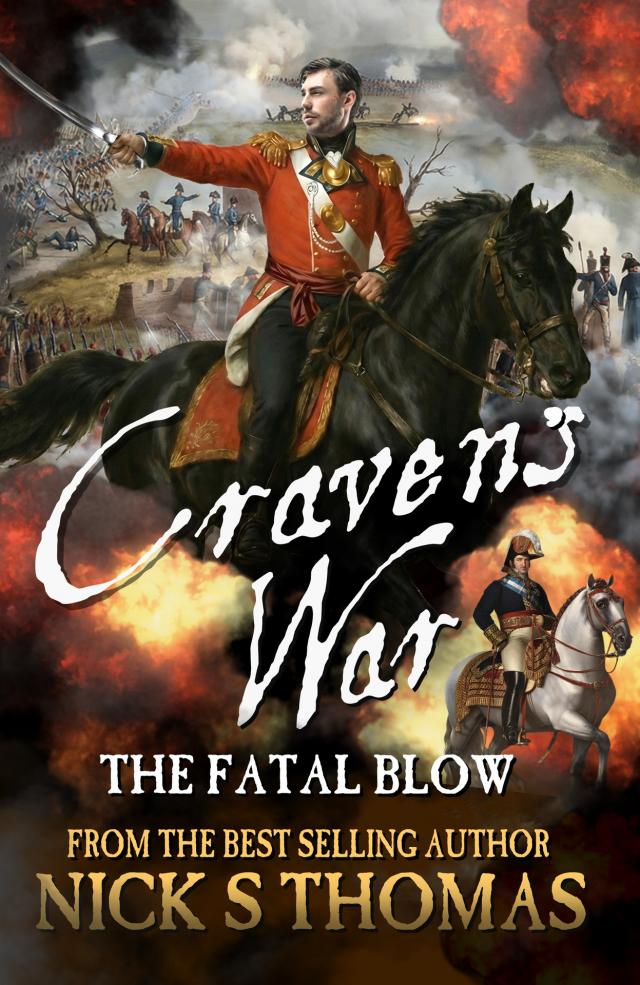


Craven’s War:
THE FATAL BLOW
By Nick S. Thomas
Copyright © 2026 by Nick S. Thomas
Published by Swordworks Books
All rights reserved. Without limiting the rights under copyright reserved above, no part of this publication may be reproduced, stored in or introduced into a retrieval system, or transmitted, in any form, or by any means (electronic, mechanical, photocopying, recording, or otherwise) without the prior written permission of both the copyright owner and the above publisher of this book.
This is a work of fiction. Names, characters, places, brands, media, and incidents are either the product of the author's imagination or are used fictitiously. The author acknowledges the trademarked status and trademark owners of various products referenced in this work of fiction, which have been used without permission. The publication/use of these trademarks is not authorized, associated with, or sponsored by the trademark owners.
GET IN TOUCH
If you’d like to receive my latest news, special offers and free books then please sign up for the Swordworks Books newsletter. It’s a great way of keeping up to date with my latest projects, as well as getting samples and free books from my friends at Swordworks throughout the year. Click on the link and join up today. You can also visit the official website here:
Official website: swordworksbooks.com
Prologue
The French army in the South under the command of Marshal Soult was soundly beaten at Orthez despite their strong defensive position. Soult is not in retreat as he tries to regather his strength and take up new positions with which to resist Wellington’s advance. Napoleon continues to fiercely resist the allied advances in the North with such ingenuity and success it threatens the future of the entire Coalition. Wellington must make progress in the South, for he knows that a stalemate will only give Napoleon room to manoeuvre both politically and militarily.
Yet as the Anglo-Portuguese army presses ever deeper into Southern France, supply lines became stretched, and the danger all around them grows. They are in a hostile land now, with a population that could turn against them in any moment. It is a powder keg the likes of which Major Craven has not seen since the disastrous eruption of the powder magazine at Almeida almost four years ago.
Torrential rains hamper the supply of Wellington’s army further, and Soult continues to gather up his strength. But where will Soult go? Where will he make his stand? To the West at the port city of Bordeaux, or to the East to Toulouse, the regional capital of the South of the country?
Wellington’s army is playing a dangerous game, and all the while Napoleon seeks to undermine them as he sets plans in motion that will see the British Army expelled from Spain, it’s staging ground for the invasion of France. Napoleon has not been defeated, and there is everything to fight for.
Chapter 1
Craven peered cautiously around the corner of a house on the edge of a French village. They were well past Orthez now, where they had dealt a deadly blow to the enemy upon the battlefield only days before, and deep within the retreating and disordered enemy retreating lines.
“Is he there?” Paget asked impatiently.
But Craven said nothing as he studied the scene before him with his back against the wall. He was accompanied by just twenty-five of the Salford Rifles, and they travelled light, with only their weapons, ammunition, and greatcoats to keep them warm from the bitter winter chill. The village lay quietly in the rolling countryside Northeast of Orthez, where the land began to lift into soft, wooded hills and narrow valleys threaded with winter streams. The fields were stripped bare after harvest, their earth dark and heavy with rain, and the hedgerows stood as tangled, thorny silhouettes against the pale winter sky.
The houses were built of pale local stone and timber, roofed with red clay tiles darkened by age and moss. Smoke drifted lazily from low chimneys, carrying the smell of oak and chestnut wood, and yet there was no sign of the local people. The farmers, labourers, and their children one would expect to find. The only movement was that of weary French soldiers. Narrow lanes wound between the buildings, muddy from weeks of winter rain and churned by the wheels of carts and soldiers’ boots. There was no livestock in sight either, for it had surely been slaughtered to feed the passing army.
At the village’s heart stood a small Romanesque church, its bell tower squat and weathered, the stone softened by centuries of wind and rain. The churchyard was enclosed by a low wall, the ground uneven and slick, with bare trees creaking in the winter breeze. A simple stone cross leaned slightly, worn smooth by time. Two-dozen French soldiers lay about in the courtyard, and Craven could hear more inside the church and nearby houses.
“Sir.” Paget tapped Craven’s shoulder and directed his gaze to a column of French soldiers a few hundred yards to the West. Almost a hundred French infantry moved in a disorganised formation. Some wore greatcoats, others were wrapped in their blankets, and some made do without, displaying their campaign worn tunics. Paget looked deeply concerned, but the Frenchmen paid Craven and his companions no heed, for at such a distance they were indistinguishable from the French. In fact, half of Craven’s party wore greatcoats they had taken from the enemy. It was easier and quicker to take such equipment from the enemy than to wait for the British supply lines to catch up. A man would have to be within two hundred yards or less to identity them as British soldiers, and few were even paying much attention as they pressed onwards for the safety of whatever position Marshal Soult would next make a stand. The landscape itself seemed just as subdued as the Frenchmen. Bare branches, grey skies, and low clouds hanging over the fields.
“We should turn back whilst we still can,” insisted Matthys.
“Not until we have that bastard,” replied Craven scathingly.
He looked ahead to paths they might take and nodded for the party to go. They marched on brazenly and without any caution, hoping to not draw attention to themselves. For the French army was scattered over many miles of rolling hills, and few were paying attention so long as they did not cause trouble. Paget looked back to the village they had just left and not a single Frenchmen even peered in their direction.
“The enemy walk amongst them and they have no knowledge nor care to find out,” he muttered.
“Why should they care, what danger do twenty-five British soldiers present to them?” replied Matthys.
“Plenty, and you know it,” insisted Craven.
“And if he has gone back to Spain?” Moxy asked.
“He won’t. He will be too terrified to do so, for there are those who witnessed his treachery, and he knows it.”
“But would he not be safe in Spain, Sir?” asked Paget.
“How do you think his men would feel, knowing that he betrayed his allies and his companions to the French? They’d tear him apart before we ever got our hands on him.”
They were referring to Jacabo, the Spanish officer who had betrayed them to the enemy and cost them the lives of several good men, and it would have been many more if it had not been for the tenacity of Craven and his companions to thwart his plans. On they went, keeping their distance from the French columns and meandering on as if they were part of the retreating French army. But as they came up and over the next ridge, Craven stopped them and took out his spyglass. He studied the scene carefully. A dozen French soldiers were filling their canteens from a stream. Craven panned past each man before stopping and looking back at one man in particular. The man wore a thick greatcoat and had his back to them. Craven studied him carefully, waiting and watching. Finally, as he finished drinking, he turned about, and Craven smiled as he recognised him instantly.
“I’ve got you,” he smiled with glee.
“It is him?” Matthys asked
“It is!” Paget replied, excited and too loudly.
Craven scowled at him, but his voice had fortunately not travelled afar enough to attract attention. He wiped raindrops from his spyglass to get another look to be sure. The rain was frequent. Steady, soaking showers rather than storms, and so there was rarely a time when they were fully dry and warm these days. Keeping powder and cartridges dry was a perpetual challenge.
“It will be very dangerous to go after him,” Matthys said.
“He is right. Nobody is looking at us, but after the first shot is fired, they surely will be,” added Moxy.
Craven looked to Matthys’ bruised and swollen face, injuries he had suffered whilst a prisoner of the enemy, and Jacabo was to blame for it. He looked across to Bunce who was in no better shape from the ordeal.
“What do you say?” Craven asked him.
“I want him dead,” replied Bunce coldly.
Paget grimaced, for it was a difficult thing to listen to. To hear his fun-loving old friend reduced to such bitter hatred.
“He is still an officer of the Spanish army,” noted Matthys.
“And?” Craven asked.
“And so it is an offence to do him harm.”
“He is a traitor who is working with the enemy,” snapped Bunce.
“And it is our duty to ensure he is arrested and put on trial,” replied Matthys.
“Trial?” Craven scoffed.
“He is an enemy combatant and should be treated as such,” insisted Bunce.
Matthys backed down and would press no further.
“How are we going to do this?” asked Craven.
“Wait until dark and then set upon them,” replied Paget.
& nbsp; But Craven was already shaking his head.
“By nightfall they could have made it another ten miles and vanished amongst the rest of Soult’s army. We have them in sight, and we must take our shot whilst we have it.”
“Get me in range, and I will see it done. We are not far short,” offered Moxy.
“Two miles, that is how far the shot will be heard for, perhaps more on this rolling low ground,” replied Matthys.
“We will bring a world of trouble down upon our heads,” replied Bunce.
“I want solutions, not problems,” snapped Craven.
“Cold steel,” replied Bunce calmly.
They all looked to him in surprise.
“They are halted for now, but soon they will press on for the bridge, there.” He pointed to a small stone bridge ahead. The stream was narrow enough that one could wade it easily enough, but every soldier would avoid such an experience if they could, for they were already wet and cold enough, and frostbite was ever a concern.
“You want to cut them off and take them in hand-to-hand combat?” Craven asked.
“It is the only way. Quick, and quiet. We see it done, then we leave this place and speak nothing more of it.”
Craven was surprised, but nobody else offered up a plan.
“And if we are discovered and all the enemy soldiers in the vicinity descend upon us, what then?” asked Matthys.
“Then we shall run, for no Frenchman wants to travel South after the beating Wellington gave them,” replied Craven.
Matthys sighed as he knew they were taking a great risk.
“We’ve come this far, don’t give up on me now.”
“Never,” admitted Matthys as he sighed once more, knowing that devotion could one day be his downfall.
“You are sure you want to do this, Sir?” asked Paget.
“We have a shot, and we will take it. That bastard must not only pay for his treachery, but we must stop him before he does any more damage.”
“More?”
“He knows a great deal about our army which he might share with the enemy, and he might encourage other Spaniards to join him, or at least undermine our relationship with the Spanish, which is already strained,” Matthys explained to Moxy.
“The best outcome is for that man to die here today, and the world never hears anymore of it.”
“And so, he will not see justice for his crimes?” asked Paget.
“Is death not justice enough?” Bunce said coldly.
“Better the Spanish people never know of this dark day,” replied Craven.
“Perhaps if it is so dark, we should not see it at all?”
Craven gazed at him angrily.
“It is not our deeds that are dark, Mr Paget, but the treachery of that Spaniard!”
“If we are going to do this, we must do it now,” insisted Moxy.
Craven looked around to the faces of his companions for just a moment, and he could tell instantly that they were all with him, in spite of any reservations.
“Then lead the way.”
Moxy led them on. Their rifles were slung as they continued on with a seemingly relaxed and weary look. Yet they subtlety watched everything around them and on edge, expecting to find trouble at any moment. Craven’s eyes were upon Jacabo and the French party he was travelling with, though he kept his head forward as to not be seen gazing upon them.
“Why have they not moved?” Moxy asked.
“They rest before going on, for why would they be in a rush?” replied Craven.
“He could have gone back to Spain and forgotten all of this.”
“Perhaps if he had killed you, Matthys, and Barros, to leave no evidence behind. But with the witness statements of three officers to speak on his treachery, he would hang.”
“Even being an officer of the Spanish army?”
“How else do you think he would be treated once they knew of what he has done? We might not be able to hang him, but his own people would see to it.”
“Even a rumour would be enough to see it done. You saw what the Spanish people were capable of against those who invaded their country, or to those who betrayed it,” added Matthys.
“Ditch your shakos. We cannot afford to be recognised.” Craven ordered.
Moxy and a few others who were wearing simple woollen caps were fortunate enough to keep their headgear, whilst everyone else threw them down into a pile.
They went on, and to everyone’s surprise they reached the tiny bridge without incident. No other French troopers were heading their way, but there were tracks in the mud showing where many had recently passed through. The bridge was not even wide enough for many carts to cross. It was barely twenty feet long to make the narrow crossing over the stream. It was constructed from wood and looked to be very old and creaked violently as Moxy stepped upon it. There were no walls, for it was merely a ramp across the small gorge.
“Take a rest, gather water, and look lazy.” Craven turned back and forth to carefully assess their surroundings whilst pretending to merely be in conversation. They had only just settled down when Jacabo’s party started to move, heading towards the bridge just as Bunce had predicted.
“You should be out of sight. If Jacabo recognises any of us, we may not get another chance,” insisted Matthys.
“Officers on me. Moxy, you will take it from here. Do not fire unless you have no choice. Let them get amongst you before you strike. We will be with you when the time comes.”
“Yes, Sir.”
Craven led the officers down a shallow embankment on the far side of the bridge to gather water or at least pretend to.
“We play a dangerous game,” whispered Matthys.
“Always,” smiled Craven.
They could hear the clatter of the equipment of the approaching soldiers now, and the French voices chatting back and forth. Craven was partially concealed where he had dropped down by the side of the stream, but he could still not risk turning about and drawing attention to himself. He hated not being able to see what was coming and lacking any control over the situation. The enemy were almost upon them, and they still seemed to approach without any inclination of the danger ahead. One Frenchman called out loudly as if to ask a question.
“He asks if we know where they can find some food,” whispered Paget.
Craven shook his head as there was no way to answer nor to tell Moxy and the others what to say, for the enemy were too close upon them. Moxy simply shrugged as he turned away and ignored the man, and yet that only seemed to anger the Frenchmen who repeated his question in an angrier tone.
“Come on, Moxy,” muttered Craven, praying the Welshman could pull it off.
“Je ne te dois rien, connard.”
Paget shook his head in amusement, barely restraining himself from bursting out with laughter. Bunce smirked, too. Craven had no idea what the Welshman had said, but there was no doubt a French speaker would know and not find it kind.
The Frenchman took a swing at him, but Moxy ducked under. The man lost his balance and plunged into the cold winter stream. His companions roared with laughter.
“You, I know you,” declared Jacabo as he took a better look at Moxy. His companions soon became suspicious upon hearing the English language.
“Now!” Craven roared.
Moxy swung his rifle from his shoulder and smashed the butt into the stomach of one of the Frenchmen, and then holding the muzzle in two hands swung it like a great club. He caught a second man on the jaw, breaking his neck with the brutal blow.
“Un Anglais!” cried another.
Craven ripped his sword from its scabbard and leapt up the embankment as a brawl erupted. He stormed towards Jacabo who was struggling to draw his sword in a panic. Craven reached him before he could draw out the blade, which seemed to be stuck firmly in its scabbard. He smashed the ward iron into the traitor’s face, grabbing him by the collar and throwing him to the ground.
“Sir!” Paget cried.
Craven followed his gaze. The man who had plunged into the water had now stepped up above the surface and taken aim at him. Paget took a running jump and launched himself at the man, but not before he could pull the trigger. The priming powder in the pan flashed, but to Craven’s relief the charge in the barrel did not ignite, for it had been doused by water. Paget crashed into the man a moment later, sending them both splashing into the stream once more. Craven caught a glimpse of movement out of the corner of his eye and noticed the butt of a musket being thrust towards his face. He leapt aside to save himself but was tripped by the man’s foot and plunged into the mud. He managed from his back to thrust up into the man’s body and run him through before he could do him anymore mischief.