Burning justice, p.1
Burning Justice, page 1
part #6 of Innocent Prisoners Project Series


PRAISE FOR MARTI GREEN
“Marti Green’s look at the potential for abuse and corruption in the privatized, for-profit juvenile justice systems across America is taut, edifying, and, at times, terrifying. The thought that some of the terrible things described in this book really happened to youngsters charged with minor offenses made my skin crawl. This is an important novel as well as a top-notch thriller. I’d recommend it to anyone.”
-Scott Pratt, bestselling author of Justice Redeemed, on First Offense
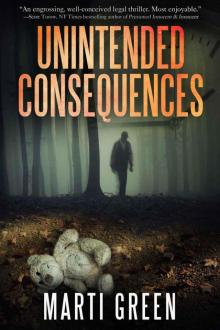
Unintended Consequences is an engrossing, well-conceived legal thriller. Most enjoyable.”
-Scott Turow, New York times best-selling author of Presumed Innocent
“This one will grab you by the neck from the very first page.”
-Steve Hamilton, Edgar Award-winning author of Die a Stranger, on Unintended Consequences
“A wonderfully clever plot, intriguing characters, and twists at every single turn—The Good Twin is better than good…it’s a great read!”
—James Hankins, bestselling author of The Prettiest One on The Good Twin
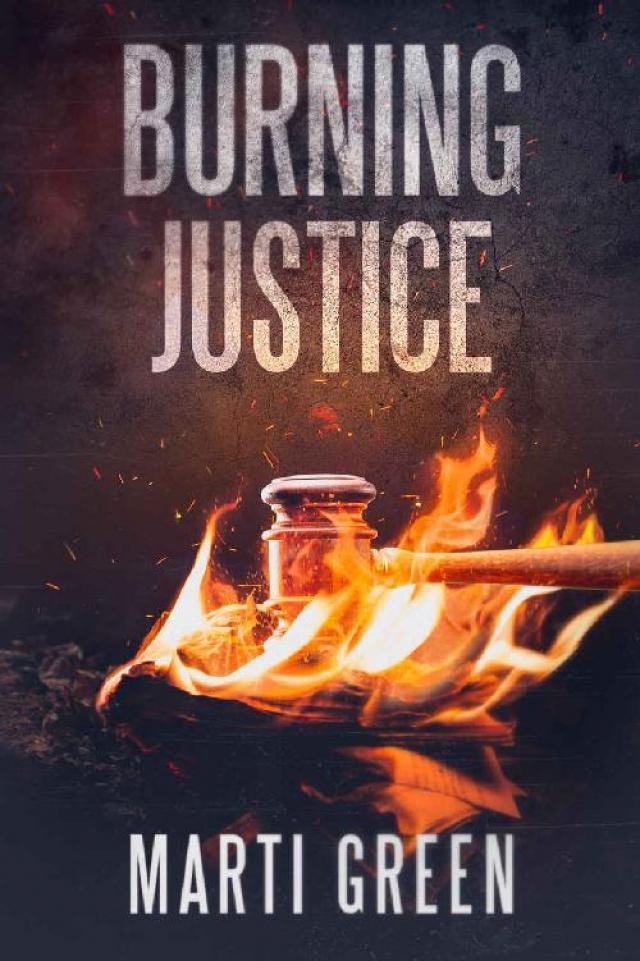
BURNING
JUSTICE
OTHER TITLES BY MARTI GREEN
Help Innocent Prisoners Project Series
Unintended Consequences
Presumption of Guilt
The Price of Justice
First Offense
Justice Delayed
The Good Twin
BURNING
JUSTICE
Marti Green
Yankee Clipper Press
This is a work of fiction. Names, characters, organizations, places, events and incidents are either products of the author’s imagination or are used fictitiously. Any resemblance to actual persons, living or dead, or actual events is purely coincidental.
Copyright © 2019 Marti Green
All rights reserved.
No part of this book may be reproduced, or stored in a retrieval system, or transmitted in any form or by any means, electronic, mechanical, photocopying, recording, or otherwise, without the express written permission of the publisher.
Published by Yankee Clipper Press, Florida
Cover design by Creativindie
Printed in the United States of America
Dedicated to my father, Simon Silverman
My mother, Ruth Silverman
And my sister, Judith Greenfield
You all have a place in my heart no one else can fill
You are dearly missed
Chapter
1
1998
Becky Whitlaw sat in the old rocking chair, its white paint peeling, slowly moving back and forth. The front porch needs painting, too, she thought, staring down at the wide planks lit only by the full moon. The chirping of cicadas broke the silence surrounding her. Inside, her three children were fast asleep—four-year-old Benji, two-and-a-half-year-old Danny, and the baby, sweet Lacy, just ten months yesterday. Becky was twenty-three years old and felt like eighty. Once, the boys all thought she was the prettiest girl in school. Now, when she passed by a mirror, she was shocked to see how haggard she looked. Her formerly blond hair had turned a mousy brown and hung limply to her shoulders; her green eyes that once sparkled like emeralds when she flirted with a boy now looked lifeless.
She picked up a bottle of Real Ale’s Devil’s Backbone from the floor of the porch and took a swig. She frowned as it went down—despite the night chill, the beer was already starting to turn warm. She preferred it icy cold. Moments later, she saw the headlights of a car enter the long, gravel driveway to her house. When it reached the end, the door opened, and a woman stepped out, dressed in a warm parka over flannel pajamas.
“Jesus,” the woman said as she walked up the porch steps. “It’s freezing out here. Can’t we go inside?”
Becky shook her head, then handed her friend a beer as she sat down in the second rocker.
“What was so important that you dragged me out of bed?” Marci Brand asked.
“I just needed company, that’s all.”
Marci looked over at her. “You okay?”
Becky’s eyes misted up, and soon tears began to roll down her cheeks. “Today’s our anniversary.” She paused, unable to speak. Finally, she said, “I just miss him so much.”
Marci leaned over and picked up Becky’s hand. “Of course you do, honey. It’s only been nine months.”
It still seemed impossible to Becky that Grady was dead. They’d been together since her sophomore year in high school and married as soon as she’d graduated. The accident was her fault. If she hadn’t sent Grady to the all-night drugstore for baby aspirin, knowing how tired he was, knowing how exhausted they both were from sleep-deprived nights with a new baby, knowing how slippery the roads were from the drenching rain, he wouldn’t have driven off the road and down the embankment. Instead, it would be Grady on the porch with her now, strumming his guitar and singing a country ballad, not Marci, looking at her with a face full of pity.
“The kids giving you a hard time?”
Becky shrugged. “They’re kids. They can’t help it.” Becky knew that wasn’t true. If she were a better mother, she would be able to control them. She wouldn’t scream at their incessant whining, their battles with each other over the television and their toys. She wouldn’t look at them and think how much easier her life would be if they hadn’t been born. If she were free, she could go to college, have a career. Not be stuck in a dead-end waitress job, wishing it was she who had died.
“You want me to sleep over tonight?”
“No. Just stay with me a little longer.”
And so, Marci did. She stayed until they’d finished the six-pack, and Becky sent her off. “I’ll be fine now,” Becky said as she walked Marci to her car.
After she watched the taillights recede, the car kicking up dust in its wake, a wave of loneliness washed over Becky, and once again, tears washed down her cheeks. She wiped them away as she walked back into the house, angry at herself for not being stronger. She stepped inside and looked around. The small ranch home was filled with secondhand furniture, once presentable but now falling apart from her children’s abuse. Toys littered the living room floor, but she felt too tired to pick them up. Tomorrow, she thought. But she knew tomorrow, they’d just mess them up again. She hated her waitress job, working from five to midnight, but at least it got her out of the house, away from the constant noise. Some weeks, it paid barely enough to cover the babysitter.
She glanced down the hallway toward her bedroom. It was past two in the morning, and the baby would awake by six-thirty. She needed to get some sleep. Still, maybe one more beer would be okay. She was still too wound up. It would help her fall asleep.
She opened the refrigerator door and muttered, “Shit.” No beer. She hesitated only a moment, then pulled out the freezer drawer and removed the bottle of vodka. She reached for a glass and poured an inch into it, stopped, then poured another two. She headed into the living room, then settled back into the couch and turned on the television.
The smell of smoke woke Jake Johnson. Even in winter, he always slept with the window open, at least a little, and his nostrils twitched from the odor. He glanced at the clock on his nightstand, saw it was six-eighteen, then lifted himself from the bed, careful not to wake Maddie, his wife going on forty-two years. He went to the front door, and when he opened it, saw clear through the dawn that Becky Whitlaw’s house was on fire. He turned and ran back to his bedroom.
“Call 911!” he shouted to his sleeping wife as he slipped on his pants.
Maddie’s eyes shot open. “What? What’s happening?”
“Becky’s house is on fire. I’m heading over there.”
Johnson slipped on his shoes and bolted out of his house. There was a good three hundred feet between his home and his neighbor’s, but he reached the front porch in seconds. Becky stood there, her face blank, her clothes covered with ash, her bare feet bleeding from cuts. Reddish-orange flames were visible through the windows.
Johnson took Becky by the shoulders and turned her to him. The roar of the flames forced him to shout. “Where are the children?”
Becky dropped to her knees, covered her face with her hands, and began wailing. “My babies! My babies . . . they’re inside. My babies!”
Suddenly, she sprung up and ran toward the front door.
Johnson sprinted after her and pulled her back. The intense heat was almost suffocating. “You can’t go in there. Maddie’s called the fire department. They’ll be here any minute.”
Becky twisted away from him, ran down the steps to the yard, and picked up a rock. She ran to the end of the porch, then threw it into the bedroom her children shared. Instantly, flames burst through the window with a loud whoosh. Once again, she fell to the ground and sobbed.
The black smoke made it hard for Johnson to breathe. He lifted Becky from the ground and pulled her away, just as he heard the sirens blaring from fire engines. Moments later, two fire trucks pulled into her driveway. Three firefighters jumped out and began uncoiling the hoses while one firefighter, equipped with an air tank and a mask covering his face, heavy gloves on his hands, opened the front door, then disappeared into the black smoke. Minutes later, he exited, holding in his arms Lacy’s lifeless body.
Johnson held Becky in his arms as she cried into his chest. “It’s my fault. It’s my fault
“What do you mean?”
She pulled away from him, looked over toward her dead daughter, then back at her burning house, and just stared.
Chapter
2
Irving Howe and Sam Miner entered the burned remains of the Whitlaw house. Howe was the fire chief of Glen Brook, Texas, population 3,213, three less than it had been two days earlier, before Benjamin, Daniel and Lacy Whitlaw died in the fire that had barreled through their home. He’d spent more than twenty years battling fires. Miner, a fire captain in Fort Worth, was known as one of the best fire investigators in the state.
Together, the men moved through each room, collecting samples of burned objects and taking photographs. The lab results later confirmed what the two men already suspected: this fire had been deliberately set.
Sheriff Mike Duncan knocked on Sarabeth Travers’s front door and waited patiently for his knock to be answered. Becky had been staying with her mother ever since the fire ten days earlier—that is, since she’d been released from the hospital. She was in shock, the doctors had said. The few burns on her weren’t serious, but they worried over her mental state. Still, they gave her some pills and sent her packing after one night’s stay. Duncan had already questioned Becky once, after the fire investigators had been to her house but before their report had been complete. Now, he was here for a different purpose.
The door opened, and Sarabeth gave him a thin smile. They’d known each other since grade school. Heck, everybody in Glen Brook knew everyone else. It was that kind of town.
Duncan bent his head and stepped inside. Despite his six-four frame, he didn’t really need to stoop when going through a door; somehow, he’d just gotten in the habit and couldn’t seem to break it. “Becky here?”
“She’s in bed. Hasn’t moved from there ever since she got here. Except when you came to question her. Got some more things to ask?”
“Something like that. Can you get her?”
Sarabeth disappeared down the hallway, then five minutes later came back with her daughter. Becky’s long hair was disheveled, and she was dressed in sweatpants and a baggy sweatshirt.
Duncan reached into his back pocket and pulled out a set of handcuffs. “Rebecca Whitlaw, you’re under arrest for arson and the murder of your three children. I’ve got to take you over to the jailhouse now.”
Sarabeth reached over and touched Duncan’s arm. “Mike, you don’t mean that,” she said, her eyes silently pleading with him.
“I’m afraid I do.”
Becky stood still, silent, as tears streamed down her cheeks.
Duncan lifted her hands, snapped on the cuffs, then gently moved her toward the door. “You better call a lawyer,” he said to Sarabeth as he left. “She’s gonna need a good one.”
Becky was alone in her cell, even though it was large enough to hold more people. Duncan had driven her to the county jail, not the one in town. The single holding pen behind the sheriff’s office was used mostly to sober up drunks who’d gotten out of hand at one of the local bars, or someone who’d tried to drive home when he should have known better.
She stared down at her hands, still shaking, as they had ever since the fire. Sounds of her children’s cries flooded her mind, despite her efforts to shut them out, to turn back the clock, to pretend that they all were still alive, clamoring for her to make chocolate chip pancakes for their breakfast. It didn’t matter if she were in a jail or at home—her life was over. Not even Grady’s death had compared to the crater-size stone lodged in her chest. Prison didn’t matter. Nothing mattered anymore.
Tim Willoughby wasn’t surprised when he received the call from Sarabeth Travers. After all, he was the only criminal defense attorney in Glen Brook. Becky’s case, of course, would be tried in the county seat, and plenty of lawyers defended criminal cases there, but when your daughter was facing a murder charge, you wanted someone you could trust. And Willoughby had known Sarabeth for two decades. Even dated her a bit after her husband passed away, but they were better suited as friends.
“They think Becky set that fire on purpose,” Sarabeth said. “She’d never do something like that. Can you get her out of jail?”
“I doubt any attorney can get her out before the trial. Judges tend not to grant bail when the charge is murder.”
“Becky loved those kids! You know she’s not capable of harming them.”
“I agree with you, but they must have their reasons for thinking otherwise.”
“Can you represent her, Tim? I don’t have a lot of money, but I’ll figure out a way to pay you.”
“Are you sure you don’t want bigger guns for Becky?”
“I want you. I want someone who knows her. Who knows she’s innocent.”
Willoughby hesitated. He felt fairly certain the prosecution would ask for the death penalty. After all, three children had died. He’d handled only one other death penalty case in his thirty years of practicing law, and that hadn’t ended well for his client. Still, maybe he could work out a plea for Becky. Her husband so recently dead, trying to raise those kids all on her own, holding down a job. Surely, a jury would sympathize with her plight. The DA would know that. Get death off the table, then whittle down the number of years. Maybe top out at fifteen, she could be out in twelve. She’d still be young. Could start over.
“I’ll do it,” he said, then immediately hoped he wasn’t making a mistake.
Two hours later, Tim Willoughby approached Becky’s cell. She thought at first he was a detective, then slowly realized she’d seen his face before.
When the guard unlocked the door and let him inside, she asked, “Did my mother send you?”
“Yes. I’m an attorney. She asked me to represent you.”
“I don’t have any money.”
“Your mother is taking care of that.”
Becky hung her head. How had her life devolved to this—sitting in a jail cell, her husband and children dead, her mother paying her bills? Once, she’d dreamed big. Getting out of Glen Brook, going to college, becoming a nurse, maybe even a doctor. She’d always done well in school. Then, she got pregnant, and everything changed. She hadn’t minded giving up her dreams, because she loved Grady with a fierceness she hadn’t thought possible. Over time, though, the shiver that ran down her spine when Grady brushed his hand against her cheek slowly lost its spark, replaced by the dullness of every day. Waking up at the crack of dawn with the first cries of her children, changing diapers, cooking meals, picking up toys, dusting and vacuuming and scrubbing floors. Now and then, a darkness would descend over her, and she’d hate being home. Hate Grady for quashing her dreams. When she felt bleakest, one of her children—most often Danny, because he was never afraid to show his heart—would come over to her, wrap his arms around her neck, then whisper, “Don’t be sad, Mommy. I love you.” And always, at that moment, she felt like the luckiest woman in the world. Because, at that moment, she knew how much she loved Grady, how much she loved her children, how her dreams of college and whatever else would have happened meant nothing compared with her love for her family.
Now, they were all gone, and nothing mattered anymore.
“I have to be honest with you,” Willoughby said. “It doesn’t look good.”
Becky stared at his kind face. She remembered him from when he took out her mother. She’d always thought him dashing, with the sprinkles of gray in his hair and the perfect posture of his trim body. He’d put on some pounds since then, and the hair was mostly gray, but his eyes still emanated warmth.
“It doesn’t matter. Everything’s gone.” Her voice was a hollow shell, devoid of timbre.
“You don’t understand. I’ve spoken to the DA. They’re going to seek the death penalty.”
Becky hung her head, then whispered, “Good. Then the pain will stop.”
“Are you telling me you did this? That you set the fire on purpose?”