The long knives, p.17
The Long Knives, page 17


— Yes, Lennox confirms, sensing his speech as slow and muffled, — he’d got my mate Les down on the ground. But Les was struggling, fighting …
Sally’s voice; it now really does seem internal to him. Coming from within. — The younger man was holding you while the other two brutalised your friend?
— Yes … I couldn’t look, Lennox recounts in slow recall, — I just heard the screams as I turned away …
Sally seems to move a little closer in her chair, as if to better hear him. His eyes remain closed, but he senses this. The disturbance of the air. The distinctive whiff of her perfume.
He was fucking scared … when you’re being restrained by some cunt that is themselves terrified, it’s the very worst … because they know what’s going to happen to you … you were just a young laddie … your ma, your dad, in the house, only a mile or so away, him maybe washing the car, her making lunch … how did you get here? How is this happening to Les, who is caught between snarling defiance and pleading for mercy? They are on him like fucking hyenas … your bike, your new bike, on its side …
— … I could smell the man holding me, that burning tin odour of fear. He was just a young guy, maybe little more than a boy himself. I can see that now.
He feels Sally holding the silence like the cape of a matador in front of a bull.
— I begged him to let me go … Lennox starts, then briefly hesitates, biting softly on his bottom lip, — and I can’t remember if he did … or if I just tore away from his grip … but I ran to my bike, jumped on it, and pedalled away … my calves were tearing as I pumped as hard as I could … terror driving me on … waiting for the hand on my shoulder to wrench me off the bike onto the hard ground …
And Ray Lennox feels a heavy weight in his chest. He senses his voice going soft and high, perhaps childlike, all the while retaining full awareness that she’ll experience this too. But he has moved into a realm beyond social embarrassment, and he carries on. — I left poor Les … to be abused by the three of them. By the time I got help he was coming out the tunnel, and they were gone.
Pedalling … away from them all … away from Les … his muffled screams in the tunnel dying as they probably gagged him in some way …
— They all raped him?
Lennox feels his teeth slam together as he transports jarringly from the riverside track by the tunnel back into the room. Senses himself coming out of the spell. It was only there to get him into the zone. Now it’s left behind and the adrenaline starts to flow through his body. His calf muscles tingle in the memory, as his eyes open fully. His voice is harsher, more adult. More cop-like. — He never confirmed the details, but from his reaction I could tell it was as horrible as it could be, he says, feeling ice in his veins. — He went a bit off the rails after that.
Sally is as still and cool as the darkest of autumn nights. — What did you do?
— I became a hunter of those people.
— Interesting.
— How so?
— In that you don’t describe yourself as a cop.
Lennox thinks of Hollis, then casts his mind back to warmer climes. It was after the Confectioner case. When he and Trudi went to Florida, supposedly to relax and plan their wedding. — It hit me when I was on holiday in Miami Beach.
Sally arches her back slightly, perhaps inches a little forward in her chair. She’s interested in this. He hasn’t talked much about it. He wonders what he has discussed with her. Perhaps all those old cases that messed him up? Or did they? They were all just symptoms, not the root cause, although they obviously picked open psychic scars. — I got involved with a young girl who was a victim of a paedophile ring. It had nothing to do with me, he stares at her, — but I had to help her. That’s when I realised I wasn’t a cop, never had been … There’s this guy in London, working on a current case with me; he’s cut from the same cloth. I’m drawn to him, to his energy. Most of us in Serious Crimes are damaged cases in some way. I’m just driven to hunt those people down. Those sex offenders.
Sally Hart draws in a long breath. — And the motivation for this hunt is that you want some kind of vengeance?
— Yes, Lennox’s reedy voice confirms. — Justice through the system isn’t enough. I know they’re like weeds, you cut them down, and more come back. But somebody needs to do the chopping, and he looks coldly at Sally. — I find that work satisfying.
Sally Hart keeps her eye contact steady. Lennox thinks he detects a slight flush on her cheeks. — You’ve put away many sex criminals.
— Yes, but nowhere near enough.
— How does that make you feel? I mean, apprehending them?
— It’s always good to jail them, but there’s an inherent anticlimax there too.
— How?
— I feel like hurting them.
Sally Hart remains focused on him. No noise in the room apart from the ticking of the clock. — I’m going to ask you something. Please do not take offence. And I stress that I’m only talking about feelings here, not actions. I only ask because it is important.
Lennox feels his neck move in a slight nod.
— Do you ever feel like hurting children?
Ray Lennox breathes in through his nostrils, fighting down an anger rising in him. He looks at her open expression, suddenly feels the rage slide.
She’s just doing her job. She has to ask.
— No. Never. He shakes his head in grim finality. — I feel like hurting adults. They’re the ones who soil and spoil our humanity.
This seems to give Sally Hart no comfort. Not a muscle in her face twitches. To Lennox, the way the light hits her, she looks like a porcelain goddess.
22
Cousin Bette roared, so deep-throated that I could see nothing of his face but a black cavern under the green baseball cap’s visor. Then he seized me, twisting my arm up my back, grabbing my hair with his other hand. — Now we show this thief the justice of Allah!
Following the revolutionary fervour, a barbarous practice had reasserted itself, but only in isolated events, and rarely here in Tehran. Now, as a reaction against the move towards further liberalisation, it seemed the tyrants wanted their say. The guards were intoxicated by their own anger and madness. Yet I could not believe what was happening, even as they fetched a length of rope and a knife. — Our laws allow us to take the hand that steals, Cousin Bette shouted to cheers, as he wrenched my arm so hard I thought I might black out with the surge of pain.
Then they secured my right forearm by a tourniquet to a heavy block of wood as I heard someone saying something about the courts. He was shouted down. I actually laughed through this terrifying process; the grim, collusive cackle of the class clown who knows he’s the stooge, but gains an aberrant status through being part of the prank.
It had to be a joke!
I looked back to the embassy gates, but through the surrounding bodies could no longer see the Ambassador’s son. My mind’s eye, however, could not erase the notion that he was watching: willing them on to do what it seemed inconceivable that they would do.
It was no joke.
Cousin Bette, in his green uniform, kept his thuggish grasp on me. I kicked out, eliciting a curse, wishing I had my knife, now of course in the possession of the embassy. I turned in appeal to his sidekick, Valerie, who did not look at me. My screams and pleas couldn’t invoke his pity or provoke his conscience. Part of me thought they would never do this, not to a young boy, never so publicly. They only meant to scare me, surely. I swept my gaze around the mob; transfixed, wanting, needing, to witness this spectacle.
It all happened instantly. I had read about it taking two blows of an axe. I only saw the gleam before I looked away; it was an Arabian scimitar, a long one. I don’t remember the pain I suffered or how much I screamed out. Stuck in a state of disbelief, where everything froze, I saw my arm pull away from my hand, after just one blow at the joint, and watched the cord of blood splash from me under the impact of the blade. In my stark terror and the rising sickness that swept through my whole body, all I registered were those eyes. It was uncanny because although I know them to be those of Cousin Bette, in the distortion of memory’s recall they always manifest as a different set, the evil intelligence of that ice-blue stare of the Ambassador’s son, Christopher Piggot-Wilkins. I do not know who physically carried out the mutilation Cousin Bette engineered, but had the sense that it was not him. Then came the voices, muffled at first, as I felt somebody wrapping me up in a blanket. I shook in a shivering fit, leaving my body, bearing witness to myself being held high before being hurried into a car. Again I heard the cry, — God is great, this time spoken in a fearful defiance.
Cousin Bette.
First I could feel the mob as a tidal wave, engulfing me, now I sensed it ebbing away as the extent of the damage it had perpetuated became clear. So anxious to join in an atrocity, then when it stared them in the face, they reverted to frightened individuals, terrified to own it.
I was taken to the Torfeh Hospital, a large, new public facility, and operated on straight away under general anaesthetic. I was recovering in the ward when Roya came to me. She was silent and grave, looking fearfully at my bandaged residue as I began to talk, to rant really, stopping as my aunt appeared at her shoulder. She almost had a smile on her face as she said, in serenity, — A great wrong has been done to you, but those responsible have been apprehended and punished.
I looked at my bandaged stump. I could not believe my hand had gone despite the evidence of my eyes. There was now no pain, just a strange itch. — Who? I asked urgently. — Who has been punished?
It wasn’t Christopher Piggot-Wilkins. It may have been Cousin Bette and his associates. I never received a reply.
I was in hospital for two days. When I was discharged, my aunt told Roya and me that we would never go back to the embassy. This more than suited us. That place of beauty had become a house of terror in my eyes. When I returned to District 11, I looked at my handless appendage, utterly despondent. I cried only once in pain, but many times in frustration as I struggled to open doors, brush my teeth, wipe my arse, dress myself, and tying my shoelaces was a daily humiliation.
Then, a few days after the discharge, there was a change of heart. We were informed that the Ambassador wished to receive us for tea. I was terrified to go back to the embassy, Roya even more so, but Aunt Liana now insisted. She stressed that it would be to our benefit.
To walk through those gates again induced great fear. But now things were different; this time there were no chanting crowds, just spare clusters of onlookers. Even the Revolutionary Guards, Cousin Bette conspicuous by his absence, had, if not benign, then studiedly neutral expressions on their faces. The full embassy functions had now been restored, in preparation for the next fallout.
We were taken to the library, and served tea and scones. Abdul the assistant could not look at Roya and me. The treachery with the Rolex – had he been punished for that? What knowledge did the Ambassador have of this stunt, or his son’s rape of my sister? Other than Abdul, and the Ambassador himself, the staff seemed largely new. In contrast to our last encounter, he was polite. He asked me about my hand, the hospital, and declared that I was a very brave young man. — You have a terrible disability, but you are to be well compensated.
Even as a thirteen-year-old, I felt the whiff of performance in his clunky overtures.
A payment was made to my family, to be administered by Aunt Liana. The amount was never disclosed; not to Roya and me at any rate. It was described, even at that meeting, as ‘provision for you both to go to England for schooling’. My aunt nodded, looking smug and vindicated. It was obviously our mother’s sister who had negotiated this package. She was subsequently promoted to head of interpreting services.
— This business is highly regrettable … let me be mother … The Ambassador himself deigned to pour the tea, served in bone-china cups. He sipped at his, pinkie literally in the air. — Of course, the incident did not take place on embassy property, nor under our jurisdiction, and your nephew is not in the employ of Her Majesty’s government, he addressed my aunt. — Nonetheless, we take a dim view of this … well … atrocity and will make provision for the boy … and his sister. You do understand this is all unofficial, and your discretion is strongly advised.
A wide-eyed Aunt Liana praised the Ambassador as a good and virtuous man. I evidenced neither his Rolex nor his son. When I looked around the room for those sapphire eyes, I noticed that the library had been restocked; its empty shelves were filled. My heart leapt as the spine of a paperback, Cousin Bette, by Balzac, jumped out at me. Then I heard the voice of the Ambassador. — Do you have anything to say, young man?
— I have one request.
He raised his brows cagily. In stark contrast to his toilet-brush hair, they were thin, feminine strips. Then he nodded slowly.
I rose and withdrew the paperback from the shelf. — Might I take this book?
— Of course, he sang cheerfully, obviously relieved at the modest nature of my plea. — Heard you were a reader. Love old Balzac. Good show!
They sent me to live with my uncle and attend public school in England. I thus received an education among the ruling classes of the country who had precipitated my butchering.
Uncle Jahangir was a scientist who had fled Iran following the revolution. He had a badly scarred face after being attacked and mutilated as a young boy by a rabid Great Dane. Since then he had devoted his life to the cosmetic industry and specifically to product testing on animals. He hated dogs and cats especially, and would fix a predatory gaze when the neighbour’s spaniel barked or their sleek black tom climbed over the wall into his garden in Islington. Jahangir was an intellectual, who had many Western bourgeois friends keen to show how cosmopolitan they were by accepting a dark-skinned man into their midst, even as they bussed their own children long distances in order to avoid them being schooled alongside blacks from inner-London housing estates.
I was a ‘one-handed wog’, described as such by a sniggering prefect on my very first day at school. But one-handed or not, I was big and angry and I could hit hard with my solitary hand. I was crazy about sports. My disability meant that I couldn’t play rugby or row, but I spent as much time in the gym as I could. That is not to say that the handicap did not still, on occasion, flummox and frustrate me. I went through a series of prosthetic hands with various degrees of dissatisfaction.
My intense physical training was undertaken solely in preparation for my revenge. While I was disciplined, Roya too seemed to thrive. Our life in Islington was comfortable. Jahangir was jovial company, very much my father’s brother, with little interest in exercising any parental control. He treated us like adults, allowing Roya and me to come and go as we pleased. The freedoms of Western life appealed greatly. I quickly discovered alcohol and girls, but was never inclined to let either intoxication or romance blur the focus of my mission. Attending university at Cambridge, Roya specialised in virology and infectious diseases. She went on to become an expert in this field, teaching and researching at Edinburgh University. But this was all on the surface. Roya struggled with depression and anxiety. I once received a call from a housemate telling me that she had overdosed on sleeping pills. I immediately headed north to Scotland. I told her she couldn’t do this to herself, and to think of her brilliant career as a virologist.
— Abusers of children are the real spreaders of virus, she told me weakly from her bed.
She survived this incident, and seemed to get on with her life.
I had also gone to university, at Oxford, then into journalism. I changed my name from Arash Lankarani to Vikram Rawat. Iran and the West kept falling out; it was more fashionable to be Indian. I passed myself off as one. Worked for various newspapers. I wrote my book, A Privileged Wog: My Life in the English Public School System. Moved to Paris, then back to London. Authored my follow-up: A Token Wog: My Life in the Last Days of Fleet Street.
My planned career specialisation was to follow in my father’s footsteps. I would investigate atrocities in corrupt regimes, and thus hold oppressive power elites to account. Then I realised two things. Firstly, the masses were beaten down, stupefied and frightened by the pace of change. Thus, driven to servile drooling by the tabloid-led power-and-status culture of reality TV, they tolerated, or even worshipped, the abuses of the elites. They had the rage of victims, but they turned this on each other, or any other group they perceived as being better treated than them. And this perception was almost wholly controlled by the ruling establishment through their media. The second thing was that, in any case, I got no direct satisfaction from this attempt to expose power’s abuses. I wanted to make them squirm. To feel the fear and helplessness they wantonly dispensed to others. I decided that I would befriend these men of power and entitlement, who felt they had a God-given right to destroy lives willy-nilly. Then I would bring terror to them.
Building on my skills as a writer of my own memoirs, I started to take an interest in writing about the lives of others.
I became the biographer.
All my emotional and physical training was geared towards winning the confidence of such vainglorious men. When the time was right, I would wrench the diseased souls from their weak flesh.
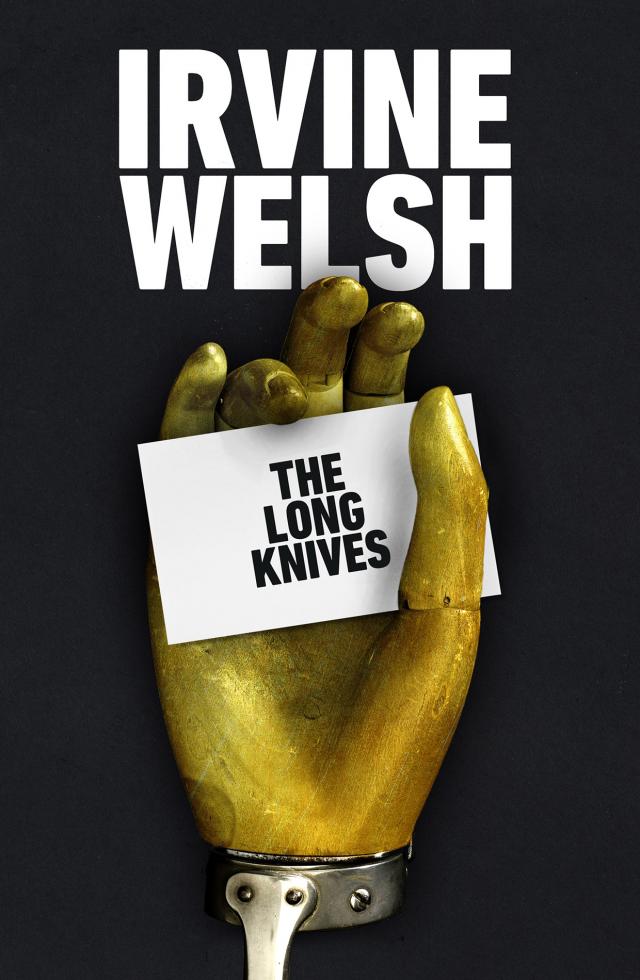
I had several prosthetic hands over the years, before eventually finding one that really suited me. It was forged from a brass alloy, a heavy instrument for sure, and thus worthy of the power my biceps, shoulders, core and legs could generate.
Then I was called back up to Edinburgh on a heartbreaking mission. Roya was dead: this time her overdose had been successful. I was devastated, but far from surprised. At the funeral I gave a eulogy, and asked everyone to pray that she found the peace in death that the beasts had taken from her in her life. Revenge scorched me stronger than ever. I had dossiers on all my intended targets. Yes, it was a dish best served cold, but I had nursed it for too long. Now I was ablaze. But how could I get started?