

Pure life, p.1
Pure Life, page 1


Copyright © 2022 by Eugene Marten
First edition published 2022
Strange Light and colophon are registered trademarks of Penguin Random House Canada Limited.
All rights reserved. The use of any part of this publication reproduced, transmitted in any form or by any means, electronic, mechanical, photocopying, recording, or otherwise, or stored in a retrieval system, without the prior written consent of the publisher—or, in case of photocopying or other reprographic copying, a licence from the Canadian Copyright Licensing Agency—is an infringement of the copyright law.
This is a work of fiction. Names, characters, places, and incidents either are the product of the author’s imagination or are used fictitiously. Any resemblance to actual persons, living or dead, events or locales is entirely coincidental.
Library and Archives Canada Cataloguing in Publication data is available upon request.
ISBN 9780771051760
Ebook ISBN 9780771051777
“The Rapture of the Athlete Assumed Into Heaven” by Don DeLillo. Copyright © 1990 by Don DeLillo. First performed at the American Repertory Theater, Cambridge, MA. First published in The Quarterly. Used by permission of Robin Straus Agency, Inc.
Book design by Kate Sinclair
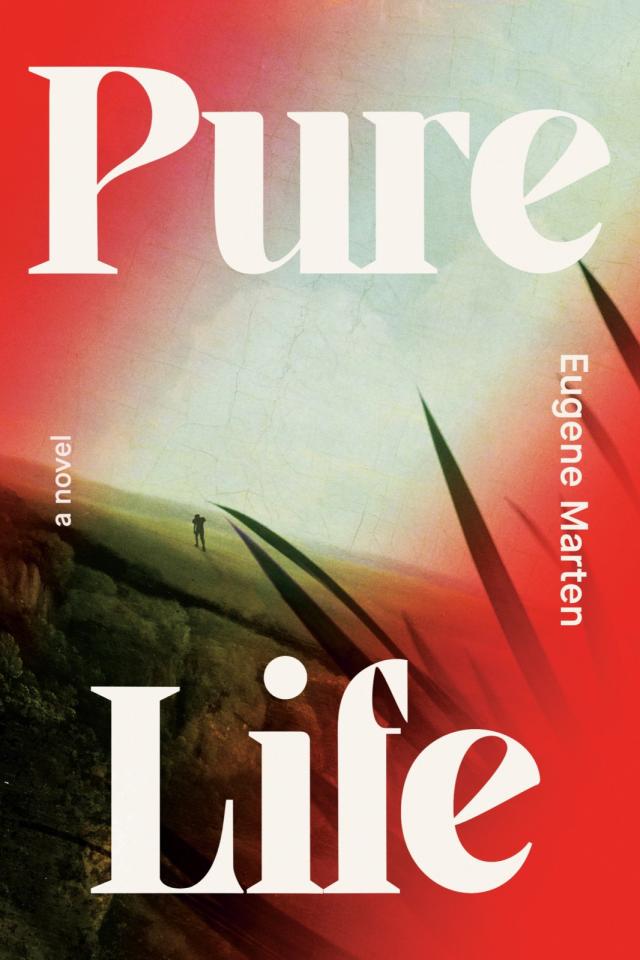
Cover art: (jungle) The Anio Valley with the Waterfalls of Tivoli by Cornelis Apostool; (cloud texture) max fuchs / Unsplash; (palm fronds) Chua Bing Quan / Unsplash; (football player) Kevin Dodge / Getty Images
Published by Strange Light, an imprint of Penguin Random House Canada Limited, a Penguin Random House Company
www.penguinrandomhouse.ca
a_prh_6.0_139875643_c0_r0
For Kelly
And to the memory of my parents
…how super it must feel to achieve your biggest thrill as an athlete on the last day of your life, to know the perfection of the body even as your skin loses heat and energy and hair and nails, and now we’re all enfolded in your arms, you are the culture that contains us, we’re running out of time, so tell us quickly, time is short, tell us now.
DON DELILLO, The Rapture of the Athlete Assumed into Heaven
About 5 percent of love is romantic. The other 95 percent is something else.
STEVE YOUNG, NUMBER EIGHT, QB: My Life Behind the Spiral
Piuta yumuhka man,
Kiama lihnira man,
Tatahkukam dakbi
prak piram
MISKITU HEALING SONG
Contents
Cover
Title Page
Copyright
Dedication
Epigraph
Part 1
Part 2
Part 3
Part 4
Part 5
Part 6
Part 7
Part 8
Part 9
Part 10
Part 11
Part 12
Part 13
Part 14
About the Author
This is not yet the time of girls, it is a time of fields, diamonds, courts, fake leather; vacant lots and asphalt, broken glass and blood. It is Sunday afternoon in early autumn on the front lawn of a public school. Time to pick up a game, choose sides, five on five, the sidewalk out of bounds. The other border is a long hedge behind which boys go to pee, play with matches, learn to smoke, drink, sniff, abuse small animals and sometimes each other, under the blind windows…The boy whose ball it is hikes to himself, backpedals in the dirt. His brother stands in front of him, arms raised, counting: “One one thousand, two one thousand…” (Sometimes he counts battleships.) Now here he comes.
Streetlights flicker.
It is officially dark, a school night; boys have algebra, state capitals, late Mass, boys have baths. Now it is four on four, now three on three. (Across the street the mother of twins sings her sons home: “JoeyEddie! EddieJoey!”) Two on two, then one on one, brother on brother, each trying to catch his own throw. But the boy the ball belongs to is the boy who belongs to the ball. He is shy, quiet, a bed-wetter, good with numbers, goes to confession, an altar boy—but a mother’s boy with no mercy. Even when it is touch, he tackles…An argument, blows, tears. Now he plays alone, throwing and running, against no one, against himself, against the dark, against all.
Drags a garbage can into the middle of the field, throws to what only he can see.
* * *
—
Coach tells his kids, “You must choose the pain of discipline or the pain of regret.” His assistant nods. The oldest boy is twelve.
They start with the three-point stance. Those who pick it up fast go on to snap drills. Some become centres; some don’t pick it up at all. The grass, unmarked, is fresh-cut and smells like the end of summer. Then there are sprints, bear crawls, tumbling drills to see who has feet. He is the oldest kid there but slow and skinny; he doesn’t have feet. They set up passing squares in the diamond. He stands on the pitcher’s mound again though Little League was months ago. Four receivers run around the bases and he throws to each as they cut around the bags.
The assistant is paunchy, pasty, rheumy-eyed. Calls him Snake because he’s left-handed like Number Twelve. “Just hit their hands. They don’t even have to catch it.”
He is four for four his first time out. Then the runners change direction and he is eight for eight. The assistant’s hand on his back, boneless, like a leech.
First day in pads, bigheaded in helmets, they learn to sweat, hit, how not to cry, vomit behind the ash tree that shades their parents at the edge of the grass. Coach keeps them thirsty. When their mothers aren’t there he speaks to them in the language of men, the language he used at the slab mill where he was a cinderman, where he ate carbon dust and iron like everyone else in the valley. But if you ask him he’ll tell you this is his real job.
“Fire out! Fire out!” he says. “Good group! Good group!” Says everything twice.
The boys bark like dogs.
When their mothers aren’t there some of them have no ride home. The assistant beeps his horn but the one he called Snake rides his bike. He has his number now.
* * *
—
Black Monday. A father arrives at Sheet and Tube, the Campbell Works, to find a sign taped to doors now chained shut. He and five thousand men and women turn around and go home or to the scores of bars that line the valley, and whose days are also numbered. He will not be the same.
Some fight back, but two years later the Brier Hill Works (blast furnaces named Grace and Jeannette) close. Then U.S. Steel’s Ohio Works, then Haselton, then Sharon Steel. Unemployment in Y-town rises to twenty-four percent, and a building a day burns down in the valley, insurance the only income for those who must walk away from homes and businesses. Arsonists pay off the fire departments.
* * *
—
Homecoming.
After the game, reassuringly sore—pain is still a privilege, a token of accomplishment—Number Nineteen moves in another way under a different kind of light with the captain of the majorettes. His vest matches her ball gown, and though they are not in the Court—both declined nominations to make room for the less popular, the unattractive, disabled, bullied, minority, a practice that has yet to establish itself—they are the true king and queen of the evening, their corner of the gym its centre, and to almost everyone.
But in truth he is as uncomfortable in popularity as he is in this rented tuxedo, and declined the nomination for class presidency for somewhat the same reason, though also so he could focus on game tape and defensive alignments, and on English and Social Studies, his academic weaknesses. In truth a bit of a bore, shy with girls, good at math, drinks ginger ale at the parties he attends mainly for solidarity, fellowship of the varsity jacket, has a close friend somewhere out there among the absent and excluded who isn’t a jock, whom he has defended against his own teammates, all of which is forgiven because he threw for five scores and put up nearly four hundred yards tonight and is starting quarterback for a high school in the middle of America.
He vomits before every game.
But if it is true that he is shy with them, kind of skinny and geeky around them, gangling, purportedly saving himself for marriage (though, with his dark eyes and curls and aquiline nose, on the verge of looking the part he has played tonight), it is also true that it doesn’t matter, that they come to him, as the captain of the majorettes came, though perhaps in part because it was expected of her, and they believe they are in love, perhaps in part because it is expected, though perhaps he is truly in love with only one thing.
The deejay conjures Sade, smoke and velvet. Nineteen drops his hand to the small of her back, perfecting the embrace. Deep-sea slow. Streamers and balloons, colours bending over the polished wood floor and walls, over teachers relegated to chaperone, watching, policing, perhaps seeing themselves among the watched, recalling the cologne, the hair, the hush, the sway, the groping as for beauty just out of reach, the yet-unbroken promise of it all. Maybe as good as it got.
The King has cerebral palsy, dances knock-kneed with his mother at half court.
The captain of the majorettes looks up suddenly, not at Nineteen but over his shoulder, as if into her future (community college, Where Futures Begin®), then tucks her blond head under his chin, makes a memory, and he looks over it to another uncrow ned queen on the other side of the gym. No escort, no makeup nor need of it, neither cheerleader nor majorette but a fair gymnast, probable valedictorian, and foremost a violinist, bound for some school without an athletic program. We think we want what we already have; he turns away. Sees Number Forty-Seven, looking around as if for a better party, a fight to break up or begin, prematurely thinning, wearing the same full beard since ninth grade, probably too small for college though not for the girl he is dancing with, not saving himself for anything; sees Thirty-Six and Seventy-Four, with whom he has visited nursing homes and soup kitchens at Coach’s behest; Coach in his tight suit and crewcut, lump in his chin, who has taught him humility as well as six different drops, that there is throwing and there is passing, that your eyes are more important than your arm, that there can be honour in losing but no winning without honour and everything else is just kicking stones.
Nineteen believes in almost all of it.
* * *
—
“I can’t believe you drove all that way in this weather,” his mother marvels at the Lightning’s coach. The family sits in the family room, on the same furniture in the same duplex his parents moved into the day they married. You can smell it. You can hear the neighbours’ TV on the other side of the wall.
“School jet can’t fly in a snowstorm?” his father says.
The coach smiles. His nose is red, bulbous. “You must be thinking of Alabama. Made sixty-some recruiting flights in six months.”
“Right, I forgot. You’re D-2.” His brother and sister smirk.
“It’s just a number. There’s nothing your son can get out of one of those programs that he can’t get out of ours.”
“Televised games…Drafted…”
They have a week to decide. It is the only full ride on the table so far, and full rides are rare from Division 2. A partial from the MAC. The Buckeyes sent a letter but only invited him to walk on. And utter silence from the rest of the Big 10, the Big 8, Pac-12. Too slow for the Wishbone, not built for the punishment this would draw—not to mention the sidearm throw. Not to mention there are no left-handers in the Hall of Fame.
“The big schools don’t care about intangibles,” the coach says.
“Intangibles won’t pay a house note,” his father says. He has not worked since Black Monday, and he looks everywhere but at whom he is talking to.
“He threw for two thousand yards this year,” his sister says. “He’s All-State.”
“With all due respect,” the coach says, “the world is full of gym teachers who threw for two thousand yards.”
“What’s wrong with being a gym teacher?” his mother says.
“Kenny Anderson went to a small school,” his brother points out. “Dave Krieg.” And the coach runs a pro-style offense.
The coach enthuses over the athletic facilities, though he doesn’t say the stadium is fifteen miles from campus and shared with two high schools. He talks about the renovated Fitness and Recreation Complex. Nineteen blanches at the subject of weights. He looks to his mother and speaks through his eyes: I will get you out of here.
His brother wears the jersey of The Only Team That Matters.
* * *
—
The school is a private liberal arts college founded in 1856 as a female seminary. Its main campus covers fifty-two acres in a small city two hours from Nineteen’s hometown. The prime minister of Ethiopia is an alumnus. The school motto is engraved on a bronze seal embedded in the sidewalk at College Hall. Students are asked to walk around it; most do.
Lux et Veritas, and girls.
Nineteen is still in a committed relationship.
He meets the Lightning’s starter outside the Athletic Training Centre behind College Hall. Number Eleven is a big friendly Italian kid who says, “If it ain’t me, I hope it’s you,” and drives a convertible, shirtless, wearing sunglasses like he’s Jim McMahon or something. He can bench-press three-fifty and runs a 4.7 forty. Nineteen—Associated Press’s Mr. Football, played in the state All-Star Classic but here so did everyone else—struggles to lift one eighty-five and has been clocked at 5.4—about as fast as you or me. This must be some kind of mistake. He wants to transfer, play baseball, crawl home.
“How about fencing?” Coach says. “Or water polo?”
During rush Nineteen is invited to pledge Phi Psi but declines; he’s heard things about alcohol poisoning and gang rape. Keeps himself on a short leash. Freshmen are required to take three credit hours in the humanities, and Nineteen takes a course in logic. He determines that the egg comes first.
* * *
—
Home games are broadcast on a thousand-watt AM station that plays gospel music on Sunday. There is no colour analyst and you can’t hear the noise of the game, only the announcer’s voice, eerily bare, as if he were calling it from a sealed vault.
Maybe two thousand in attendance if you count the pigeons
The Lightning have won nine games in five years, have dropped their first three so far and are down 20-0 in the third quarter of the fourth. Number Eleven confers with Coach at the edge of the track that rounds the field.
“Not one guy open. It’s like they got our script.”
“We string em out.”
What we call Indian summer
Eleven attempts a naked bootleg just inside the twenty. The middle backer grabs him below the knee and doesn’t just break his leg; his feet now point in opposite directions. Doesn’t feel a thing.
“Could probably still outrun you,” Coach says to Nineteen but gives him the nod and a play. “Just remember: it’s a pocket, not a pitcher’s mound.”
He hears himself in the huddle, purposeful gibberish: “Scatter Wing One, Packer, on One. Ready…” Can’t believe these words mean anything to anyone.
At first he just hands it off. A body squirting loose from a knot of other bodies. Then the Blue Knights put an extra man in the box and he can see downfield a little, goes upstairs. Just high enough but Eighty-Three drops it in the end zone. Coach is livid.
“You get two hands on that pig, hang on!” Swats him with the clipboard. “Secure the fuckin rock!”
Nineteen remains calm, recites more Dadaist poetry. Flow Tweet Packer on Two. The visitors’ bleachers are tiny. Someone’s mother exhorts the ref: “You blowin that whistle out your ass, get in the game!” God bless her.
Next time the wideout catches it in stride, scores, runs over a male cheerleader like he can’t stop. Nineteen feels close to God. The mascot—arms, legs, a face embedded in zigzag foam rubber—plays air guitar. The game tightens, gets personal. Helmets bang, exchange paint as in car accidents. Opposing players knock each other cold during a punt (one actually snores). The band plays Carmina Burana, gloriously out of tune.
BLUE AND WHITE! TRUTH AND LIGHT!
Soft toss across the middle He may not have a hose but he’s got something
Nineteen is no dancer but never gives the ball away, gets rid of it in traffic, finds the gap with eight men in coverage. A play is a problem to be solved. The Lightning have a chance to force overtime at zero but the placekicker, somehow better at long range than close, botches the extra point. Nineteen stays at the throttle. Attendance improves. Number Eleven will become a sheep farmer after graduating and not own a phone or television.
* * *
—
Only the sure things throw draft parties. Nineteen spends the first day at the apartment he shares with his cousin on Liberty. They don’t have cable but he knows only a half dozen or so D-2 players will get selected—usually linemen, backs, receivers, if any—and they won’t go early so it’s just as well. He prepares for an Actuarial Science exam. Keeps glancing at the phone till it becomes the black hole at the heart of every possibility. Dead plastic.
Next day he is at a dive bar on East Main, shooting pool with a loose collection of friends, all but one (former) teammates. Dark wood and beer breath. ESPN. Nineteen watches two guys playing chess in a booth under a stuffed antelope head. He pretends not to watch the ticker, pretends not to watch the Commissioner in his polka-dot tie reading off the selections from small pieces of paper.






