Remote, p.1
Remote, page 1


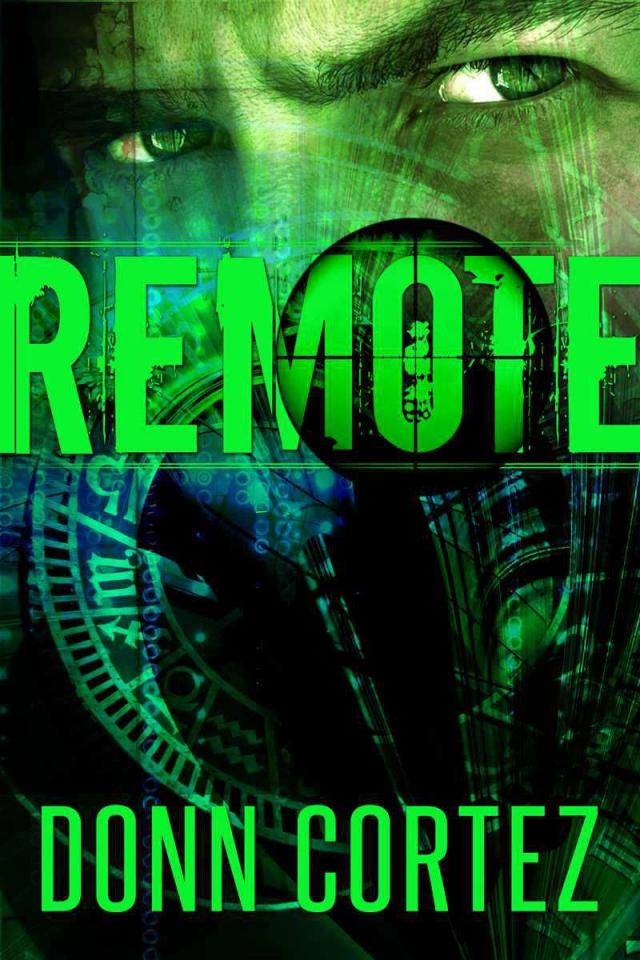
REMOTE
DONN CORTEZ
Copyright Information
This is a work of fiction. All of the characters, organizations, and events portrayed in this novel are either products of the author‘s imagination or are used fictitiously.
Copyright © 2011 by Donn Cortez
All rights reserved.
No part of this book may be reproduced in any form or by any electronic or mechanical means including information storage and retrieval systems, without permission in writing from the author. The only exception is by a reviewer, who may quote short excerpts in a review.
eISBN: 978-1-937776-22-0
Also by Donn Cortez
The Closer
The Man Burns Tonight
Visit Donn online at www.DonnCortez.com!
Table of Contents
REMOTE
Copyright Information
Also by Donn Cortez
Part One: Template
Chapter One
Chapter Two
Chapter Three
Chapter Four
Chapter Five
Chapter Six
Chapter Seven
Chapter Eight
Chapter Nine
Part Two: Mechanism
Chapter Ten
Chapter Eleven
Chapter Twelve
Chapter Thirteen
Chapter Fourteen
Chapter Fifteen
Chapter Sixteen
Chapter Seventeen
Chapter Eighteen
Part Three: Operation
Chapter Nineteen
Chapter Twenty
Chapter Twenty-One
Chapter Twenty-Two
Chapter Twenty-Three
Author Bio
PART ONE: TEMPLATE
You can hold yourself back from the sufferings of the world, that is something you are free to do and it accords with your nature, but perhaps this very holding back is the one suffering you could avoid.
–Franz Kafka
CHAPTER ONE
You have to kill him.
Rosalee Klein sat in her Mercedes, staring out at a white-painted brick wall through the windshield, gripping the steering wheel so tightly her fingers had begun to go numb. She heard the words clearly, resonating inside her skull with perfect clarity, the voice calm and uninflected.
The voice was not her own.
It makes sense. You know it does. Kill him and then all this will be over.
She had come to think of it as the Voice of Judgment, because that’s exactly what it did: it stated the facts, then decided on a course of action that must be followed. It did not equivocate, it did not argue. It was as steadfast and implacable as a guillotine blade coming down, and as merciless.
“I don’t want to,” she said. She hated how she sounded, like a petulant child whining about her bedtime.
Yes, you do. You want very much to kill him. He deserves it, and you know that. You simply don’t have the determination or the courage. But I do, and I’m the one in charge. I will give you my strength to use as your own. And doesn’t he deserve to pay for what he’s done?
“Yes,” she whispered.
It’s not really you that’s doing it--you’re simply obeying forces beyond your control. Is a bullet responsible for the death it causes, or does the one who pulled the trigger shoulder the blame?
“But . . . my children—“
Yes, your children. Do you want them to grow up without their mother?
Even considering the possibility made her feel like she was going to throw up. Sweet little Madeline and rambunctious Joel, neither of them old enough to attend school yet. She couldn’t let that happen. “I could go to jail—“
You won’t, not if you do as I say. You’ll be a hero.
She pounded on the steering wheel in frustration. “I won’t! I’ll lose my license at the very least—“
Her outburst broke off with a choked, inarticulate gurgle. Pain exploded through her body, making her shudder and twitch uncontrollably as every muscle she had spasmed in torment. It wasn’t her first attack, but it was by far the worst; she screamed involuntarily as a storm of agony raged through her, leaving her slumped dazed and half-conscious over the steering wheel.
There are worse things to lose than your license, Rosalee. Get out of the car and enter the building. You have work to do.
She did as she was told.
She hoped she didn’t look too disheveled as she tottered toward the front door of the Beverly Hills Imago Medical Center. It was a large, round building, all brushed steel and glass, no more than a year old; it specialized in cosmetic procedures for a very high-end clientele, specifically actors, rock stars and other media darlings willing to pay for the latest, trendiest brand of elective surgery. The California sun spiked off its mirrored skin and into Rosalee’s eyes as she walked across the parking lot, making her fumble for her sunglasses before she stepped inside.
Only one of the four receptionists said hello—the others were busy on phones or with clients—but she brushed past him without responding. She knew her rudeness wouldn’t cause much comment; this was Beverly Hills, after all, and people stumbling in late wearing sunglasses and avoiding conversation just meant they’d stayed a little too long at last night’s party in the Hills and weren’t ready to face the working world yet.
She made it to her office, sat down and tried to get her breathing under control. She picked up a Tiffany hand mirror from her desk, a gift from a rapper she’d done some work on, took off her sunglasses and studied herself in it; barely thirty, blonde, tanned, with the kind of good looks that so many women seemed to take for granted in LA. Hollywood genes, she supposed, the end result of millions of physically attractive wannabes flooding the city decade after decade and interbreeding. Her own mother had been a failed actress, her father a screenwriter with Oscar aspirations who had to settle for sporadic work on sitcoms. She hoped her own kids would follow the path their mother had chosen rather than the one their grandparents had; she couldn’t bear to think of Joel or Maddy living that kind of life, filled with either constant rejection or overpowering success. One could destroy you as easily as the other.
But she couldn’t worry about that now. Right now, a much more immediate kind of destruction was at hand.
She got up and slipped a white medical coat on over her loose sweater. The temperature outside was far too warm for either, but the omnipresent air-conditioning meant she was actually more comfortable wearing it than not. She opened the adjoining door and stepped into her workspace.
The room was dominated by a large reclining chair, upholstered in red leather. Steel shelves on articulated arms branched out on either side, while a Helios 3000 LED spotlight craned its single eye over the chair like a predatory mechanical Cyclops.
Her assistant should have already been there, making sure everything was prepared, but he wouldn’t be coming in today; Rosalee had fired him last night, over the phone. Even then, she hadn’t thought she would really go through with what she was now getting ready to do.
Like most of the doctors at the Imago Center, Rosalee was a specialist. Not a plastic surgeon, though; her expertise lay in cosmetic dentistry. Celebrities came to her to have their teeth straightened, whitened, or even sharpened; she also fitted custom-made “grills”, usually made from platinum or gold and studded with precious gems, into the mouths of multimillionaire rappers.
Not today, though. Today one of her clients wanted a diamond embedded in a front tooth, a relatively simple procedure that normally would require no anesthetic at all—the gem would simply be glued on. But the client had insisted on a particular stone, one with a less than ideal shape—she would have to do some shaping on the enamel beforehand to create a proper setting, then bridge any projecting edges with sealant.
“Your two o’clock is here.” She jumped a little, but it wasn’t the Voice; it was just the receptionist, letting her know over the intercom system that she’d run out of time.
“Send him in.”
The man that shambled in barely fit through the door; he must have massed at least two hundred and fifty pounds, almost all of it muscle. He stood at least 6' 6", his head shaved down to stubble, his nose flat and his chin square. He wore an Oakland Raiders t-shirt, baggy grey shorts, and leather sandals. A gold Superbowl ring glinted on the middle finger of each hand.
“Hey, Doc,” he said. “Ready to make me even prettier?”
She swallowed, and tried to smile back. “Absolutely, Mr. Hampton. Have a seat.”
He did, settling down with the care that more than one broken piece of furniture had taught him. “Please, Doc—I told you, call me Okay. Mr. Hampton’s the guy that married my mother.”
Okay Hampton was many things, and he’d become famous for several of them. He’d had a pretty good career as a linebacker, a better one as a pro wrestler, and an absolutely spectacular rise to fame as a defendant.
Easygoing, likeable Okay Hampton, the man who’d appeared in a series of Kool-Aid commercials, the man who called himself “Captain Okay” in the ring, had killed his wife. He’d beaten her to death with a barbell in their own home, and claimed it had been in self-defense. Several years, several high-priced lawyers and one sensational trial later, he was a free man; the jury apparently believed his story that she had pulled a gun and tried to shoot him. Her side of the story was not, unfortunately, available.
“Okay, uh—Okay,” she said. “You’re certain about this particular stone? Something with a lower profile would be more comfortable in the long run.” She was stalling; she knew he wouldn’t change his mind. She knew why, too.
“Didn’t lose it, did you, Doc? That’d be something to tell all your online followers about.” Even though she couldn’t divulge confidential client information, Rosalee had a large following on the social network system Twitter; her posts were vague but tantalizing, dropping hints about the famous people she was working on without going into detail. She hadn’t posted anything at all in the last twenty-four hours.
“No, no, of course not. I’ve got it right here.”
“Good. Don’t worry about the size—I’m a big guy, I deserve a big rock. And I kinda like the idea of being able to feel it all the time, of knowing it’s always there. Like a touchstone, right?”
She swallowed. “You’re sure you still want the nitrous? I promise you, you won’t feel any pain.” She wasn’t even supposed to ask that—at the Imago, if a client wanted a little happy gas, you gave it to them without any debate and slapped on a hefty surcharge. No one ever complained about paying it, either.
“Hell, yes. I may look big and nasty, but when it comes to the dentist I’m just a weepy little girl. You don’t want someone my size getting all panicky and thrashing around, believe me.”
He gave her a lazy grin and met her eyes, and just for a second she saw the animal that lived behind that affable exterior, the one that exulted in slamming into another human being like an enraged bull. It was the same animal Nancy Hampton had seen in the last seconds of her life.
“No problem,” she said.
The nitrous feed went into his nostrils, letting her work on his mouth unimpeded. She hesitated before turning on the valve.
Don’t lose your nerve now, the Voice said. It’s almost over.
She turned it on.
You’re doing the right thing. He’s a monster, he beat his wife to death with a piece of steel and now he’s laughing at the world. You read that piece in Variety, you know what he’s going to do next—he’s coming out of retirement, going back into the ring as a villain. He’s going to make millions of dollars by dressing up as a cartoon version of his own evil, and what he’s really doing is mocking the world. Mocking justice, mocking life, mocking his victim. Somebody has to make him pay.
This time, though, it wasn’t the Voice of Judgment she heard.
It was her own.
***
Jack Salter sat in the middle of a room full of horror and beauty, thinking about art. Art, and the responsibilities of the artist—to his audience, to his craft, to himself.
Jack once considered himself an artist. But that was before he became a serial killer.
The media christened him the Closer. His victims always turned out to be killers themselves, and all the unsolved murders they’d been responsible for became closed cases once Jack was finished. Jack extracted information from his victims: detailed accounts of what they’d done, who’d they done it to, when, where, and how. He left the information for the police, usually with the body of the killer he’d tortured to death to get it. Despite his horrific methods, Jack was no sadist; he took no pleasure in what he did, only cold satisfaction that he was providing closure for the families of the killer’s victims.
That’s what Jack kept telling himself. Until he caught up with the man responsible for his own family’s brutal murder.
The one who butchered Jack’s parents, wife and son had called himself the Patron, because he only targeted those close to artists. Jack had encountered killers who claimed what they did was art; the Patron had a different motivation.
“I don’t create art,” he’d told Jack. “I create artists.”
And the truly horrifying, damning fact was, he’d been right.
That was what surrounded Jack now, the fruits of the Patron’s endeavors. Work by artists who’d had lovers, parents, friends taken away from them in terrible, haunting ways. The Patron liked to strike on holidays, times when loved ones were especially close, and leave the bodies of his victims in creative poses designed for maximum emotional impact on whoever discovered them—usually the artists themselves. Jack had been the one to find his family, on Christmas day.
He didn’t celebrate Christmas any more.
The Patron had been a monster, an inhuman intelligence all the more terrible for his understanding of the human condition—because, more than once, he’d been proven right. Though the majority of the artists the Patron had tormented wound up spiraling into self-destruction, the few that survived the process had indeed made the leap from mediocre to outstanding. Their work, a testament to the resilience of the creative spirit, surrounded Jack now, the Patron’s own private collection. It was already worth millions; some of it, Jack suspected, would one day be considered priceless.
A consideration that would be untrue. Jack knew exactly what the price had been.
The Patron had not escaped the Closer. Jack had finally caught up to him, finally been able to ask him the same questions he’d asked every other killer he’d caught . . . but he never got to hear the answers.
Twenty minutes into the interrogation, the Patron had a massive heart attack and died.
Jack studied the piece in front of him, a neon sculpture that hung suspended from thin wires. It was a maze of words made from curving, glowing glass, the tubing of the letters interlinked so that the words bled into and wrapped around each other; loss and joy and pain and thanks and skin and sweet and blood, all of them inextricably entwined. The words nearest the edges of the tangle were easiest to read; the ones in the center were just a jumble of dense, glowing light.
It was beautiful and touching. Every time Jack looked at it, he wanted to smash it with a ball-peen hammer.
“Hey.” Nikki, Jack’s partner, stood framed in the doorway, holding a bottle of water in one hand. They weren’t together in any romantic sense; violence and sorrow bound them to each other, not mutual attraction. She wore baggy grey sweatpants, running shoes, and a shapeless black-t-shirt; her short blond hair was damp with sweat from her run. She was in her mid-thirties, with the hard physique of an athlete, sharp features and ice-blue eyes. Before she’d met Jack, she gave blowjobs to strangers for a living. “You hear back from Deslane yet?”
“Yeah.” Rene Deslane was one of the artists that had been targeted by the Patron. “Sent me an email telling me to go to hell. Didn’t believe I was who I said I was, or that I’d done what I said I did. Didn’t believe me, period.”
“You gave him the details, right?” She took a long gulp of water from the bottle.
“What I had, yeah. But it’s pretty thin, Nikki—we just don’t have the hard data we pulled from other targets.”
“Not your fault, Jack. We couldn’t know he’d just kick off like that.” They’d stripped the Patron’s body of ID and dumped it in an alley on Vancouver’s East side; since he’d died of natural causes, there was no need to go to extensive lengths to get rid of it. Only one other person could link them to the body, one the Patron had set up to take the fall. Once they’d shown that person the evidence the Patron had planted implicating him in the Patron’s murders, he’d been easy to swear to secrecy.
But the evidence, while damning, did little to actually document the people whose lives the Patron had destroyed. Jack and Nikki now had the Patron’s art collection, but it only connected them to his successes.
“I don’t know what to do,” Jack said. “I mean, the ones he put through his process that didn’t make it—I don’t even know how to locate them. Some are dead, some are junkies or alcoholics or institutionalized—and those are the ones that most need to know he’s gone.”
“We can track them down.”
“Can we? He didn’t restrict himself to a particular age, sex, or race. He traveled all over the country. He never used the same method twice.”
“Yeah, but he wasn’t exactly subtle, either. Liked to strike on holidays, always posed the bodies in some bizarre way. That kind of signature can’t be hard to pinpoint.”
“Maybe not. But even if we do track them down, what do I tell them? So far, I can’t even convince the ones we’re sure about.” Jack paused, ran a hand over his stubbled chin. “And I’m not so sure I should even be trying.”