

Divinely destined, p.5
Divinely Destined, page 5
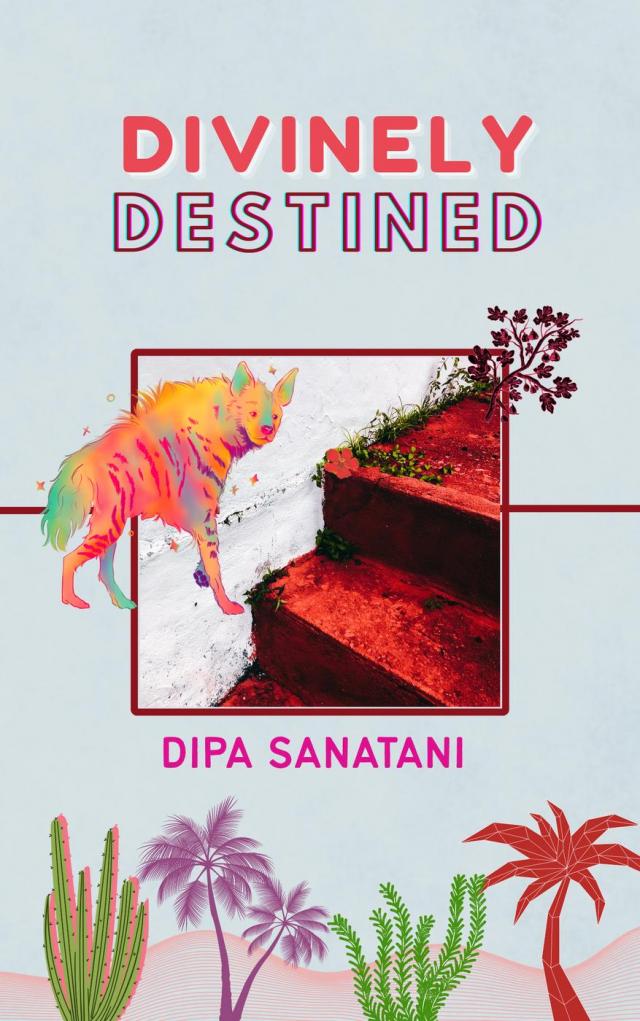


Following the established orthodoxy of the age sometimes proves to be a trap. I realised, as one often does during in a period of drought, that I had inherited nothing from my ancestors. They had taken the lion’s share for themselves and left me bereft. I was a hyena who had survived on scraps till even those scraps were taken away from me.
From here on forth, all that I had would be Him. The Divine Truth stands tall and proud for it cannot be refuted. When one begins to comprehend, that it is neither one’s parents nor one’s ancestors that gave them life, one begins to grasp at the eternal truth.
God is my Maker.
God is the only One who will guide me from here on forth. To be divinely destined is to accept that the soul’s destination is decided by God and not by the brutal beast that resides within men. It was in knowing and truly understanding my soul destination that I was able to withstand the trials and the torturous sufferings which came into my life.
❁
To those who cling to systems that have failed you—who justify your silence with empty appeals to tradition, who dismiss the cracks in the foundation as ‘the way things are’—hear this loud and clear: your compliance is a slow karmic poison.
You mistake stability for strength and tradition for virtue. But a system is only as noble as those who uphold it. When men exploit and abuse their roles to demand obedience without accountability, to extract labour without reciprocity, to claim authority without sacrifice, they turn order into tyranny.
And you, who say nothing, who do nothing, who hide behind the lie that ‘this is how it has always been’ are complicit in that tyranny. You enable the slow bleed of trust, the erosion of dignity and the theft of women’s honour. You trade your integrity for the illusion of safety, not realising that a system built on broken promises is a house of sand.
Every time you choose not to heal the poison within these structures, every time you forgive the exploitation of women, the abandonment of the vulnerable or the cowardice of men who hoard power without honour, you become the architect of a delayed, yet undoubtedly certain, collapse.
The system you defend does not protect you; it merely delays the day the tower topples. And when it falls—as it undoubtedly will, when its guardians would rather repeatedly exploit rather than serve the community—the debris will crush the ones who relied upon it.
Choose wisely for to continue down this path is to chain yourself to a corpse. The old order will not save you. It will merely demand your soul in exchange for empty guarantees. The time for blind loyalty is over. Demand better. Fight for a world where systems serve, rather than exploit; where power is earned, not inherited; where men who fail their duties are stripped of their privileges, not coddled by your silence.
The choice is stark: hold the line of accountability or watch everything you claim to value crumble under the weight of its own hypocrisy.
14 The Four Cups
The Divine Masculine is the embodiment of consciousness, stability, and focused energy. A person who embodies the Divine Masculine is characterised by inner stillness. They possess the potential to be the unwavering banyan tree in the storm, their roots reaching deeper into the earth, providing a stable foundation for themselves and those who seek shelter in their presence.
They are unyielding in their commitment. Their hearts, ablaze with the fire of determination, face challenges with unwavering resolve, protecting those under their care with a strength that transcends power. They carry responsibility, not as a burden, but as a sacred trust, a commitment to care for their community, ensuring that their needs are considered and their future secured.
Finally, they exhibit leadership, like the guiding pole star in the darkest night, their vision clear, their direction true, taking charge of situations with wisdom and ability, ensuring the safety and security of those who depend on their guidance. These qualities are intrinsic aspects waiting to be awakened within every human being, including women.
The rejection of traditional male roles, particularly when linked to an incapability to provide and protect, suggests that true masculinity is not defined by the fleeting shadows of social roles, but by the very attributes of the Divine Masculine. A person—be it a man or a woman—who embodies these traits is seen as fulfilling their true nature, not bound only by societal obligation, but empowered by the natural and authentic expression of their being.
They know that a financial crisis may be temporal, but if one has the strength of character to focus on their objectives, they will emerge on the other side stronger than ever.
❁
When a person is incompetent in fulfilling the provider and protector role, this crisis, rather than leading to despair, may prompt a search for meaning that transcends material success. Economic hardship exposes the fragility of an identity built solely on economic success. The loss of a job, financial instability, and the inability to be, become, and maintain the role of a traditional provider can create a vacuum: a space where old certainties crumble.
The inability to provide, while initially shattering a person’s sense of self, can paradoxically lead a person to accept a different path in life, one defined less by external achievement and more by an internal state of being where one develops their character in addition to their status and bank account.
For men, however, the unwillingness to fulfil the traditional role of the protector and the provider speaks to a profound dissonance, an estrangement from the Divine Masculine. It is as if an ancient song, once resonant within all men, has faded to a whisper, leaving behind a void where strength, responsibility and purpose should have flourished.
Certain inherent and intrinsic qualities and energies, rooted in the Divine Masculine, are not mere social constructs, but embedded into the very essence of a man's being. When a man is not able to express these qualities, it signifies a profound separation from the Divine Masculine. It is as if a vital chord within him has severed, leaving him adrift and unable to fully express his capability as a protector and a provider.
This disconnect can manifest as a lack of purpose and direction, leaving him wandering aimlessly without a true direction to follow. It can even manifest as an inability to take decisive action, paralysing him in the face of challenges and preventing him from seizing opportunities. Moreover, it can result in a failure to provide stability and security, leaving those who depend on him vulnerable and uncertain. Finally, it can lead to a difficulty in protecting and leading, rendering him unable to guide and safeguard those entrusted to his care.
From this perspective, the rejection of traditional male roles is not merely a matter of economic circumstances or conscious choice, but a symptom of this deeper failure to embody the essential qualities of the Divine Masculine. It represents a deviation from the path of true masculinity, a silencing of the masculine voice within, resulting in a diminished expression of a human being's full potential.
❁
I stood at the threshold of a twilight garden. I sat, as many seekers before me had, at the base of a tree. The air bustled with the twittering of unseen insects. The scent of night-blooming plumeria hung heavy and sweet. A sense of ancient wisdom emanated from the gnarled bark against my back. It was as if the tree itself held the secrets I sought.
I am not idle, not truly, even if it appears that way.
I am told that there are four cups in total. The three cups standing in garden before me represent my past choices and experiences. These three cups once held great meaning for me, but now, they feel empty and devoid of the significance they once held.
The fourth cup, which appears like a silver thread from the clouds, symbolises the unlived life—the life I had yet to lead. Perhaps there is still more to explore, more to become, and more that is yet to be.
The garden is alive with whispers—ancestral voices, forgotten dreams and the buzzing of the underworld. They are all urging me to take note of what I have to leave behind. The time had come to let go of what no longer served me. The time had come to release the weight of obstructive obligations and half-lived truths. Humans cling to the comfortable to avoid the vulnerability of true fulfillment.
The fourth cup that is being offered to me is chaotic, wild and dripping with the nectar of unbridled fulfillment. Perhaps what I am seeking is in this cup—or perhaps—it is yet another distraction that I do not need.
Life has taught me to distrust easy answers. Easy answers were a well-placed stone on a path—too perfect to be natural, likely hiding something unpleasant underneath. No...No... the fourth cup does not offer easy solutions. It never has. The fourth cup is an invocation. It is an invitation from a higher power. Its mystery lies in availing oneself of the opportunity that is presented, instead of simply settling for the monotony of a humdrum existence.
The cup is the ache we all carry within us to live out the unlived life. I can’t help but ask myself: what am I willing to risk to drink from the well of my own wildness? I gaze at the cup pensively knowing that fleeting attractions can become disarming distractions.
I think of the Samaritan woman to whom Christ once said, "You have had five husbands, and the one you have now is not your husband." He then offered her living water, a spring within her welling up to eternal life.
I can only pray that the vessel I hold, this deep spring of yearning within me, will finally be quenched with that same living water, quelling this persistent thirst for something more profound than earthly connections. I know that it is the ache of what is unfulfilled within me that is advising me to throw caution to the wind as it guides me towards the uncharted quest which still remains in my heart.
May this twilight garden, like that ancient well where Jesus met the Samaritan woman, become a place of revelation and lasting satisfaction.
Part 4
The Quest
15 The Network
I chose to avail myself of the cup. I combed the entire world in search of stories. I attended countless festivals, workshops and book signings. I met storyteller after storyteller and heard story after story. I met author after author and heard of the books that they had penned and authored.
I navigated the bustling literary festivals like a ghost watching a biopic based on my unlived life. I sometimes applauded enthusiastically at the end of readings, nodded sagely during discussions on the writer's journey and sometimes even posed thoughtful questions during the Q&A sessions.
The endless cycle of literary events became a strange sort of comfort, a familiar rhythm of borrowed inspiration. Perhaps I had found a peculiar solace in the anonymity of the crowd for I was yet another silent observer amidst the fervent literary chatter. Like other attendees, I networked with agents and pitched my manuscript with eyes filled with hope. Yet, I remained on the periphery, a diligent student perpetually enrolled, but never quite able to submit her own work.
The energy of these gatherings, the palpable excitement of shared passion for storytelling, left me feeling like an outsider. It was as if I were forever standing just outside a brightly lit room, eavesdropping on the joyous conversation, patiently waiting for an invitation that never seemed to arrive.
It seems that the hyena’s instinct was still alive within me. I would have to wait my turn... Perhaps it was not my lot in life to receive the lion’s share. Perhaps I would have to make do with the scraps.
Was this truly my lot in life? Had I not worked, perhaps even overworked myself, in a quest for more? When the foundations of society are laid unevenly, the most fervent striving can feel like building on shifting sand, where every upward push is met with a subtle and persistent dissolution.
The narrative of hard work as the sole determinant of success then becomes a haunting melody, beautiful in its simplicity, but discordant with the lived reality of systemic imbalance. Perhaps the deeper artistry lies in illuminating these unseen inclines and advocating for a landscape where the ground itself offers a more equitable footing.
There remained a quiet and unexpressed yearning in my attendance, a persistent hope that by osmosis, by sheer proximity to the creative fire, a spark of my own unique voice would finally ignite. I collected anecdotes and advice like precious gems, carefully storing them away, believing that one day, they would coalesce into something truly my own.
But for now, my role remained that of the dedicated listener, the appreciative audience member, the one who knew all the right questions to ask. The day, I hoped, would eventually come when I would step out of the shadows and onto the stage, my own voice finally ready to be heard. The truth is: I had yet to discover the story only I could tell.
Despite all the people I had the chance to meet, know and see, I neither heard nor had the opportunity to tell my own tale. I had spent too much time hearing the stories of others. I had spent too much time narrating the stories of others. I had wasted years, perhaps even lifetimes, never having given form to the stories which laid dormant inside me.
I now know that there are stories within me. These are not ordinary stories. Perhaps there are stories, perhaps there exist stories within the womb of the world, that were waiting, patiently, for the day that they would be heard. Perhaps, in choosing to be a writer, I was longing, not to be heard, but to be seen.
Do you see these words? Yes... These words are mine. You must see them and read them to know who I am. Alas! In this world, it is only the one who reads who will see my words.
❁
The penthouse floated above the city’s pulse, a citadel of glass where light bent to disguise its exploitative roots. Those who entered his orbit—the women in silk whispers, the flatterers with fake smiles—saw not the man, but the myth: a king whose crown glinted with the pyrite sheen of exploited mountains and strangled rivers.
They partook his offerings, not in ignorance, but in a silent covenant. To partake in his world was to take a sip from the chalice of collective denial, where every toast tasted of the bitter herbs of complicity.
Why did they stay?
They stay for the same reason moths orbit a flame—not for true warmth, but for the illusion of light. The women who lingered in his penthouse were unwitting initiates into an age-old hierarchical hegemony. They had arrived seeking refuge—from dwindling trust funds, studios that demanded their art bleed only in market-approved hues—and found themselves baptised by the chlorinated luminosity of his infinity pool at night time.
The socialite, her pearls strung with the unspoken history of sugar and cotton plantations, mistook his predatory gaze for affection. The artist, her hands still stained with the bleeding red paint of her abandoned dreams, let his patronage anoint her as ‘relevant’, blind to the way his contracts leached her voice into palatable silence.
Their acceptance was not truly a collusion. It was the slow seduction of sleepwalkers drawn to a lighthouse. They navigated his world by its curated light—the way a champagne flute’s prism hid its ancestral ties to exploited vineyards. By the time they, his initiates, sensed the rot—the too-sharp tang in the imported truffles, the way his compliments carried the aftertaste of audits—the bait had been taken and the hooks were set.
In the end, they stayed because his lies were familiar. The city thrived on such pacts. The waiter who memorised his whiskey preference had a sister working the factory shifts. The gallerist who praised his ‘vision’ quietly sold pieces looted from ancestral temples. To outright reject his wealth—to tell him that they didn’t need or want his business—was to confront their own entanglement in the web.
Perhaps it was more predictable to laugh at his jokes, to wear his jewels, to let the champagne bubbles numb the whispers of the gnawing sense of discomfort. In a world where survival wore the mask of complicit compromise, some sins were simply more brazen than others. In his presence, a solace was found—not in his humanity, but in the relief of shared corruption. His unapologetic greed became a sanctuary for their quiet culpability.
And so, the macabre dance continued, a masquerade where every participant wore masks of their own making. The women, the enablers, the silent witnesses—all spun in orbits calibrated to avoid the empty void at the centre. To truly see him would demand seeing themselves: the compromises, the swallowed truths, the small betrayals that paved their own broken roads.
In the penthouse’s cold brilliance, they found not connection, but a perverse kinship. His unrepentant exploitation became a dark sacrament, absolving them of their own. The city’s skyline watched, indifferent, as the black dog’s shadow passed over the glass—an evanescent reminder that every debt, no matter how cleverly deferred, awaits its collector.
16 The Narrative
It is in the nature of narratives to fail us. They do so because they fail to fully account for all that happened. The very act of selecting and arranging events, of imposing a beginning, middle, and end, inherently involves omission. Countless moments, fleeting thoughts, unspoken emotions, and tangential occurrences are inevitably pruned away to create a coherent and digestible whole.
What ultimately remains is a carefully constructed edifice, a representation, but never the totality of experience. The messy, chaotic reality, with its contradictions and ambiguities, is smoothed over, simplified, rendered into a predictable form and format that our minds can grasp, but at the cost of its intricate and inexplicable truth.
Narratives are made by the perspective which is privileged. The teller, whether consciously or unconsciously, filters events through their own biases, beliefs, and memories. What one person emphasises, another disregards. The same series of events can be recounted in myriad ways, each version highlighting different aspects and drawing different conclusions.
This inherent subjectivity in storytelling means that even the most meticulously crafted account is ultimately a partial truth, a specific interpretation rather than an objective record. The gaps and silences within a narrative can be just as telling as the words themselves, revealing the limitations of any attempt to fully capture the complexity of the past.






