Hanoi at midnight, p.1
Hanoi at Midnight, page 1


DVAN Founders
Isabelle Thuy Pelaud
and
Viet Thanh Nguyen
Also in the series:
Constellations of Eve, by Abbigail Nguyen Rosewood
Hà Nội at
Midnight
Stories
Bảo Ninh
Translated and edited by
Quan Manh Ha and Cab Tran
Texas Tech University Press
Copyright © 2023 by Texas Tech University Press
All rights reserved. No portion of this book may be reproduced in any form or by any means, including electronic storage and retrieval systems, except by explicit prior written permission of the publisher. Brief passages excerpted for review and critical purposes are excepted.
This book is typeset in EB Garamond. The paper used in this book meets the minimum requirements of ANSI/NISO Z39.48-1992 (R1997). ♾
Design by Hannah Gaskamp
Cover design by Hannah Gaskamp
Library of Congress Cataloging-in-Publication Data
Names: Bảo Ninh, author. | Ha, Quan Manh, translator and editor. | Tran, Cab, translator and editor.
Title: Hanoi at Midnight: Stories / Bảo Ninh; translated and edited by Quan Manh Ha and Cab Tran.
Description: Lubbock, Texas: Texas Tech University Press, [2023] | Series: Diasporic Vietnamese Artists Network Series | Summary: “The first English translation of several short stories by Bao Ninh, arguably the most famous writer in Vietnam.”—Provided by publisher.
Identifiers: LCCN 2022031909 (print) | LCCN 2022031910 (ebook) |
ISBN 978-1-68283-162-5 (cloth) | ISBN 978-1-68283-1-632 (ebook)
Subjects: LCSH: Bảo Ninh—Translations into English. | LCGFT: Short stories.
Classification: LCC PL4378.9.B37 H36 2022 (print) | LCC PL4378.9.B37 (ebook) |
DDC 895.9/2233—dc23/eng/20220708
LC record available at https://lccn.loc.gov/2022031909
LC ebook record available at https://lccn.loc.gov/2022031910
Printed in the United States of America
23 24 25 26 27 28 29 30 31 / 9 8 7 6 5 4 3 2 1
Texas Tech University Press
Box 41037
Lubbock, Texas 79409-1037 USA
800.832.4042
ttup@ttu.edu
www.ttupress.org
Dâng tặng các anh em đồng đội của tôi ở trung đoàn 24, sư đoàn 10 bộ binh,
và những người đã chiến đấu và hy sinh cho hoà bình ở
Việt Nam.
For my fellow soldiers of Regiment 24, Infantry Division 10,
and the people who have fought and died for peace in
Việt Nam.
Contents
Foreword
Acknowledgments
A Note on the Translation
Farewell to a Soldier’s Life
Beloved Son
301
Letters from the Year of the Water Buffalo
The Camp of the Seven Dwarfs
Giang
Reminiscences
Evidence
The Secret of the River
An Unnamed Star
Hà Nội at Midnight
Untamed Winds
Copyrights and Permissions
About the Author
Foreword
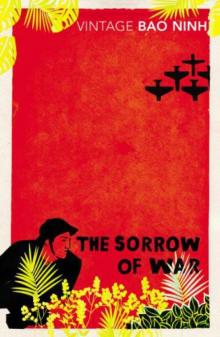
Bảo Ninh is internationally known for his debut novel The Sorrow of War, the first Vietnamese novel about the American War to be translated into English, published in 1994. Like his esteemed contemporaries, such as Nguyễn Minh Châu, Nguyễn Huy Thiệp, Lê Minh Khuê, Lê Lựu, and Nguyễn Quang Thiều, Bảo Ninh has received considerable acclaim both inside Vietnam and abroad for his penetrating fiction about the war and its aftermath. The Sorrow of War and his short stories represent a significant contribution to the diversity and realism of Vietnamese literature since 1986, the same year that ushered in the Reform Period in Việt Nam.
Considered one of the best Vietnamese novels about the war, The Sorrow of War has been translated into roughly twenty languages and has received prestigious national and international awards. In the United States the novel has gained substantial attention from critics and scholars and is widely taught in college courses on literature about the Việt Nam War. Bảo Ninh’s novel eloquently depicts the traumatic memory and survivor’s guilt of the male protagonist, Kiên, who is unable to return to normal life after witnessing the horrendous realities of war, the indelible deaths of his fellow soldiers, and the fragility of life when juxtaposed with the atrocity of warfare. Kiên’s postwar life is characterized by regret, haunting nightmares, and tragic-heroic memories of war—all of which deviate from the patriotic themes commonly found in Vietnamese literature prior to 1986. But Bảo Ninh also writes movingly about topics other than war: his observations of daily life in contemporary Việt Nam, unfulfilled promises, domestic conflicts, and romantic love, etc. The twelve short stories in this collection are among his best, with ten of them appearing in English translation for the first time.
Serendipitous encounters are a recurring motif in Bảo Ninh’s short stories: some accidental and ephemeral, others lasting longer. For instance, “Giang” depicts a romantic encounter between a recruit and the eponymous heroine at a water well in a desolate mountainous area. “301” recounts two meetings: the first between an artillery tank’s crew members and the daughter of a photography studio owner, and the second between the narrator and the daughter, now an older woman. The former occurs near the end of the war, and the latter during the postwar period. “The Camp of the Seven Dwarfs” relates the fortuitous encounter during a rainy night between the narrator—a postal worker—and a soldier who survives harsh realities in an environment where people have to onerously cultivate and raise livestock to supply food for soldiers on the front. Their conversations reveal the soldier’s painful memories of love, nostalgia, regret, and the sorrow of human life. In “An Unnamed Star,” the meeting between a team of soldiers, a decrepit old man, and his daughter evokes the odor of gunpowder, the image of a war-torn, impoverished village, and the poignant memory of the loss of one’s beloved. The shared memories during these unanticipated encounters accentuate the fragility of the human condition in both wartime and its aftermath. The tragic and romantic memories resemble shards of bomb shrapnel that exacerbate the psychological wounds caused by war. In “Untamed Winds,” the characters find themselves trapped in the monstrosity of war, between love and political ideology. Similarly, “Letters from the Year of the Water Buffalo” poignantly captures the blurred line between “us” and “them,” between genuine camaraderie and intense antagonism. War generates coincidences, sympathy, compassion, and even suspicion in “The Secret of the River” and “Evidence.”
Bảo Ninh’s stories run the gamut of human emotions: nostalgia, anguish, desolation, melancholy, and hope. His stories wistfully reimagine prewar Hà Nội, its peaceful alleys and streets, its courteous residents, and the cozy atmosphere, when family members, neighbors, and friends gather around a fire or converse in a coffee shop, as in “Hà Nội at Midnight” and “Reminiscences.” Juxtaposed with this tranquility and geniality are the abandoned areas and defoliated forests caused by American bombardment and use of Agent Orange, as in “An Unnamed Star” and “Farewell to a Soldier’s Life.” Images of polluted rivers and streams, the pungent air filled with the stench of decomposing human corpses, and the deafening roar of helicopters and bombers hovering in the gloomy sky dominate the settings of Bảo Ninh’s stories. Intertwined with these horrific images are human tears shed during farewell ceremonies, when recruits are separated from their loved ones, when parents live in fear and hope at home while their children are fighting in a war in remote regions, and when soldiers bury their brethren and burden themselves with their fallen comrades’ unfulfilled wishes. The mother’s sorrow in “Beloved Son” becomes unspeakable; the narrator in “Letters from the Year of the Water Buffalo” struggles in his inability to deliver a letter that Duy, a soldier from the opposite side, wrote to the latter’s uncle in Hà Nội. The past continues to haunt the present; the living mourn the dead; the physical war may have ended, but the internal conflict rages on.
The characters in Bảo Ninh’s stories are Vietnamese soldiers from both sides (the NVA and the ARVN),1 young women longing for a lover’s return from the battlefield, forlorn and forgotten female youth-volunteers in the remote woods, and doleful parents whose children lost their lives in the war. The majority of soldiers joined the military when they were very young, energetic, and naïve. Many of them were talented, valorous, and committed to the nationalistic cause. Tragically, the monstrous war snatched away their potential, turning the young soldiers into adversaries and then corpses. Those who fortunately survived became lost after peace was restored, and their lives were unceasingly tormented by trauma, confusion, and despondency. Their restless minds and hearts prevent them from returning to a normal postwar life. However, it should be noted that these victims of war often can rely on their loved ones for empathy, support, compassion, and understanding. Their lovers and families help mitigate the veterans’ losses, alleviating their agony so that they will not fall forever into hopelessness. In the preface to Other Moons: Vietnamese Short Stories of the American War and Its Aftermath, Bảo Ninh states, “Writing about war is writing about peace,” and his stories convey his philosophy effectively and successfully. In condemning war, the stories in Hà Nội at Midnight also celebrate love, hope, and the possibility for reconciliation. The humanist themes in his fiction help the reader to appreciate peace as well as the cost to achieve such peace.
“Untamed Winds,” arguably Bảo Ninh’s best short story, depicts the tragedy of love during wartime. When he published the story in the literary magazine Cửa Việt in the early 1990s, it was immediately banned by the Vietnamese government. The characters in “Untamed Winds” represent two sides of the conflict: the NVA soldiers and the civilians of the former South Việt Nam. Both sides are Vietnamese but are divided by contradictory political ideologies. The central couple’s escape amid gunfire illuminates the irony of war, and the story exposes human cowardice, cruelty, and selfishness. The concluding line of the story reads: “We had shot to death the two people who most embodied peace, even if peace did finally come.”
Bảo Ninh’s father, Hoàng Tuệ, was a professor of Vietnamese linguistics, and the author very likely inherits his father’s linguistic eloquence and virtuosity. His descriptions are poetic, artistic, and meticulous. In his fiction, the reader can imagine sounds and images vividly, whether they are the roaring of a helicopter, tank, siren, monsoon downpour, flickering fire, or a character’s facial expression, a storyteller’s tone of voice. Although his stories are colorful and cacophonic, at times they also resemble a pastoral Chinese painting—lurking underneath the tranquility of the setting is the turmoil of the human heart and the impending fury of war.
Nguyễn Văn Thuấn
School of Education, Huế University
* * *
1 NVA: North Vietnamese Army. ARVN: Army of the Republic of Việt Nam.
Acknowledgments
First and foremost, our most sincere thanks go to Bảo Ninh for trusting us and for granting us permission to translate his short stories into English. Because we did not fight in the war and our knowledge of many military terms and weapons is limited, he kindly explained to us the words or terms that we didn’t understand in his stories. It took us almost two years to complete this project for various reasons, and we appreciate the author for his patience.
We are deeply indebted to the two anonymous reviewers of this collection. Their profound knowledge of the American War in Việt Nam, NVA soldiers and ARVN soldiers, Vietnamese culture, history, and politics, and linguistic sophistication impress us greatly. They pointed out places that we had mistranslated or misinterpreted, and they offered us valuable suggestions to make our translation flow better and stay more faithful to the originals. Their meticulous reading of the manuscript was a time-consuming and onerous task, and we are grateful for their time, insights, and constructive criticism.
Special thanks to Dr. Nguyễn Văn Thuấn, Chair of Literary Studies at Huế University in Việt Nam, for writing the foreword to this collection.
We are indebted to Hubbard Savage, our copy editor, and Travis Snyder, the acquisitions editor of Texas Tech University Press. Despite his hectic schedule, Travis always replied to our emails and inquiries promptly, constantly keeping us informed of the peer-review process. This means a lot to us. We also extend our thanks to DVAN (Diasporic Vietnamese Artists Network), especially Katherina Nguyen and Isabelle Thuy Pelaud, for their encouragement and support of this project. They worked diligently with the reviewers and with us to bring Hà Nội at Midnight to English-speaking readers.
This collection would not have come to fruition without the gracious assistance and dedicated support of our friends. Joseph Babcock came up with the idea for this project. Nguyễn Thị Minh Hạnh and Võ Thị Lệ Thủy found and scanned some stories that we couldn’t find online. Paul Christiansen, Võ Hương Quỳnh, and Nguyễn Phan Quế Mai continuously offered us encouragement. Tạ Duy Anh and Dạ Ngân clarified some of the terms related to the war that we didn’t quite grasp. We thank all of them for their kindness and friendship.
Finally, our deepest gratitude is expressed to our parents, Đinh Thị Hải, Noel Harold Kaylor, Ho Tran, and Thuy Tran, for their love, inspiration, and sacrifice to ensure us the best life possible. Also, many thanks to Lindsay Tran for her patience and devotion during the course of this project.
A Note on the Translation
Bảo Ninh has published about twenty-five short stories related to the war, and several have been translated into English: “Wandering Souls” in The Other Side of Heaven: Post-War Fiction by Vietnamese and American Writers (1995), “Savage Winds” in the Britain-based literary magazine Granta (1995), “A Marker on the Side of the Boat” in Night, Again: Contemporary Fiction from Vietnam (1996), “The River’s Mystery” in Love After War: Contemporary Fiction from Vietnam (2003), and “White Clouds Flying” in Other Moons: Vietnamese Short Stories about the American War and Its Aftermath (2020). For this present collection, two stories have been re-translated per Bảo Ninh’s request: “The Secret of the River” and “Untamed Winds.”
Translating a work of fiction from one language to another is no easy task. There might be an expectation that the final result—the translated version of the work—retain as much of the original’s language as possible. Ideally, any reader from any language would come away with the exact same story in their native tongue. This, of course, is impossible. Language is slippery, ever evolving, and what might make complete sense to one group of people might sound nonsensical to another. In our translation of Hà Nội at Midnight, we decided early on that we would try our best to preserve Bảo Ninh’s poetic voice, his sense of humor, his idiosyncratic use of first-person narration, his fragmentary style of storytelling, while at the same time making his stories as accessible to the widest English-speaking audience as possible.
We chose to approach this project holistically, focusing our efforts less on the word-for-word literal translation and more on Bảo Ninh’s voice. Not only must careful attention be paid to syntax and word choice, but there is figurative and metaphorical language to worry about, idiomatic and proverbial usage, tone, and the simple fact that certain words, phrases, and ideas will remain untranslatable. Taken together, the writer’s voice is perhaps the least understood and yet most recognizable feature of any writer’s work. Our decisions along the way reflect this line of thinking.
We kept Bảo Ninh’s fragmentary style and blended use of first-person and third-person omniscient because this kind of unconventional storytelling is a hallmark of his prose. In more mainstream stories written in English, normally the point of view is clearly indicated, whether it is first-person, third-person omniscient, or third-person limited. For a variety of historic and linguistic reasons, this is not the case in Vietnamese fiction. Perspectives often shift, and details are presented from viewpoints of characters who may not logically be privy to others’ thoughts and feelings. Bảo Ninh’s decision to dispel with rigid point-of-view distinctions is most apparent in his two longest stories, “Untamed Winds” and “Hà Nội at Midnight.” In the first—perhaps the author’s most narratively complex story—the “I” narrator does not appear until much later, throwing doubt on how exactly the “I” narrator can recall in striking detail not only the events leading up to the point he inserts himself into the story, but also the fact that he has access to the innermost thoughts of other characters at all. In “Hà Nội at Midnight,” what starts out in the first person shifts to something more akin to third for much of the middle, until a reversal when the narrative sleight-of-hand becomes evident and integral to the story’s big reveal: that the narrator, in fact, is one of the children living at the house all along. In this way, Bảo Ninh’s stylistic—and some would say problematic—use of point of view is unique among his literary peers in Việt Nam. In our translation, we have done our best to preserve this incongruity while at the same time making it less confusing for readers to follow.
To maintain consistency across the translation, we added diacritical marks to proper names and places as they would appear in the original to Vietnamese readers. With the author’s express permission, we changed the names of several characters to avoid further confusion, as some characters who appear in different stories share identical names, and sometimes within the same story even though they are clearly not the same people. We do not believe this editorial change adversely affects the narratives. In the process of our translation, we trimmed down a few areas without distorting the overall shape of the story and reworded a few awkward phrases for the sake of clarity, so that events in the stories unfold in a more natural way without sacrificing any of Bảo Ninh’s narrative power.