The island, p.1
The Island, page 1


This is a work of fiction. Names, characters, places and incidents are either products of the author’s imagination or, if real, are used fictitiously.
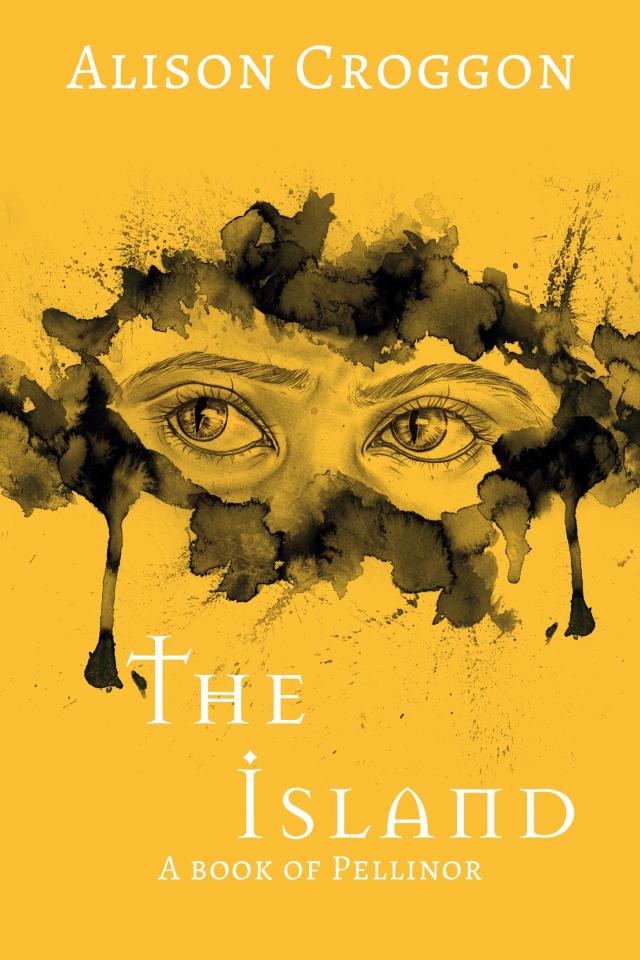
Cover art: Oleisha Proksa
Copyright © Alison Croggon 2017
Artwork Copyright © Oleisha Proksa 2017
Newport Street Books, Melbourne
First published by Newport Street Books, 2017
The moral right of the author has been asserted.
All rights reserved. No part of this books may be reproduced, transmitted or stored in an information retrieval system in any form or by any means, graphic, electronic or mechanical, including photocopying, taping and recording, without prior written permission from the author.
Alison Croggon is the acclaimed author of the Books of Pellinor. Her other novels include The River and the Book, a finalist in the West Australian Premier’s Awards and winner of the 2016 Environmental Writing for Children Award, and Black Spring, a finalist in the NSW Premiers Literary Awards. Her prize winning poetry has been published extensively in magazines and anthologies internationally. She has written several opera libretti which have been performed in major festivals across Australia. She is also a critic and editor. She lives in Melbourne, Australia, with her husband, the playwright Daniel Keene, with whom she is co-writing a new speculative fiction series.
For more information visit alisoncroggon.com
THE ISLAND was visible today, sharply breaking the line of sea and sky. So she hadn’t imagined it after all.
Even at this distance Maerad could see the green fringe of a forest, white cliffs, hills mounting behind into purple shadows. A brightness among the trees, as if a star had fallen there: most likely a lake throwing back the dawn light. Or perhaps, she thought with a quickening of her heart, it was a window. Perhaps someone lived there.
The isle blurred, as if a swift haze were climbing over it, and in a matter of moments vanished completely. Maerad had a brief irrational conviction that someone had sensed her looking and hidden it from her sight. She shrugged, smiling at the vanity of her thought. Her nausea had passed now, and she was beginning to feel hungry. It was probably time to double back for breakfast.
Maerad of Pellinor had arrived at the School of Amocen a fortnight earlier to study some scrolls of the Bard Lorcan, recently rediscovered in the School’s small Library. Since her arrival, she had woken every day with bile in her mouth and nausea roiling in her stomach. It was, said the healer Nicolan, a common complaint in pregnancy.
“It’s a minor problem,” he said, pushing his spectacles up his nose. “So you mustn’t worry.”
“If you had to sprint to the privy every morning, I doubt you’d call it minor,” said Maerad, more sharply than she intended.
“It’s all relative,” said Nicolan. Maerad bit her lip so she wouldn’t snap at him: she knew he didn’t mean it, but he was a little patronising. Yes, this was her first quickening, but that didn’t mean she was completely ignorant. “You’re in good health. And you say it passes by the afternoon. Some women can’t keep down a morsel all day. A morning walk should abate the worst of it.”
Maerad was relieved, but also slightly irritated, to find that Nicolan’s advice worked. Every morning she made her way through the School of Amocen down to the shoreline, past the pier where fishing boats tied up to display their wares to the townsfolk, to the narrow strand beyond. It stretched out before her, a long curve vanishing into the distant grasslands of Lanorial. She loved striding along the firm sand where the tide had withdrawn, kicking the wracks of seaweed thrown up overnight, the salt wind riffling her hair.
She would miss these walks when she returned to Lirigon. All her worries about the pregnancy dissolved in the music of the sea.
Cadvan had known, as Maerad did, the exact moment that she had quickened. He was immediately overwhelmed with anxieties about her wellbeing. Maerad, who hated fuss of any kind, was at first surprised and touched, but she found it increasingly irritating: he would scarcely permit her to lift a book on her own. They had ended up arguing about her long-planned visit to Amocen. He feared that the travel would be too much for her, and all but forbade her to leave Lirigon.
“Light’s sake, Cadvan, there’s nothing wrong with me,” Maerad said. “I’m just with child!”
“It’s a long journey,” Cadvan said. “I don’t think you should take the risk.”
“I’m in perfect health. Norowen says so, and she’s a much better healer than you. And I want to go.”
“If I could come with you…” said Cadvan, and trailed off. He was expected in Jouan to the north, where he was to teach the new healer there. It was an appointment he didn’t feel he could break. “Can’t you delay it? What’s the hurry?”
“I’ll be away for ten weeks, that’s all,” said Maerad. “And then I promise to stay here, unless you drive me away with all this fussing. Don’t you trust me to look after myself?”
“Of course I trust you. I just don’t trust the world not to harm you.”
“The world’s done its best to harm me and I survived. I’m the most dangerous thing most people will meet.”
Cadvan smiled reluctantly at that, because of course it was true. In the end, as a concession, she agreed not to ride to Amocen, instead travelling by carriage. But she still left.
Cadvan sent birdnews almost every day, imperfectly concealing his worries, and Maerad wrote back every other day, trying to hide her irritation. She didn’t tell him about the morning sickness because if he thought she were unwell he would likely drop everything and ride to Amocen. She thought she understood why he was suddenly so uncharacteristically over-protective, but that didn’t mean she had the patience to deal with it. She was having enough trouble coping with herself.
More than anything, Maerad wanted time alone to think. Her pregnancy had pulled up a tumult of unexpected emotions. She was, deep down, a little afraid. Who was this person inside her, this stranger that she was bringing into the world? Would everything change after the birth? How? Other Bards reassured her, but it made no difference. She felt as if she didn’t know herself, as if she had to discover who she was all over again.
She knew the reason for at least part of her irritability. Wounds that she had thought long healed had reopened. She was haunted by the memory of a woman who had died in labour in Gilman’s Cot, where Maerad lived in slavery as a child: the woman’s screaming echoed through her worst nightmares. And the old grief for her mother had returned, as raw and painful as when Milana had died. It hurt, more deeply than she could express, that her child would never know her.
Maerad first noticed the island on her third walk, a dark blur through the mist. She casually asked one of the Amocen Bards what it was called and was told that there was no island off the coast. Curious, Maerad had looked at several maps in the Library. Amocen nestled midway between the two peninsula kingdoms of Lanorial and Amdridh. As the Bards said, no island was marked anywhere nearby.
For the next few mornings the horizon had been straight and bare; and then she saw it again, in exactly the same place as before. This time it was a dark mass humped under a sky streaked with grey and red cirrus clouds. Maybe, Maerad thought, studying it carefully, it was some strange mirage? She didn’t know much about sea weather, but sailors had told her of some very curious natural phenomena.
The thought of the island nagged her as she sorted through the dusty scrolls in the Library. What if it were real? An enchanted island, hidden from casual eyes? There was the ancient story of Charodys, the Isle of Mist, supposedly inhabited by spirit women, which appeared in times in trouble off the coast of Thorold. Most Bards thought this was a confused myth about Elidhu, the immortal Elementals, and it was generally agreed that the island didn’t exist.
She stared out at the misty horizon. Today she knew she was not mistaken. It was definitely an island. An island that everyone said wasn’t there…
Her stomach lurched with hunger, startling her out of her reverie, and she discovered that she had wandered further than she had intended. She thought of the buttery almond pastries that the Amocen Bards baked for the morning meal. Their sweet, crispy crusts were burned almost black, and inside was a soft delicious paste. When she wasn’t feeling sick, Maerad craved these pastries. Her greed amazed her, even though she knew it was another common side effect of pregnancy.
She turned around to head back to the School. She had gone no more than three steps when she heard a cry. A curlew, she thought at first; they were common along the coast. Or maybe it was the wind… but an urgency in the sound clawed her heart, pulling her up short. She opened her hearing, trying to trace its origin. It seemed to be coming from the bushy scrub that grew along the edge of the beach.
Maerad hurried up the strand. The scrub here was a dense, forbidding thicket, slightly higher than her head. She hesitated, remembering the stories she had heard as a child about evil spirits that tricked unwary travellers into their clutches with just such lures as these, and then shook herself. She was a Bard. She need not fear such things. The cry grew louder, and she set her teeth and plunged into the thicket, wrapping her cloak close around her to keep out prickles.
Once she broke through the outer leaves the scrub became less difficult to navigate. She twisted her body through a tangle of branches, worming her way towards the crying until, quite suddenly, she broke into a clearing.
A small, dark-headed child lay curled up in a n attitude of complete despair beside a burned out fireplace. As she stepped into the clearing it fell silent, aside from the sobbing intake of its breath. It gave no sign that it had noticed Maerad’s arrival.
Maerad approached it gently, kneeling down and taking its hand, and the child startled and pulled away.
“I won’t harm you,” she said softly. “I promise. I’m here to help you.”
The child panicked. Maerad, afraid that it would bolt off and hurt itself, held fast to its arm as it struggled to wrench itself free. She tried the same words in several languages, since it didn’t seem to understand Annaren, and then finally in the Speech. At last she touched its mind. She flinched at the terror which flooded through her. She knew then that it couldn’t hear her through the chaos of its fear. Something terrible had happened here.
Maerad didn’t know what to do.
She wrapped her arms around it, trying to calm it down, and closed her eyes, searching her memory for a charm to combat fear. It was difficult to think of anything: the child was struggling violently, kicking and hitting out. It bit her arm viciously and she almost let it go. Aside from a desperate panting, it made no sound at all.
At last she remembered a sleep spell. She said the charm out loud, putting all her power into the Speech, and the small body collapsed in her arms. Maerad shut her eyes momentarily with relief and then, with a stab of anxiety, wondered if her baby had been hurt in the struggle. She sent her awareness down to the tiny being curled inside her, her breath suddenly tight. She was scarce four months gone, and life was so fragile… But no, everything was all right. She inspected the rest of the damage: a couple of bruises, and the bite had broken her skin and was bleeding, but not badly. She patched herself up quickly, wondering how to get the child back to Amocen.
It was clad in a torn and filthy tunic, barefooted, its dark hair closely cropped. She couldn’t tell its sex. Even fast asleep, she detected a faint flicker of something like, but not like, magery. It had no injury that she could see, aside from a yellowing bruise on its cheek. It was lighter-skinned than the Amocen people, more like a Baladhian. If the child came from Baladh, it was a long way from home. But it could be Pilanel, from the north. That was even further.
She laid the child gently on the ground beside her, trying to clear her mind of the aftershock of its panic. Vague images rippled through her mind, making it difficult to think: flickers of figures seen in darkness and fire, overwhelming fear. Something terrible has happened here. Something terrible…
The child must have been brought to this place, and surely it wasn’t dragged through the thicket. She looked behind her and found a gap in the scrub that opened to a narrow sandy path, on the other side from where she had entered the clearing. She touched the remains of the dead fire. They still held traces of warmth. There had been a struggle, because ashes were scattered all over the clearing.
The first thing, she thought, is to get out of here, and quickly, in case somebody comes back.
She lifted the sleeping child to her hip. Its limbs twitched, and then it relaxed into her body. It was lighter than she expected, and its breath feathered on her neck, light and soft, as she followed the narrow path out of the scrub.
The sleep spell she had used was a powerful one, used to promote the healing of serious physical injuries, and she began to worry that in her haste she had chosen the wrong charm. She didn’t dare to wake the child up until they were somewhere safe, but she remembered belatedly that there was a risk that too deep an enchanted sleep could slide into coma. Though hadn’t she been told that this spell could also help to heal a wounded mind? Or was that another? Like all Bards, Maerad knew something of the art of healing, but she was no expert. She guessed that an hour shouldn’t do it any harm. She hoped.
At last the scrub began to thin and she emerged into grasslands that sloped gently up towards some hills in the east. By now she was sweating, even though the air still held its early chill. She laid the child down and stretched her arms. She couldn’t see anyone about, aside from a herd of wild ponies grazing in the distance, and she was far from any road or sign of habitation. The shoreline was visible on her right, below the barrier of scrub. As long as she kept it in sight, she wouldn’t get lost.
For the first time since she had arrived in Amocen she missed Cadvan. Right now, she could do with his help.
She wiped her brow with her forearm, staring blankly at the sea while she considered what to do. The waves had changed colour. Before they had been a shifting weave of blue and silver: now they were murky green grey. The wind had lifted, hurrying low clouds inland. It would likely rain soon.
The island was there again. It seemed closer: the cliffs were clearly lineated, with their fringe of green trees. And–perhaps–a tower on the brow of the cliff? Was that the chiming of a bell? She squinted, trying to see more, and again a haze lifted, hiding it in a bank of cloud.
Maerad sighed and knelt down by the sleeping child. It was breathing evenly, but its hands and feet were too cold. She had no choice: she’d have to carry it all the way to the School. For a moment she worried about straining herself, but then she remembered all the pregnant women she had seen carrying children with no ill-effect. This was just the irrational worries of a first quickening, the same fears she had been annoyed with Bard Nicolan for trying to allay.
She hefted the child back onto her hip, nestling it beneath her cloak, and began the trek south, trying not to stumble over the tussocks of grass. It would be easier walking along the strand, but she could see no path back through the thicket. At some point near the town the scrub petered out, but it would likely be a half hour or so before she got there.
The child grew heavier the further she went. She shifted the burden from side to side, reflecting that she should get used to this. A light rain began to fall, and gathered quickly into a heavy shower. She made a hasty mageshield to keep dry. It was beginning to feel like a very long walk.
At last the scrub thinned out, and Maerad bent her steps towards the shore, scanning the horizon. There was no sign of Amocen, or any of its outlying villages. For a heartsinking moment she wondered if she had walked in the wrong direction. No, of course she hadn’t: the sea was rolling to her right, iron-grey under swathes of rain. She must be in a dip or hollow that cut off the view.
The rain was becoming heavier. Soon she would have to make another charm, or find shelter. She plodded stubbornly on with her head down, trying to ignore her hunger and increasing weariness. She did tire more easily, it was one of the things about pregnancy that annoyed her, and the sleeping child kept sliding down her body, a dead weight. Her arms ached viciously now.
At last she was forced to stop. There was no habitation in sight, no town, no farmhouse, not even a goatherd’s shelter. Not far ahead on the edge of the strand there was a small sheoak, its dense, feathery branches drooping under the downpour. She hurried towards it and huddled against the grey trunk. It wasn’t much, but it was something. With inexpressible relief, she let down her burden.
She figured she must have been walking for an hour now, and she dared not leave the child asleep any longer. She took a deep breath to clear her mind and put her hand on its forehead, her skin glowing dimly in the murk as she drew on her powers. The child stirred and muttered something, but didn’t wake. The charm had taken deeply. She strengthened her magery until her hands were dazzling silver, battling to keep a creeping dread at bay. Still nothing.
She had sunk it into endless sleep. Why had she been so stupid? There was no excuse.
Wake, child. Wake and be unafraid. You are safe. Wake up…She shook its shoulder, gently at first and then more roughly. At last, to her immeasurable relief, the child’s eyes blinked open.
They were golden, slotted like a cat’s. Maerad rocked back on her heels in astonishment. The child was an Elidhu. Only the immortal Elementals had eyes like these.
The child rubbed its eyes and curled over on its side, still swathed in sleepiness. Maerad gently turned it back.
You mustn’t go back to sleep, she said into its mind. Not yet.
She felt the instant it snapped into wakefulness, a stab of red alarm. I won’t hurt you, I promise, she said. I want to help you. I’m Maerad.