Survival lessons, p.1
Survival Lessons, page 1


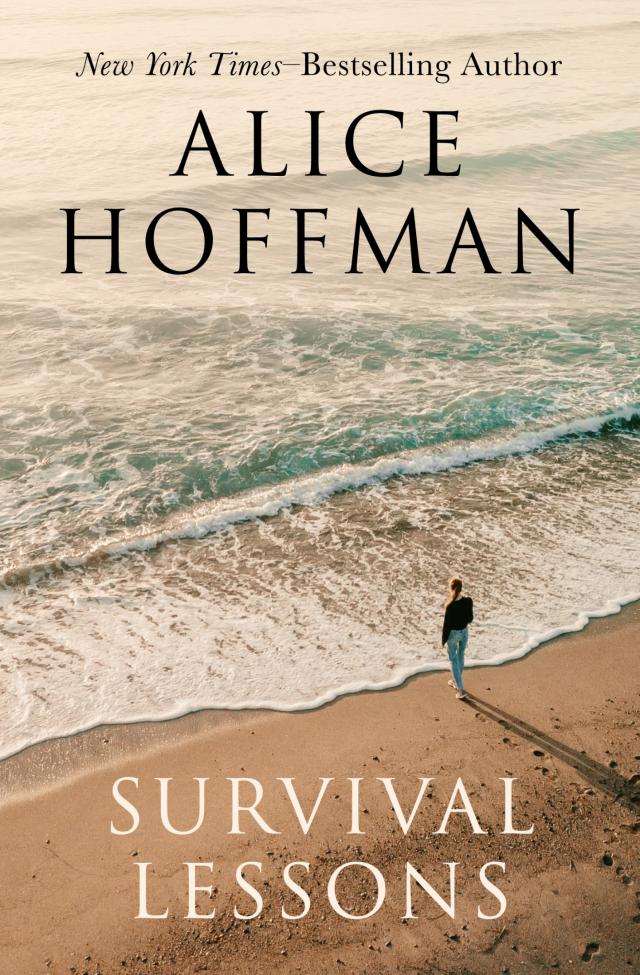
Survival Lessons
Alice Hoffman
Contents
Preface
Choose Your Heroes
Choose to Enjoy Yourself
Choose Your Friends
Choose Your Relatives
Choose How You Spend Your Time
Choose to Plan for the Future
Choose to Love Who You Are
Choose to Accept Sorrow
Choose to Dream
Choose Something New
Choose to Give in to Yourself
Choose to Make Things Beautiful
Choose to Tell Your Own Story
Choose to Forgive
Choose to Claim Your Past
Choose to Be Yourself
Choose to Share
Choose Love
Choose the Evidence
About the Author
Preface
When I found the lump I was convinced I had imagined it. These things didn’t happen to me.
True, bad things happened around me. My mother was undergoing treatment for breast cancer. My sister-in-law had just lost her battle with brain cancer. Several relatives and friends were seriously ill. But, still, these things didn’t happen to me. I was not someone who got cancer. In fact, I was the person who sat by bedsides, accompanied friends to doctor’s appointments, researched family members’ diseases until I became an expert, went to meetings with lawyers when divorce was the only option, found therapists for depressed teenagers, bought plots at cemeteries, arranged funerals, babysat children and pets.
But as it turned out, I was also the one with cancer.
I did my best to pretend it wasn’t so. I was busy after all, the mother of two young sons, caring for my ill mother, involved in my writing. My most recent novel, Here on Earth, had been chosen as an Oprah’s Book Club selection; an earlier novel, Practical Magic, was being filmed in California with Sandra Bullock and Nicole Kidman. I didn’t have time to be ill.
Now I know you can’t run away by ignoring the truth. Truth follows you; it comes in through open windows and drifts under doors. I went for a biopsy, convinced I was fine. Days later my doctor phoned me and said, Alice, I’m sorry. Then I knew. Good fortune and bad luck are always tied together with invisible, unbreakable thread. It happens to everyone, in one way or another, sooner or later. The loss of a loved one, a divorce, heartbreak, a child set on the wrong path, a bad diagnosis. When it comes to sorrow, no one is immune.
I’ve always believed there is a very thin line that separates readers and writers. You make a leap over that line when there’s a book you want to read and you can’t find it and you have to write it yourself. All the while I was in treatment I was looking for a guidebook. I needed help in my new situation. I needed to know how people survived trauma.
It took all this time for me to figure out what I would have most wanted to hear when I was newly diagnosed, when I lost the people I loved, when I was deeply disappointed in myself and the turns my life had taken. In many ways I wrote this book to remind myself of the beauty of life, something that’s all too easy to overlook during the crisis of illness or loss. There were many times when I forgot about roses and starry nights. I forgot that our lives are made up of equal parts sorrow and joy, and that it is impossible to have one without the other. This is what makes us human. This is why our world is so precious. I wrote to remind myself that in the darkest hour the roses still bloom, the stars still come out at night. And to remind myself that, despite everything that was happening to me, there were still choices I could make.
Fifteen years after being diagnosed with cancer, I’ve become something I never imagined I’d be. I’m a survivor.
We all experience trauma and we all take a very personal path to healing on our own terms. But we’re also alike in what we need most. Love really is the answer. I received so many gifts from friends and strangers during my times of loss. I hope this book can be my gift to you.
Alice Hoffman
There is always a before and an after.
My advice, travel light.
Choose only what you need most
to see you through.
Choose Your Heroes
Everyone needs a hero. In the worst of times there is someone, in the past or the present, in the same household or a thousand miles away, who can teach you what you need to know, a guide through the darkness.
As a girl, I was obsessed with Anne Frank. She was young and a writer and Jewish, but most importantly, she was an optimist, able to keep her spirit strong even in the most brutal of times. She was my first hero, and I think I chose well. At the Anne Frank House in Amsterdam I’m always thrilled to see crowds of teenagers among the visitors waiting in line, all of them looking up to Anne Frank as I did, with awe and admiration. She wanted her life so much. She wanted to grow up and experience everything. She, along with her sister, did not survive the Bergen-Belson concentration camp, but her words, written into a checked autograph book when she was hidden in an attic in Amsterdam, live on for us.
It’s a wonder I haven’t abandoned all my ideals, they seem so absurd and impractical. Yet I still believe, in spite of everything, that people are truly good at heart.
I don’t think of all the misery,
but of the beauty that still remains.
—Anne Frank
Anne Frank’s passionate ability to see beauty in a cruel world is nothing less than astounding. Though she belongs to the past, she is the person I still look to for faith in the future.
It is difficult to measure a personal tragedy. How much bad fortune does it take to destroy a person? How much strength must someone possess in order to survive against the odds? In my house, my mother took to her bed when my father left her. She was in shock. I was eight years old and I didn’t meet anyone else whose parents divorced until I was in college. Times were different then. A broken marriage was a stigma, a mark of real failure, a secret to hide away. For many it’s still that way, an emotional earthquake.
My mother was a rebel, beautiful and lazy and brilliant. She thought she knew where her life was heading until the rug, which hadn’t been vacuumed in months, was pulled out from under her. She completely fell apart. I slept on the floor of her room for several weeks because she was afraid to be alone.
I think that’s when I began to think of her more as my daughter than my mother, on those nights when I heard her crying herself to sleep. From then on I cleaned the house, I walked the dog, I tried to warn her away from worthless men. By the time I was ten I often sat drinking tea with my no-nonsense Russian grandmother, both of us complaining about my mother as if she were a wild teenager and we were the irate guardians she regularly disobeyed.
It’s possible that I became a writer because of my mother’s fear of being alone after her divorce. A novelist, after all, is never alone. We travel with hundreds of people, invented characters that have already been written or will someday appear on the page. Despite my mother’s uninhibited, untidy ways, she was the first heroine in my everyday life. She survived her failed marriage. She went onward, into the territory of single women and broken hearts. She fell in love again (wrong man, wrong time, but love is always an act of courage). She became a teacher and then a social worker, helping hundreds of children in foster care, and she had a large group of loving friends. She would rather see a play on Broadway than clean the kitchen. She preferred taking a class at The New School to cooking dinner. I thought she was irresponsible. Most girls are angry with their mothers at some point, and I was often furious with mine. But the traits I once deplored are the ones I now appreciate most. My mother possessed a true gift: she had the ability to enjoy herself. She saw the beauty of the world.
Perhaps that’s the link that connects the women I admire most. My grandmother Lillie, who volunteered at an old-age home into her eighties, who lost a husband and a child and still kept on going, one foot in front of the other, out of Russia, across the ocean, to a tenement in the Lower East Side of New York. She sold underwear and did alterations at a little shop she opened on Jerome Avenue in the Bronx, where she kept a hammer ready in the back room in case there were robbers. She split her meager retirement check with me to help me become a writer. She was my angel, the person I could always depend on, as funny as she was tough. I spoke to her every morning until the day she died. Because of her, I know that if you are lucky enough to have one person believe in you, you have it made.
My sister-in-law Jo Ann was the bravest of the brave. She was eighteen when she fell in love with my brother. For a while she was a hippie in San Francisco. She worked in an incense factory, then she was a DJ at a radio station that operated out of a metal shack. She loved travel, painting, her children, and odd, interesting people. She had the best laugh in the world. When she was told she had only one more summer in which to live and was advised to attend to her bucket list, she informed the doctor she’d already done everything she’d ever wanted to do. Her life had been complete.
Again and again, friends have amazed me with their courage. My friend who lost her baby daughter at birth, and another who lost her child to an unexpected sudden illness, and still another who fights depression as if it were a dragon that follows her from town to town. A friend who battled cancer with extreme grace, not once but twice, a hairdresser who on her off hours helped women who had lost their hair, making them beautiful. She, herself, remained the same beautiful person she’d always been, with or without hair. You could take one look at her face and know she understood joy. In a last card to me she wrote: Life is beautiful, just very unfair.
My heroes don’t give up, even when the going gets rough, even when they want to. They manage to see the stars in the sky until they disappear from sight, a glittering memory of our world.
“Hope” is the thing with feathers –
That perches in the soul –
And sings the tune without the words –
And never stops – at all –
—Emily Dickinson
Choose to Enjoy Yourself
Start by eating chocolate. In fact, if you can, eat whatever you want. Any time. Any place. Cook your dream dinner: lasagna, stuffed mushrooms, fried rice, devil’s food cake with mocha frosting, blueberry pie.
Take a cooking class. My son was in a class taught by the great Julia Child. He learned to make sublime eggs, poached, scrambled, coddled, and boiled. Here is the recipe for Julia’s hard-boiled egg. It’s simple, but most perfect things are.
Select a room-temperature egg.
Place in a pot of cold water.
Bring to a boil. When at a full boil, cover and remove the pot from the burner.
Let stand covered for fourteen minutes.
Submerge egg into ice-cold water. Peel.
I don’t think Julia would mind me giving out her secret. She was a survivor. When we worked together raising funds at the hospital where we had both been treated, I instantly wished she was my best friend. Her warmth and compassion were legend. She didn’t want to talk about herself and was deeply interested in other people. She knew who she was, but she didn’t know who you were, and she wanted to. Frankly, she was more alive than people half her age. Everything was beautiful to her: an egg, a stranger’s life story, a battered cooking pot.
Another secret recipe comes from my dear friend Maclin Bocock Guerard, who was a writer from Virginia and the most charming person I have ever known. She fell in love with her professor at Harvard, who was also my professor many years later, only she married him, which I would have, had I been in her shoes. Professor Guerard was the greatest writing teacher of his time; without him I would have never become a published writer. He was my mentor until the day he died, but Maclin was always my first reader. I trusted her completely. How often does that happen in a life? They were both beautiful and brilliant, and in spite of that they were also terribly kind.
For my wedding present Maclin sent a double boiler and a recipe for brownies. I lost the double boiler, but I still have the recipe, typed out on an index card. No recipe comes close to this one. When you eat these brownies you will forget your sorrows. The sensation won’t last, but it will be worth it. For a brief time, you will be in a chocolate ecstasy.
Here is a warning: Maclin’s brownies will not appear to be perfect. They will sink in the middle. The top will crack. You’ll want to throw them out. Don’t. They will be everything they should be and more. They are perfect inside, which is even better than merely looking good. Soon you’ll find yourself copying this recipe onto index cards to give to people you love, as Maclin did for me.
The last time I saw her, my friend was in the final stages of Parkinson’s disease and could no longer speak. Her muscles would freeze and moving was difficult for her. We sat in her garden in Palo Alto. It was quiet and green and we could hear people playing tennis next door. We had already said everything we needed to in the letters we had written to each other for more than thirty years. All the same, I thanked her for the double boiler and for everything else she had given me.
Maclin’s Brownies
Melt 9 ounces of Nestle’s semi-sweet chocolate bits over hot water (double boiler!) with 1 stick butter cut into pieces.
Beat 2 eggs with ½ cup white sugar until thick. Add ½ cup white flour, sifted with ¼ teaspoon salt and ½ teaspoon baking powder. Add the chocolate mixture and 1 teaspoon of vanilla and 1 cup (or less if you prefer) of walnut bits. Pour batter into 8” x 8” greased pan. Mix about 2 tablespoons of brown sugar with 1 teaspoon of melted butter and dot the top of the brownies. Bake at 375° for about 20 minutes, sometimes longer. Test with a toothpick. Cool on a rack after baking. When brownies have cooled, sprinkle with powdered sugar (you may use a doily set over brownies if you prefer a sugar pattern).
Choose Your Friends
When you have a dinner party only invite people you want to talk to. Invite those you’ve always wanted to know. If I could, I would invite the Brontës and Edgar Allan Poe. They would be my first choices for dinner guests. I would want to know about their minds and his life. I would also want to invite Emily Dickinson, even though it is said that at some point she only spoke to callers through her bedroom door. That makes me love her all the more because I often feel exactly the same and want to hide away. She took to covering the windows in her bedroom, so she would feel safe, but she also went into the woods and collected hundreds of specimens of wildflowers.
Since it is impossible to invite great, dead writers, invite alive young people. Girls with pink hair who have big dreams. Young men who plan to change the world. Children who get into trouble at school because they have too much energy and too many ideas. People in the middle of their lives are so busy working, buying things, and trying to pay their mortgages that they often don’t have time to spend dreaming out loud. Your friends’ children may now seem more interesting than their parents. It may come as a complete surprise when they are the ones who take time to visit, who view you without judgment even though you have lost your hair and your eyebrows. They ask questions other people are too polite to bring up: Did you love her? Does it hurt? Are you afraid of what happens next?
I especially appreciated the fearlessness of teen readers and writers when I was undergoing treatment. One beautiful girl said to me, I am the darkest person you’ve ever met, but her poems were graceful and eloquent, and she hugged me when I left. Another told me that my book Green Angel—about a girl who loses everything and has to reclaim her life through writing her story—had gotten her through months in a hospital bed and several surgeries. I realized these teens were just starting out and I might be ending, but I felt a wild sort of joy to see how alike we were despite the difference in our ages. The fact that they loved books assured me that even if I wasn’t able to be a part of it, the future would be in good hands.
I also found myself drawn to older people. I asked them, How did it feel to see yourself change on the outside and look entirely different? I began to talk to neighbors in their eighties and nineties, people who had previously been nothing more than nodding acquaintances. I discovered what interesting lives they’d led and how much they had to say. Once I slowed down and took the time to ask questions, I realized they had a thousand and one stories.
I threw a party for my mother’s birthday, inviting both her friends and mine. We had tea in an old New England Inn. It was the last birthday my mother celebrated. We didn’t know that, but we had an idea that might be true. We didn’t count calories or glasses of wine. One of the younger women asked if there was anything the older women wished they’d done when they were younger and had more energy and time. The older women all agreed upon the answer: They wished they had traveled the world. But more importantly, they wished they’d fallen in love more often. Don’t hold back! they told us. Live right now!
Make time for old friends. Get a group of your favorite people together and rent a room at a hotel. Order room service, watch movies, dance until the management starts to get complaints from other guests. Go to a spa together or make pizza from scratch. Tell someone how much he means to you. Don’t hold back! Throw your arms around somebody right now.
The truth is, some of your closest friends may disappear during your most difficult times. These people have their own history and traumas; they may not be able to deal with yours. They may belong to the before.
I still mourn the loss of certain people, friends who didn’t call after my diagnosis, who were too afraid to come to the hospital or visit me on my worst days. I was hurt. I felt abandoned. Looking back on it, I wish I had let them go more easily. If people aren’t there for you now, when you really need them, they never will be, and it’s time to move on. You’ll be amazed by how many new friends you have in the after. They’ll be the ones who aren’t afraid of sorrow, who know we can’t avoid it. The best we can do is face it together.