




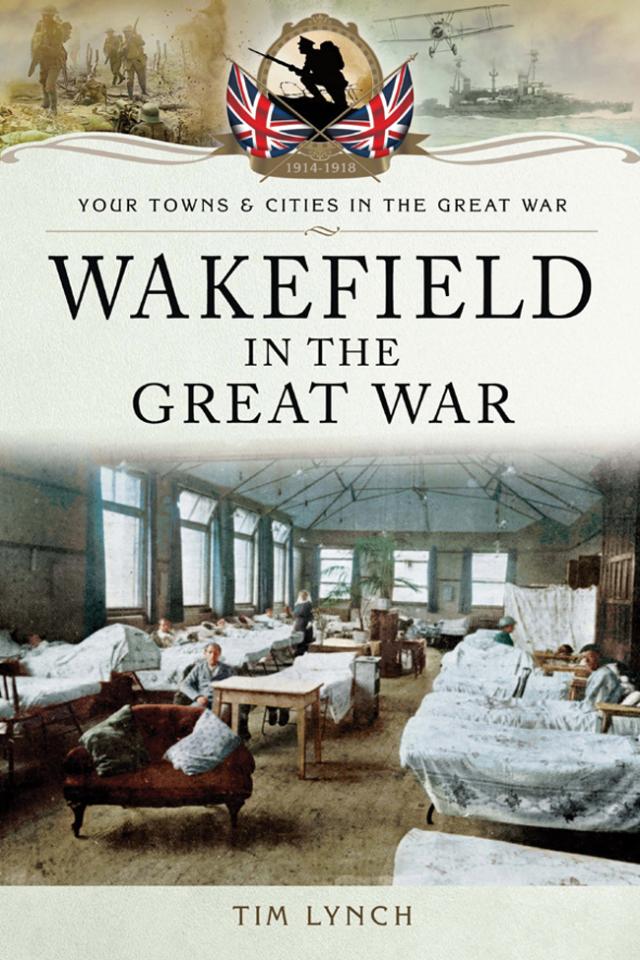
Wakefield in the Great War
Tim Lynch
Tim Lynch
The Great War saw thousands of Wakefield men enlist in the armed forces, serving in every arm of the services. Wakefield in the Great War tells the story of the men who fought and the families they left behind.This was total war. Volunteers worked tirelessly as nurses in local auxiliary hospitals, cared for Belgian refugees, sent food parcels to prisoners of war, fed soldiers during their long waits at railway stations and stitched sandbags to send to the Front. At nearby country estates, the 'Gorgeous Wrecks' practiced maneuvers at weekend camps. Wakefields engineering firms set the model for war production from shells to backpacks. Children gathered chestnuts and moss to help the war effort and stood patiently for hours in long queues to feed their families. The prison became home to conscientious objectors and the target for running battles in the street outside so that men had to find ways of sneaking over the walls to get back into jail. Wakefield in the Great War is the untold story of a time that would change the city forever.
About the Author: Tim Lynch is a social and military historian, battlefield guide and author of a number of books about the impact of the Great War on local communities.
Read online
