Amnesia Moon

Amnesia Moon

Jonathan Lethem

Literature & Fiction

In Jonathan Lethem's wryly funny second novel, we meet a young man named Chaos, who's living in a movie theater in post-apocalyptic Wyoming, drinking alcohol, and eating food out of cans.It's an unusual and at times unbearable existence, but Chaos soon discovers that his post-nuclear reality may have no connection to the truth. So he takes to the road with a girl named Melinda in order to find answers. As the pair travels through the United States they find that, while each town has been affected differently by the mysterious source of the apocalypse, none of the people they meet can fill in their incomplete memories or answer their questions. Gradually, figures from Chaos's past, including some who appear only under the influence of intravenously administered drugs, make Chaos remember some of his forgotten life as a man named Moon.
Read online
  • 30
Men and Cartoons

Men and Cartoons

Jonathan Lethem

Literature & Fiction

A boozy ex-military captain trapped in a mysterious vessel searches for his runaway son, an aging superhero settles into academia, and a professional "dystopianist" receives a visit from a suicidal sheep. Men and Cartoons contains eleven fantastical, amusing, and moving stories written in a dizzying array of styles that shows the remarkable range and power of Lethem's vision. Sometimes firmly grounded in reality, and other times spinning off into utterly original imaginary worlds, this book brings together marvelous characters with incisive social commentary and thought provoking allegories. 
 A visionary and creative collection that only Jonathan Lethem could have produced, the Vintage edition features two stories not published in the hardcover edition, "The Shape We're In" and "Interview with the Crab. From the Trade Paperback edition.
Read online
  • 28
The Feral Detective

The Feral Detective

Jonathan Lethem

Literature & Fiction

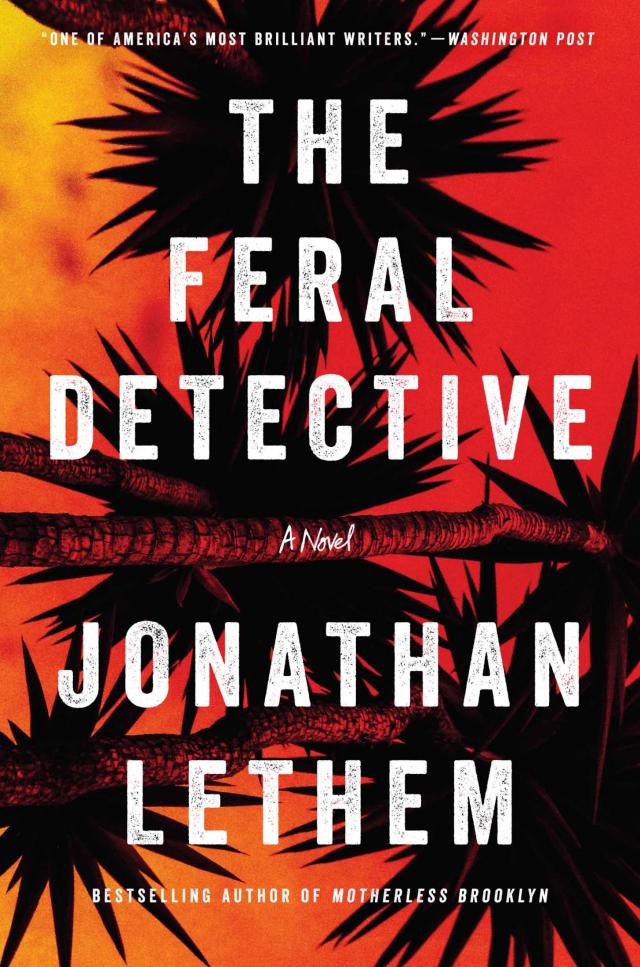
Jonathan Lethem's first detective novel since Motherless Brooklyn"One of America's greatest storytellers." —Washington PostPhoebe Siegler first meets Charles Heist in a shabby trailer on the eastern edge of Los Angeles. She's looking for her friend's missing daughter, Arabella, and hires Heist to help. A laconic loner who keeps his pet opossum in a desk drawer, Heist intrigues the sarcastic and garrulous Phoebe. Reluctantly, he agrees to help. The unlikely pair navigate the enclaves of desert-dwelling vagabonds and find that Arabella is in serious trouble—caught in the middle of a violent standoff that only Heist, mysteriously, can end. Phoebe's trip to the desert was always going to be strange, but it was never supposed to be dangerous. . . .Jonathan Lethem's first detective novel since Motherless Brooklyn, The Feral Detective is a singular achievement by one of our greatest writers.
Read online
  • 23

Gun, with Occasional Music

Gun, with Occasional Music

Jonathan Lethem

Literature & Fiction

"Gumshoe Conrad Metcalf has problems-there's a rabbit in his waiting room and a trigger-happy kangaroo on his tail. Near-future Oakland is a brave new world where evolved animals are members of society, the police monitor citizens by their karma levels, and mind-numbing drugs such as Forgettol and Acceptol are all the rage. Metcalf has been shadowing Celeste, the wife of an affluent doctor. Perhaps he's falling a little in love with her at the same time. When the doctor turns up dead, our amiable investigator finds himself caught in a crossfire between the boys from the Inquisitor's Office and gangsters who operate out of the back room of a bar called the Fickle Muse. Mixing elements of sci-fi, noir, and mystery, this clever first novel from the author of Motherless Brooklyn is a wry, funny, and satiric look at all that the future may hold.
Read online
  • 18
The Fortress of Solitude

The Fortress of Solitude

Jonathan Lethem

Literature & Fiction

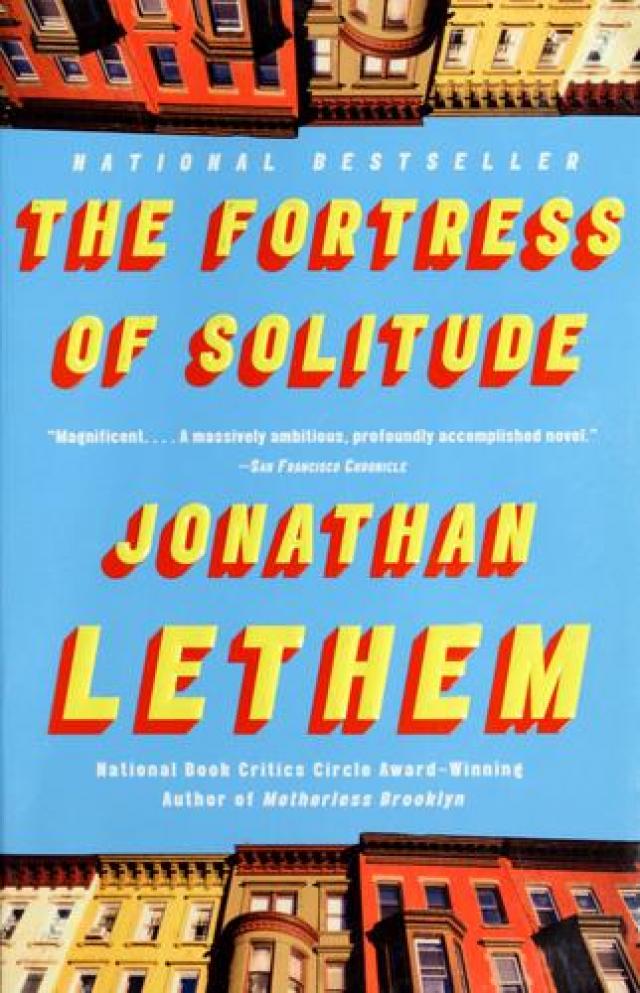
From Publishers WeeklyIf there still remains any doubt, this novel confirms Lethem's status as the poet of Brooklyn and of motherless boys. Projected through the prism of race relations, black music and pop art, Lethem's stunning, disturbing and authoritatively observed narrative covers three decades of turbulent events on Dean Street, Brooklyn. When Abraham and Rachel Ebdus arrive there in the early 1970s, they are among the first whites to venture into a mainly black neighborhood that is just beginning to be called Boerum Hill. Abraham is a painter who abandons his craft to construct tiny, virtually indistinguishable movie frames in which nothing happens. Ex-hippie Rachel, a misguided liberal who will soon abandon her family, insists on sending their son, Dylan, to public school, where he stands out like a white flag. Desperately lonely, regularly attacked and abused by the black kids ("yoked," in the parlance), Dylan is saved by his unlikely friendship with his neighbor Mingus Rude, the son of a once-famous black singer, Barnett Rude Jr., who is now into cocaine and rage at the world. The story of Dylan and Mingus, both motherless boys, is one of loyalty and betrayal, and eventually different paths in life. Dylan will become a music journalist, and Mingus, for all his intelligence, kindness, verbal virtuosity and courage, will wind up behind bars. Meanwhile, the plot manages to encompass pop music from punk rock to rap, avant-garde art, graffiti, drug use, gentrification, the New York prison system-and to sing a vibrant, sometimes heartbreaking ballad of Brooklyn throughout. Lethem seems to have devoured the '70s, '80s and '90s-inhaled them whole-and he reproduces them faithfully on the page, in prose as supple as silk and as bright, explosive and illuminating as fireworks. Scary and funny and seriously surreal, the novel hurtles on a trajectory that feels inevitable. By the time Dylan begins to break out of the fortress of solitude that has been his life, readers have shared his pain and understood his dreams.Copyright 2003 Reed Business Information, Inc. FromDylan Ebdus is a white kid on a black-and-brown street. As he struggles through public school in 1970s Brooklyn, he is "yoked"--put in a headlock--and frisked for change on a daily basis. Testing into a good Manhattan school, he steps into a long-lasting role: vulnerable among street kids, he's street-smart compared to his new, privileged pals, and loathes himself as a poseur with both crowds. When he finds a ring that grants the power of flight, he's afraid to use it, but his black friend, Mingus, is not. They try their hand at crime fighting, but like many teenage endeavors, the project fizzles out. Lethem is a tremendous writer, and in the first half he uses magnificent language to capture the complexity of a child's worldview. When he jump-cuts to Dylan's adulthood, however, his switch to a more conventional narrative style is disappointing. The story regains momentum when Dylan rediscovers the ring and a new power it offers, then returns to his old street and ponders a sacrifice: whether to give the ring to the boy who yoked him the most. Lethem explores many avenues: the origins of gentrification, the development of soul music, the genealogy of graffiti, the seeds of the crack epidemic. The different concepts converge in the closing pages, but this often-excellent novel labors under the weight of its ambition. Keir GraffCopyright © American Library Association. All rights reserved
Read online
  • 10
The Wall of the Sky, the Wall of the Eye

The Wall of the Sky, the Wall of the Eye

Jonathan Lethem

Literature & Fiction

A dead man is brought back to life so he can support his family in "The Happy Man"; occasionally he slips into a zombielike state while his soul is tortured in Hell. In "Vanilla Dunk," future basketball players are given the skills of old-time stars like Michael Jordan and Wilt Chamberlain. And in "Forever, Said the Duck," stored computer personalities scheme to break free of their owners. In these and other stories in this striking collection, Jonathan Lethem, author of The Fortress of Solitude and Motherless Brooklyn, draws the reader ever more deeply into his strange, unforgettable world—a trip from which there may be no easy return.
Read online
  • 9
183